
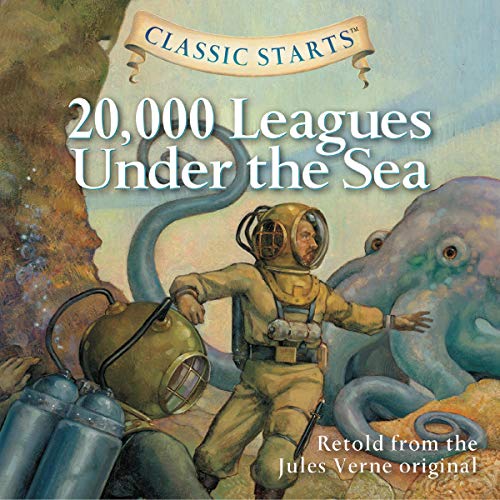
[The Mystery of the Deep: Investigating the Sea Monster]-[20,000 Leagues Under the Sea - Part 02]
📋 Summary
The Hunt for the Unknown
The Emergence of a Maritime Mystery
The year 1866 marked a turning point in maritime history, characterized by a "strange event" that puzzled sailors across the globe. Reports surfaced of an "odd sight"—an unidentified object that was "faster and bigger than any sea animal." This phenomenon was not merely a sailor's superstition; it was observed by enough people to establish that "the mystery did indeed exist." The urgency of the situation reached a breaking point in April 1867, when a large vessel was "hit by the beast," transforming a curiosity into a tangible threat that demanded a response.
Scientific Analysis and Speculation
As a respected scientist specializing in "ocean and sea life," the narrator, Professor Pierre Aranax, found himself at the center of the public inquiry. Faced with the choice between a previously unknown monster or an undocumented advanced ship, Aranax initially leaned toward the biological explanation. He reasoned that given the vast, unexplored nature of the deep ocean, it was plausible that a creature existed beyond human classification. He hypothesized that the beast was a "narwhal or unicorn of the sea," albeit a gargantuan one. He calculated that this creature would be "ten times that size" of a typical narwhal, with a horn "six times stronger," capable of moving at speeds that allowed it to "control the waters and anything in them."
The Expedition of the Abraham Lincoln
Following the global spread of reports, an organized effort was launched to locate the creature. The ship Abraham Lincoln was commissioned to "set out in search of the beast." Although the initial mission was unsuccessful, leading to a period where the monster "disappeared" for two months, a new sighting near San Francisco reignited the hunt. Upon receiving an official invitation from the United States government, Professor Aranax felt an irresistible compulsion to join the mission, noting, "I now knew that I must hunt down the monster."
Preparation and Departure
Aranax prepared for the voyage alongside his loyal servant, Consail, whom he described as a "healthy young man" and a reliable companion. Upon boarding the Abraham Lincoln, Aranax was introduced to the mission's leader, Commander Farragut. The ship was described as a "good boat" capable of high speeds, though the narrator remained acutely aware that it would "never be as fast as the monster." As the ship departed, the atmosphere was one of anticipation, with crowds cheering at the dock. The expedition finally "pushed full steam into the dark waters of the Atlantic," marking the beginning of a journey into the unknown depths where science and legend intersect.

Deep Learning with ListenLeap


