Oh, Squeaks, it's so good to see you.
I missed you so much.
How was your vacation?
Oh, and of course, tiny Jessie's vacation too.
I'm so glad that we could pretend that I was traveling with you.
And now I can't wait to hear all about all the places that you visited.
Let's look at all the photos that you took.
Where should we start?
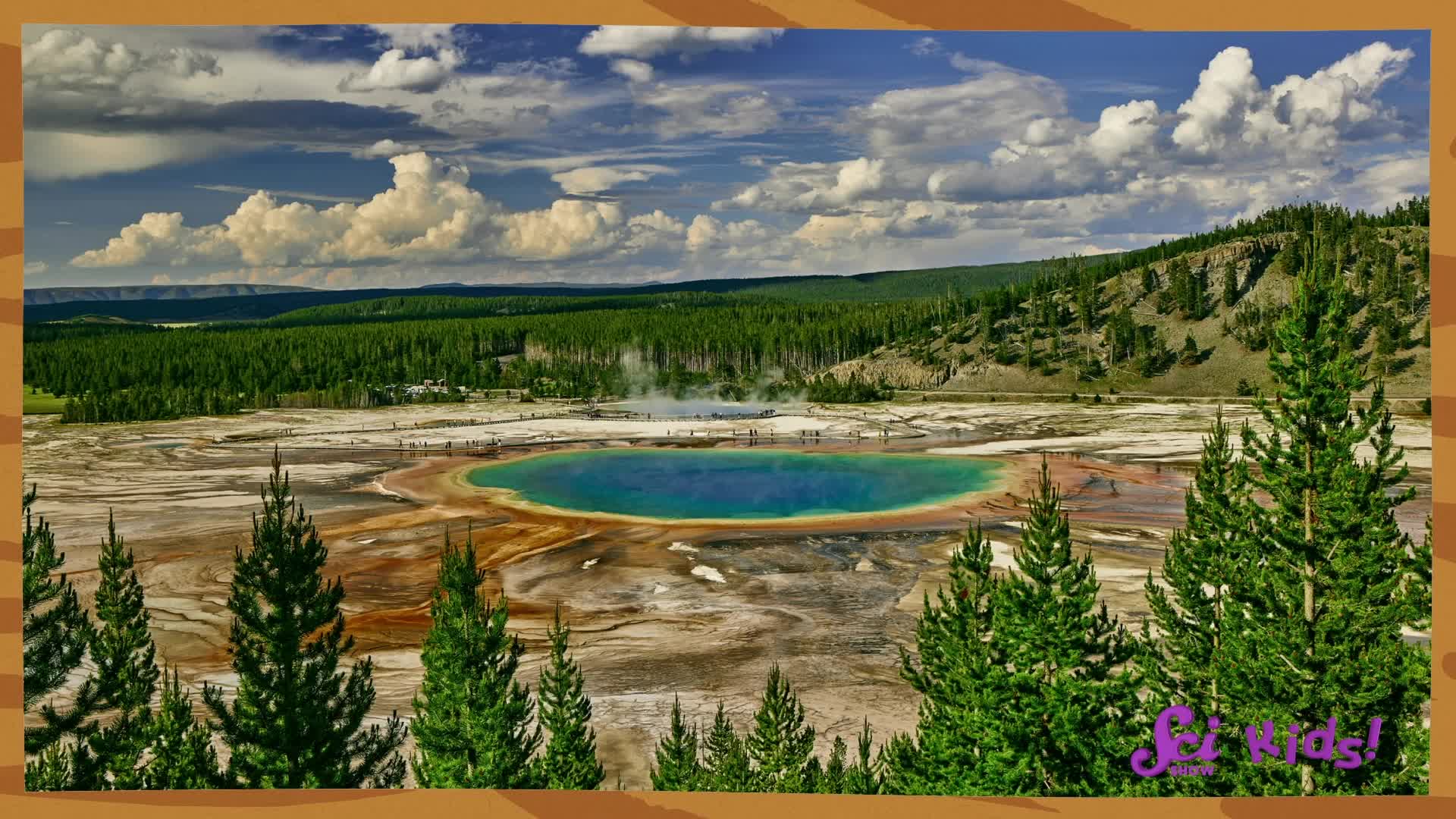
Oh, wow, Squeaks, what an amazing picture.
Hey, I think I recognize this place.
Was your first stop Yellowstone National Park?
That's amazing!
I've been there before and it's so beautiful.
All of those mountains and hot springs.
But did you know humans have been enjoying those mountains and hot springs for over 11,000 years?
It's true!
The land that we now call Yellowstone National Park was home to, or at least regularly visited by, a lot of different Native American communities, including the Mountain, Shoshone Crow Blackfeet, Bannock and Nez Perce nations.
But in 1872, the United States government decided to take that land and create a very large park.
That's not that long ago compared to how long Native Americans had been living in the area, but it was so long ago that Yellowstone became the world's very first national park.
Basically, it was meant to be a place where people could visit to enjoy the wonders of nature.
No one could sell the land or try to build a bunch of houses for people to move there.
But people did still move to the area around Yellowstone.
And that led to a lot of changes.
What kind of changes?
For one thing, there were changes for the animals around Yellowstone.
Human settlers.
The people that moved there turned forests and prairies into farms and ranches, destroying those animals' homes.
And they also brought in new animals, like cattle.
The people and cattle pushed out a lot of native animals, but some, like wolves, tried to stay by eating the cattle.
Yeah, wolves are pretty famous in Yellowstone.
Gray wolves are predators, animals that eat other animals.
And they used to live across much of North America.
Settlers didn't like wolves eating their cattle.
And they were worried that the wolves might hurt humans, too.
So they killed any wolves that they could.
Because Yellowstone was a national park, people weren't supposed to kill animals that lived there.
But the government made an exception for killing wolves.
So by the 1940s, there were very few wolves left in Yellowstone.
And that led to even more changes.
Well, once the wolves were gone, people started to notice other changes in the ecosystem.
That's the word scientists use for all of the living and non-living things that rely on each other in a specific place.
And without the wolves there were fewer predators in Yellowstone to eat the elk that lived there too.
So the elk population, or the group living in one place, got much bigger.
And all those elk ate more of Yellowstone's Stone's plants.
Soon.
There weren't enough plants in Yellowstone for rabbits to hide in, or trees for birds to nest in, or flowers for insects.
Eventually, there were so few plants that even the elk began to starve.
Yeah, it was a big problem.
The wolves had been not just a predator, but an apex predator.
That's an animal that eats prey animals and isn't eaten by any other animals.
And by removing the apex predator, humans had made Yellowstone's ecosystem unbalanced.
Killing all of the wolves ended up hurting the other animals, the plants and even the water and soil on the mountains.
Yes, things are better in Yellowstone now.
What do you think happened, Squeaks?
Yes, you're right!
People helped!
Lots of people worked together to help fix the ecosystem.
People saw how killing all of the wolves hurt Yellowstone's ecosystem and began to speak up.
Hunters told stories of the changes they had seen, and writers shared those stories all over.
Scientists studied the area's different ecosystems, and tribal nations that lived there shared knowledge about what can help wolves.
Some are still doing that even today.
And over time many people began to change their minds about wolves and decided to try to bring the apex predator back to the park.
Well, people couldn't just send invitations to the wolves.
In 1987 people created a reintroduction plan to bring grey wolves from another area to live in Yellowstone National Park.
Almost ten years later, 31 wolves were finally brought in from Canada.
The wolves hunted the elk and the other animals, and they eventually had babies who grew up to hunt there too.
Yes, there are still wolves living in Yellowstone.
There's usually around 100 of them in the park and around 500 living in the areas outside of the park.
And those wolves have helped rebalance the ecosystem.
The elk population is smaller now, but the elk are healthier.
And there are more plants for them and other animals to eat.
Now thousands and thousands of people from all over the world come to Yellowstone National Park for the chance to see gray wolves in the wild.
Yes, like you, Squeaks!
I bet you saw lots of plants and animals doing well in the park.
Thanks to the wolves and everyone who worked really hard to help them.
Oh, you wanna show me the rest of the pictures you took at Yellowstone?
All right, let's do it.
Whoa, slow down, Squeaks.
Let's take some time to enjoy all of the beautiful photos you took and all of the amazing animals and plant life that you captured.
Now that Squeaks is home from his trip, I'm sure he'll have lots to share.
If you want to learn more about some of the most amazing places in the world, check out some of the other videos with Squeaks, me and all of our friends at SciShow Kids.
And we'll see you next time here at the Port!