Psych2Go is a digital media organization that raises mental health awareness by presenting psychological topics in a digestible and relatable manner.
Please share our content with those who need it.
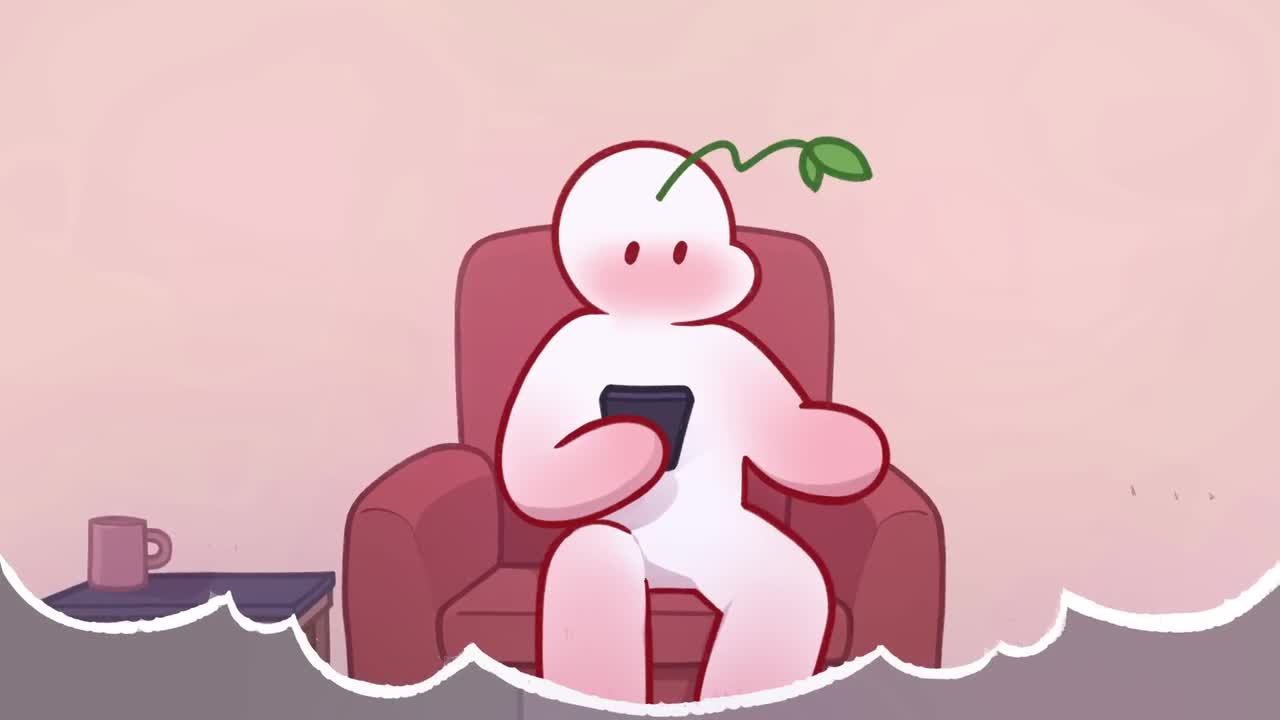
If crowded places drain you faster than your phone battery, you're not alone.
And there's real psychology behind why, but it's more nuanced than people usually think.
Picture this, it's Saturday night, your phone buzzes.
We're meeting downtown, the place is packed, but it's amazing.
And something in you just sinks.
Not because you hate your friends, not because you hate fun.
You already feel tired just imagining it.
Here's what might actually be happening and why it matters.
One, your sensory system may take in more than average.
Some people have heightened sensory processing sensitivity, a well-studied trait that affects about 15 to 20 of the population.
In simple terms while most brains automatically filter out background noise, visual clutter and overlapping conversations, some nervous systems take in much more environmental information at once.
It's not better or worse.
It's different wiring.
Think of it like this.
If most people's brains are streaming in standard definition, yours might be running in 4K.
More detail means more data, and more data takes more energy to process.
Research by psychologist Elaine Aron suggests this trait involves deeper processing of physical, social and emotional stimuli.
You might notice the flickering light, a shift in tone, a micro expression and subtle tension in the room, all at the same time.
From an evolutionary perspective, this was useful.
Someone needed to notice what others missed.
The problem is that modern environments loud bars, flashing lights, crowded venues were not designed with this nervous system in mind.
What feels like too much isn't weakness, it's cognitive overload from excess input.
It's not always the crowd, it's the social performance.
Many people who struggle with crowds say it's not the number of people, it's the effort required to navigate the social layer.
If you're highly attuned to body language, subtext and emotional undertones, social situations become more complex.
You're not just listening to words.
You're also tracking what's unsaid, where things don't align and how people actually feel.
Some research suggests that people who prefer smaller gatherings score higher on measures of emotional perception.
That doesn't make anyone superior, it just makes certain environments more mentally demanding.
You might value depth over breadth.
One meaningful 2 AM conversation can feel more nourishing than hours of small talk.
Neither preference is wrong, they're just different.
The issue is that society often confuses social frequency with social skill.
Quantity gets rewarded, quality gets overlooked.
Three, your brain may be rewarded by different things.
This is where brain chemistry is often oversimplified.
Research suggests extroverts tend to get more dopamine responses from social stimulation and novelty.
Introverts may rely more on neurotransmitter systems linked to internal focus and reflection.
This isn't an on-off switch, it's a spectrum.
Most people fall somewhere in between.
What it means in practice is simple.
Your brain feels more restored by reading, quiet walks, or focused creative work than by parties.
Nothing is broken.
You're just drawing energy from different sources.
There is research on structural brain differences, like gray matter variations, but it's complex and often exaggerated.
Online
No brain type is better, just optimized for different environments.
The real problem is cultural.
Many societies treat extroversion as the default and introversion as something to overcome, which creates unnecessary shame around natural preferences.
If you ever come home from a social event craving silence more than sleep, this might explain why.
Four, emotional absorption is real.
Some people are especially sensitive to others emotional states.
You might hear this being described as having highly active mirror neurons or being an empath, though those terms vary in scientific precision.
If you can walk into a room and immediately sense tension no one mentions, or feel drained after being around someone anxious, even when they seemed fine, you are likely picking up on subtle emotional cues.
In crowded places.
That means you're not just managing your own emotions, you're unconsciously processing many others at once.
That is genuinely exhausting.
The upside is strong empathy, deep listening skills, and emotional insight.
The downside is that without boundaries and recovery time, overwhelm builds fast.
Needing quiet afterward isn't avoidance, it's regulation.
Five, one extra support might be helpful.
One important point that often gets missed is sometimes struggling with crowds isn't just preference.
Social anxiety, panic disorder, trauma or agoraphobia can make crowded spaces genuinely distressing.
These are not character flaws.
They're treatable experiences.
If avoiding crowds is limiting your life in ways you don't want, Or if you experience panic, dread or physical symptoms in social situations, talking with a mental health professional can help.
There's a difference between I prefer smaller gatherings and I'm afraid to leave my house.
Both deserve compassion.
They just need different support.
What this means for your life.
Understanding yourself isn't about labeling yourself as broken or evolved.
It's about making informed choices that fit how you actually function. a few grounding truths.
Small social circles can be just as meaningful as large ones.
Recovery time after social events is self-care, not antisocial behavior.
You don't owe anyone an explanation for declining invitations.
And preferences can shift with different life seasons.
The better question isn't what's wrong with me, it's what do I need to thrive?
Sometimes that means skipping the party.
Sometimes it means going and leaving early.
Sometimes it means finding people who also prefer quiet conversations and depth.
If crowds drain you, you're experiencing something real, whether it's sensory sensitivity introversion, emotional attunement, anxiety or simple preference.
You're not better than people who love crowds and they're not better than you.
We're all just trying to find environments where we can be ourselves.
The goal isn't to force yourself into spaces that deplete you or to avoid connection altogether.
It's to understand your patterns and to build a life that fits who you are.
So, whether your team give me all the people, or team give me a good book in silence, there's room for both.
What's your experience?
Do crowds energize or drain you?
Let me know in the comments.
I'm curious where you land on the spectrum.
Until next time, thanks for watching Psych2Goers.