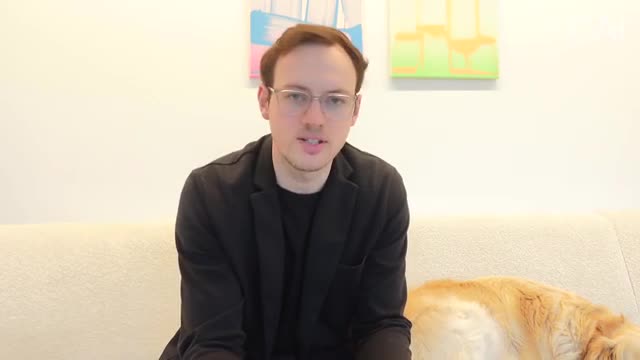
Hello dear readers and subscribers.
Writing for artists is a key thing to do.
In a recent interview I was asked why I think it is empowering for artists to also write about art in general and about their own work.
And in this video I would like to expand on this activity because in reality, it is not a detail or a side quest at all.
Writing can be key to improve your artistic practice, to discover and have a clear vision, and also to communicate it successfully.
First and foremost, let us start with writing as a tool to remember, gather and organize your thoughts.
I strongly recommend everyone to have a little notebook as an artist, your artist notebook, which is where you can write down all ideas or thoughts, or useful other artists you encounter, or interesting works where there is a historical or contemporary, where there is an interesting connection with your work, anything that might be useful in the long run.
Because if we do not write them down, they simply disappear.
Thoughts are very fleeting.
And if we do not crystallize them in text, we lose track of them.
So therefore, one of the most helpful things to do to still have kind of an overview of all these thoughts is by writing them down and occasionally also kind of going through them.
Because then you can actually start to see certain connections between things that inspired you a composition that intrigued you, a film that had an interesting message, perhaps where you feel there is also something that resonates with your practice, but you're not quite sure what just yet.
So you can actually organize all of that and use it when you get to the studio or when reflecting on your artistic practice.
So grab a notebook and start writing down your ideas.
Trust me, it is a game changer.
A second aspect that makes writing a very, very important exercise for artists is the intensity of how you deal with those thoughts.
Thoughts are very intuitive and there's sometimes very subconscious flashes that pop into your mind and they come and go and at first glance they all feel equally valuable.
But when writing and not only writing them down in your notebook, but when you try to put this into a single text so really not only writing down your ideas, but reflecting on them and trying to organize them in a fluent text then you have this different intensity of dealing with your ideas.
You're not just thinking them for a moment, you're not just briefly writing them down, you're really digesting them.
And it's in those moments where, As an artist, you very often have a vague understanding of what a work does for you, or what you're doing in the studio or what your practice is about.
But when you challenge yourself to write that down, you can transform that vague understanding into a clear understanding, can almost discover exactly what drives you by the exercise of writing.
And that is, of course, very exciting because now, because we are more aware of what we do, you can also explore it more consciously or more directly.
So this exercise of writing is really key, and you don't have to be a a tremendous writer to do so.
Try to do this in your own words and definitely avoid at all times using ChatGPT when going through this process.
I'm really afraid that a lot of artists will stop reflecting on their work because they no longer have to write about their work.
ChatGPT can do it, and they will simply give it their vague idea of what their work is about, and ChatGPT will turn it into a vague generative text.
But we will no longer really think about our work if ChatGPT starts doing that role and it will not result into the insights one usually has when writing about one's work.
So avoid ChatGPT for that phase of digesting your work and your ideas.
You can use ChatGPT to have a fluent and correct text at the end of it.
And that's also why our tools first ask the questions and then the prompt can actually result it in a like a polished text that is ready for public use.
But definitely do not resort to yeah, those fake statements based on your vague ideas.
Do the work, think about your work.
It's really, really important.
And then, to conclude, writing is also a stepping stone towards communicating, which is, of course, also very important as an artist.
Sooner or later, in various contexts, you will have to talk about your work or you will have to provide text about your work.
That is inevitable.
Whether it's for an open call that you need to pitch your work, whether it's simply a conversation during an exhibition with a potential collector.
Perhaps it is during a studio visit when a gallery director or a curator is interested in your work.
There are so many instances where you will need to have words to describe your work or to talk about your work.
That doesn't mean we have to pin everything down into words.
You can leave things also open-ended. when talking about your works.
I think this is very important and also a bit of a misconception that these days everything needs to have a very clear and kind of one-dimensional meaning.
I think art is the exact opposite.
But sooner or later, you will be expected professionally to communicate about your work, and then the words need to be there, and the only way for those words to be there is to have written about your work, to have those words ready so you don't stumble when you're being put on the spot.
As well as having an artist biography and an artist statement ready to go that you don't have to write one in a hurry when there is a deadline approaching soon.
So, that being said, to summarize, get yourself a notebook, challenge yourself to do the exercise of writing about your work, to crystallize your vague ideas and to turn them into clear ideas, to truly discover and become aware of your own vision, what drives you.
And three also, have that text in a format that is publicly available, in the form of an artist biography and an artist statement, which the first will be used for your artist website, for instance, and then the artist statement for submissions, for open calls, but also to do a bit more, an in-depth dive on the different facets of your practice, to kind of have the words ready when you're having a talk about your work.
As a result, I also warmly invite you to have a look at our overview page with career advice for artists, where you can find not only these two tools, but also 11 other tools that are very useful for artists, and also a lot of other free resources and services for artists.
Thank you so much for tuning in today.
Feel free to watch our video on 5 things successful artists understand that most don't next.
Support us on Patreon and please consider subscribing to stay posted for more contemporary art.
Bye!