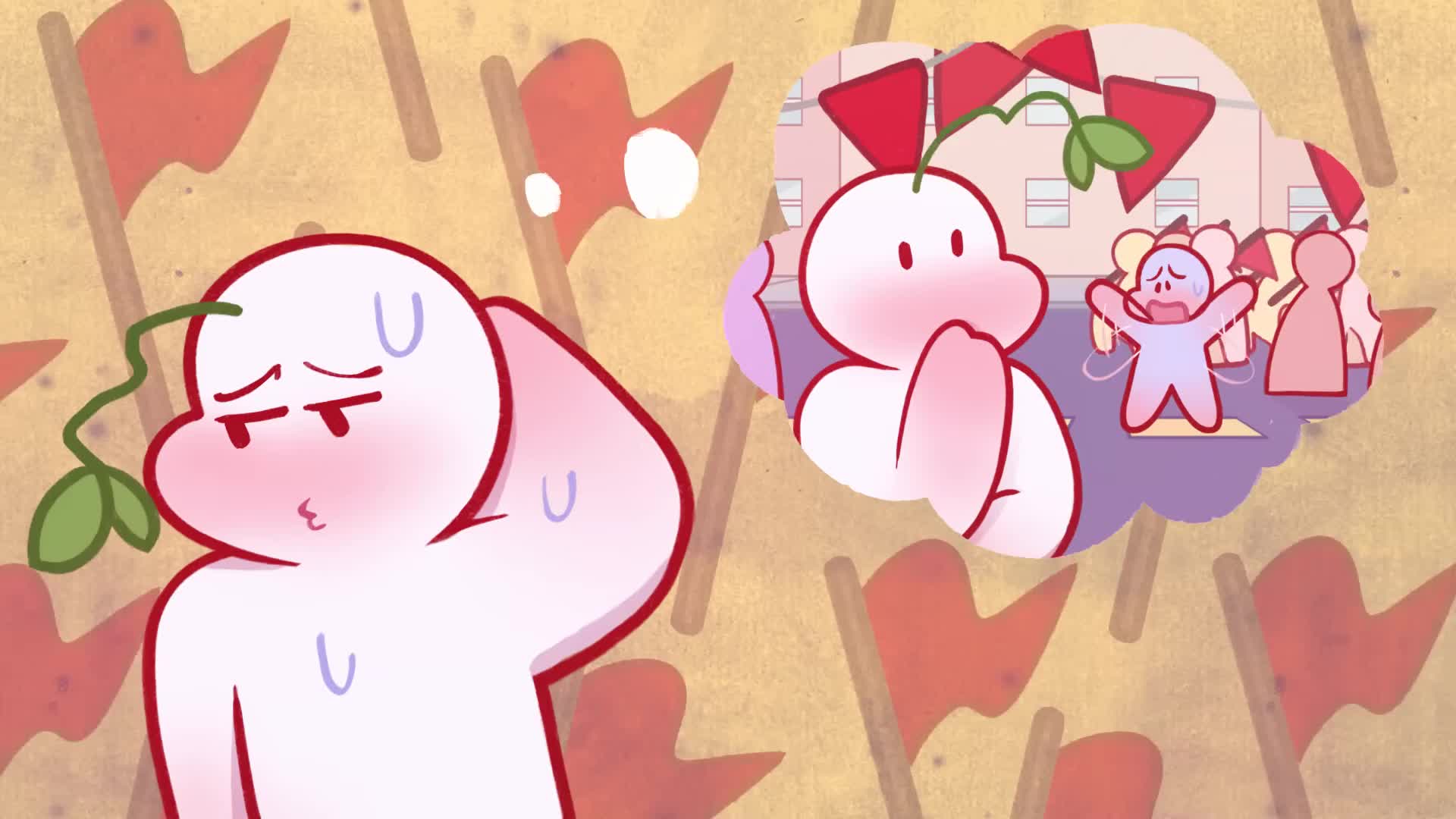
Ever met someone who had so many red flags?
They looked like a walking parade, but somehow you still thought, maybe they're just misunderstood.
Your friends warn you, your brain notices something feels off, but your heart goes no no, you don't understand.
They're different.
And then months later you look back and realize the red flags were basically waving in slow motion.
So why does this happen?
Why does lust sometimes make smart, thoughtful people ignore obvious warning signs?
Today we are exploring the psychology behind why lust makes you ignore the red flags, what's happening in your brain and how to protect yourself when attraction starts moving faster than logic.
Before we begin, we want to share something important.
At Psych2Go, our mission is to make psychology easier to understand so people can better understand their emotions, relationships and mental patterns.
If our videos have ever helped you reflect, learn and feel understood, consider subscribing and helping us reach 15 million subscribers.
In return, we promise to keep exploring topics that are sometimes uncomfortable, sometimes taboo, but very real and genuinely helpful.
Because the truth is, attraction can be powerful, sometimes a little too powerful.
Let's get into it.
One, lust activates the brain's reward system.
When we feel strong attraction towards someone, our brain releases dopamine.
Dopamine is the same chemical involved in things like winning a video game, getting likes on social media or eating your favorite food.
In other words, your brain labels that person as extremely rewarding.
Once that happens, the brain starts focusing heavily on the reward and ignoring information that might interfere with it.
It's similar to when someone becomes obsessed with a new game release.
Even if reviews say it's buggy, even if friends say it's not great, their brain still goes.
I don't care.
I want it.
Lust can create a similar kind of tunnel vision.
Two, the halo effect makes people look better than they are.
When we find someone physically attractive, our brain automatically assumes they have other positive qualities.
We might unconsciously think they are kinder more trustworthy, more intelligent or emotionally mature, even if we don't actually have evidence for those things.
Psychologists call this the halo effect.
It's like when anime introduces a mysterious character with dramatic music and glowing lighting.
Suddenly, everyone assumes they must be deep and complex, when in reality they might just be.
Dramatic attraction can paint people in a much more flattering light than reality.
Three, your brain wants the story to work.
Sometimes, when we feel strong chemistry with someone, our brain starts imagining a future, a relationship, shared experiences, a possible love story.
And once that narrative begins forming, the brain tries to protect it.
Red flags suddenly become misunderstandings, bad timing, or they'll change.
It's like watching a romantic movie, where you already want the main characters to end up together, even when one of them clearly has serious issues.
Your brain starts rooting for the story.
Four, emotional intensity feels like connection.
Lust creates emotional intensity excitement nervousness, Anticipation.
Sometimes people mistake that intensity for genuine compatibility.
But intensity isn't always the same as connection.
Think about action movies.
Explosions and chaos feel exciting, but that doesn't mean the situation is healthy.
Real compatibility tends to feel calmer and more stable.
Lust often feels dramatic and overwhelming.
Five, scarcity makes people seem more valuable.
Psychology shows that when something feels rare or difficult to obtain, we often value it more.
This is called the scarcity effect.
If someone is emotionally distant, unpredictable or inconsistent, it can sometimes make them feel more desirable.
The brain interprets unpredictability as something valuable to chase.
It's similar to rare items in video games.
If something is hard to obtain, people assume it must be valuable.
But in relationships, scarcity can sometimes just mean incompatibility.
Six, friends often see the red flags first.
Have you ever noticed that your friends can often spot warning signs long before you do?
That's because they're not experiencing the same emotional chemistry.
Without dopamine influencing their perception, they can evaluate the situation more objectively.
It's like watching someone else play a difficult level in a game.
The player might be overwhelmed, but someone watching from outside can easily say, just go left.
Outside perspectives can be extremely valuable.
Seven, lust can temporarily silence intuition.
Most people actually sense red flags early on, but strong attraction can make it easier to dismiss those instincts.
You might feel a moment of discomfort, then immediately rationalize it away.
Maybe I'm overthinking.
Maybe I'm being unfair.
Maybe it's just a bad day.
But intuition often notices patterns before logic does.
Ignoring those signals repeatedly can lead to bigger problems later.
Here's how to protect yourself.
Lust itself isn't bad.
Attraction is a normal and healthy part of human relationships.
But when attraction becomes overwhelming, it can help to slow things down.
Ask yourself questions like, do their actions match their words?
How do I feel after spending time with them?
Do people I trust notice concerns?
Healthy relationships tend to grow through consistent trust and respect, not just intense chemistry.
If you've ever ignored red flags because of attraction, you are not alone.
Our brains are wired to chase excitement and reward.
But understanding these psychological patterns can help us recognize when emotions are moving faster than reality.
And sometimes the healthiest thing we can do is pause long enough to see the situation clearly.
If this video helped you understand your relationship patterns a little better, You might also enjoy our videos on lust versus love or our compatibility quizzes that explore how emotional connections develop.
You can also explore psychology tools and resources on psych2goshop, which helps support the work we do here.
And if you'd like to help us continue creating psychology content like this, consider subscribing and helping us reach 15 million subscribers.
Because understanding the mind is one of the most powerful ways to build healthier relationships.
Thanks so much for being here and until next time, take care.