

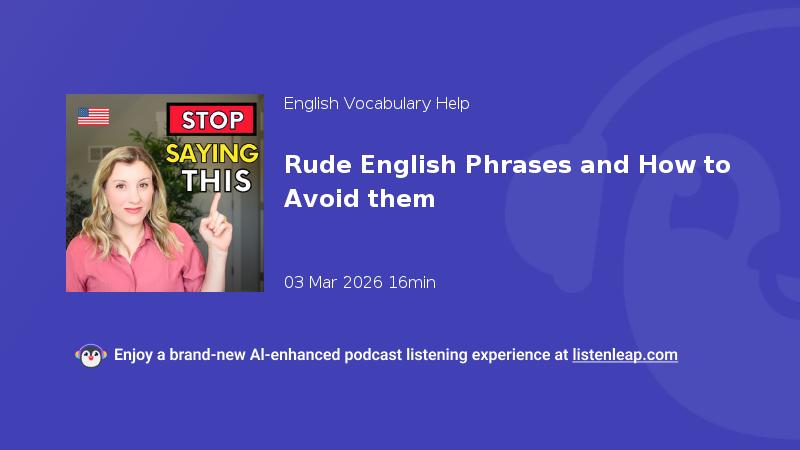
[영어를 구사할 때 피해야 할 25가지 무례한 표현과 대체 전략]-[Rude English Phrases and How to Avoid them]



📋 Summary
영어 대화에서 무례함을 피하고 소통을 원활하게 만드는 법
영어는 문법적으로 완벽하더라도 상황이나 어조에 따라 상대방에게 무례하게 들릴 수 있는 언어입니다. 본 가이드에서는 원어민들이 대화 중에 '적신호(red flags)'로 간주하는 25가지 표현을 살펴보고, 어떻게 하면 더 정중하게 의사를 전달할 수 있는지 알아봅니다.
1. 무관심과 냉담함을 드러내는 표현들
대화 중 상대방의 의견을 무시하거나 거부하는 듯한 태도는 관계를 악화시킵니다.
- Whatever (어쨌든/상관없어): 매우 무례하고 냉담하게 들릴 수 있습니다. 대신 "Okay", "I see", 혹은 **"Whatever works"**라고 표현하여 상대방의 의견을 존중하는 태도를 보이는 것이 좋습니다.
- I don't care (상관 안 해/관심 없어): 상대방의 제안에 대한 흥미가 없음을 직접적으로 드러냅니다. 대신 **"It's up to you"**나 **"I don't really have a strong opinion on this"**와 같이 부드러운 표현을 사용하세요.
- That's not my problem (내 알 바 아냐): 공감 능력이 전혀 없는 표현입니다. 대신 "I'm not able to help right now" 혹은 **"I'm not the right person to ask"**와 같이 정중히 거절하는 것이 바람직합니다.
2. 상대를 자극하는 지시형 표현
상대방의 감정을 진정시키려 할 때 오히려 화를 돋우는 표현들이 있습니다.
- Calm down / Relax (진정해/릴랙스해): 이는 상대방을 다그치는 느낌을 주어 오히려 더 화나게 만듭니다. 대신 **"Let's take a moment and we can come back to this"**와 같이 잠시 쉬어가는 제안을 하거나, **"It's okay, I can handle some of it"**처럼 상대의 짐을 덜어주는 방식으로 배려하십시오.
3. 수동 공격적이고 오만한 표현
상대를 깎아내리거나 은연중에 비난하는 표현들은 피해야 합니다.
- Do whatever you want (하고 싶은 대로 해): 이는 '내 방식대로 하지 않아 불만이다'라는 수동 공격적인 의미를 내포합니다. 대신 **"I trust your judgment(당신의 판단을 믿어요)"**라는 표현을 사용하여 상대방에게 신뢰를 주는 것이 훨씬 전문적입니다.
- You should know that already (이미 알고 있어야지): 상대를 가르치려 들거나 무안을 주는 표현입니다. 대신 **"Let me give you a refresher(기억을 되살려 드릴게요)"**라고 말하며 부드럽게 설명을 제공하는 것이 좋습니다.
- That's obvious (그건 당연한 거잖아): 상대를 어리석게 느끼게 만드는 표현입니다. 대신 **"Yes, exactly, but..."**과 같이 상대의 말을 인정하면서 자신의 의견을 덧붙이는 방식을 취하십시오.
4. 비난과 거절의 완곡한 표현
직설적인 비난은 대화의 단절을 가져옵니다.
- That's your fault (네 잘못이야): 비난보다는 **"Let's figure out what went wrong here"**라고 말하며 함께 해결책을 찾는 태도를 보이세요.
- Why would you do that? (왜 그렇게 했어?): 판단적인 어조 대신 **"Can you walk me through your thinking?(어떤 생각으로 그렇게 했는지 설명해 줄 수 있나요?)"**라고 물어봄으로써 상대의 논리를 이해하려는 노력을 보여야 합니다.
- No offense, but... (기분 나쁘게 듣지 마): 이 말을 하는 순간 상대는 이미 기분이 나빠질 준비를 합니다. 이 표현은 아예 제거하고, 샌드위치 화법(칭찬-비판-칭찬) 등을 통해 건설적인 피드백을 주는 것이 좋습니다.
5. 결론: 공감과 소통의 기술
"You're wrong(틀렸어)" 대신 **"I'm seeing it a little differently(나는 조금 다르게 생각해요)"**를, "That's not my job(내 일 아냐)" 대신 **"I'm not the person that handles this(그건 제가 담당하는 업무가 아니에요)"**를 사용하는 것만으로도 대화의 온도는 완전히 달라집니다. 언어는 상대방의 감정을 존중하는 'Softening(완곡한 표현)'이 핵심임을 기억하십시오.
🎯Key Sentences
1
I trust your judgment.
당신의 판단을 믿습니다.
2
That's not my problem.
그건 제 알 바 아닙니다.
3
I don't really have a strong opinion on this.
이 문제에 대해서는 딱히 이렇다 할 의견이 없어요.
4
Do whatever you want.
하고 싶은 대로 하세요.
5
You should know that already.
그건 이미 알고 계실 텐데요.
📝Key Phrases
1
whatever works
뭐든 괜찮아요.
2
take a moment
잠시 시간을 내어 보세요.
3
I trust your judgment
당신의 판단을 믿습니다.
4
refresh your memory
기억을 되살려 보세요
5
walk me through your thinking
어떤 과정을 거쳐 그런 결론을 내렸는지 설명해 주시겠어요?
📖 Transcript
Have you ever been in an English conversation?
And you're not sure, but you think that the person you're speaking to is being rude.
Or you say something that's completely correct, it's grammatically correct, but the person seems suddenly offended, or they come off really cold.
In this lesson, I'm going to teach you 25 phrases that are rude even if they're grammatically correct, so that you can know if there are some red flags in the conversation, if somebody is annoyed or offended, or you can make sure that you don't accidentally say these phrases to a native speaker. to avoid the phrases in this lesson and if you want to learn more about this lesson and any of the lessons on my channel make sure to visit englishwithkayla.com and you can join my monthly membership there all right let's get started with this lesson let's say you're trying to decide with your friend or your co-worker what time you're gonna have lunch and you're making suggestions you're saying we could go at noon we could go at 12 30 if you're free we can go all the way at one o'clock and they say yeah whatever whatever Whatever, whatever.
Now this tone here.
It can come off as very casual, like okay, or it can be super dismissive and it can show that they're annoyed.
ListenLeap이 실제 문맥에서 학습하도록 이끌어줌
🎨
흥미로운 콘텐츠
🌍
실제 자료
📱
언제든 듣고 보기