Picture this it's Friday night.
You're already home.
Shoes kicked off by the door, lights dimmed just enough.
Your phone is face down on the table, blissfully quiet.
Your breathing slows, your body finally unclenches.
There's nowhere you need to be and no one waiting on a reply.
What does that sound like to you?
Boring, lonely, or the perfect way to spend your weekend?
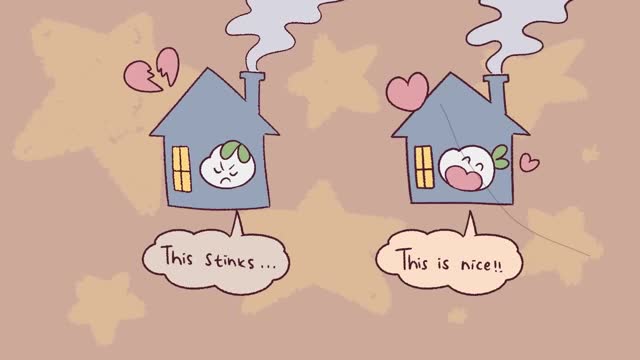
To some people, staying at home does sound boring or lonely, but if you're someone who loves being at home, we are here to tell you that it doesn't mean you're lazy or antisocial, and it isn't a flaw and it isn't something you need to fix.
There's a psychological reason staying home feels so good.
Watch till the end, because it might surprise you.
Think about this.
Some people feel energized after a long day of social plans.
They want dinner, drinks, maybe another event.
Others feel completely drained after just one outing.
Their body is already craving quiet, familiar space.
Neither is wrong.
They just have different thresholds for stimulation.
Psychology calls this optimal arousal theory.
If you're someone who loves staying home, your nervous system reaches its limit faster, not because you're fragile, but because you're sensitive to input.
Sounds conversations expectations, social cues even enjoyable ones all require processing, and over time that adds up.
Home becomes the place where nothing is demanded of you, where your system can finally drop out of monitoring mode and return to baseline.
That's why you love it so much.
It's a safe space for you to regulate your nervous system when the world outside becomes too overstimulating.
And there's another layer to this that has nothing to do with personality labels.
At home, you control your environment, the volume, the lighting, the pace, the rules.
Out in the world, you don't.
For people with sensory sensitivity, anxiety or a history of emotional unpredictability, that lack of control isn't just uncomfortable, it's draining.
The nervous system stays alert, scanning for what might happen next.
But at home, there is no scanning, no adjusting, no performing.
Your body reads that as safety.
Your nervous system is naturally wired to crave it.
And there's a common misconception that staying home means you're not doing much, but research suggests the opposite.
People who enjoy solitude tend to be highly introspective, creatively inclined, strong problem solvers.
Low stimulation environments give the mind space to wander, connect ideas, and process emotions.
This is where creativity incubates.
Not in constant motion, but in stillness.
That's why inspiration often strikes late at night.
Why we have so many of our best ideas in the shower or slow mornings.
Bring us a lot of clarity.
A lot of your best internal work happens at home.
Of course, preference isn't the whole story for everyone.
For some people, staying home is shaped by social anxiety, past emotional wounds, depression that quietly drains motivation.
In those cases, home becomes both a refuge and a shield.
And it's important to say this without judgment.
Your system learned what it needed to survive.
So take some time to ask yourself do you stay home because it restores you or because leaving feels heavier than it should?
From the outside, they can look the same, but one is about rest and enrichment.
The other is about protection and self-preservation.
Psychology suggests that if you love staying home often, you likely can sit with your feelings without needing to distract yourself.
Protect your time and energy instead of giving it away easily.
You enjoy being alone and you don't need constant reassurance.
And you enjoy deep conversations and observing more than performing.
Simply put, you're not easily bored because you have a rich inner world that keeps you occupied.
That means you're creative, introspective and you need things on a deeper level than most.
You don't avoid stimulation because you can't handle it, but because you don't need it.
You can give plenty of that to yourself at home.
In a culture built around constant output and visibility, this can look strange, but it's not a deficit.
It's just a different way of relating to life, one that values depth over noise and meaning over momentum.
And that's beautiful.
There are a few assumptions that tend to follow people who prefer staying in.
They're usually said casually, but can add up.
They say things like you're antisocial, or that you must be lonely, or that you're avoiding life instead of living it.
But liking solitude doesn't mean you dislike people.
It just means you're selective.
You care about connection, but only when it's real, not forced or performative.
And enjoying your own company doesn't mean something is missing, could mean the opposite you have a sense of self that doesn't dissolve the moment no one else is around.
Modern life is loud.
Information never stops.
Notifications never end.
Burnout is normalized.
For many people, staying home isn't a personality quirk.
It's a response, a way of protecting attention, energy and emotional bandwidth.
Home becomes the one place where the nervous system doesn't have to brace itself, And once you've experienced that kind of relief, it's hard to give up.
But here's where we ought to be careful.
The same habits that restore you can also slowly narrow your world.
If staying home leaves you feeling grounded, clear and more yourself, that's peace.
But if it leaves you feeling numb, disconnected or smaller over time, that's something else when staying home is a genuine preference, not a coping mechanism.
It offers quiet but meaningful benefits.
It gives your nervous system time to reset.
It protects your attention from constant fragmentation.
It creates space for creativity and reflection and emotional processing.
So loving being at home doesn't mean you're disconnected from the world.
For many people, it means you're deeply connected to yourself.
When staying home is intentional, it becomes a strength, a way of living that values depth, self-awareness and emotional safety in a culture that often rewards the opposite.
If this video made you feel seen, helped you understand yourself a little bit better or put words to something you've always felt but couldn't explain, let us know by liking sharing, subscribing and maybe leaving a comment for others to relate to.
Thanks so much for watching and we'll see you soon.