[폼페이의 시간을 초월한 시선: ‘사포’로 불리는 고대 프레스코화의 미학]-[Portrait of a Young Woman (known as Sappho) from Pompeii]



📋 Summary
폼페이와 헤르쿨라네움의 예술적 생존
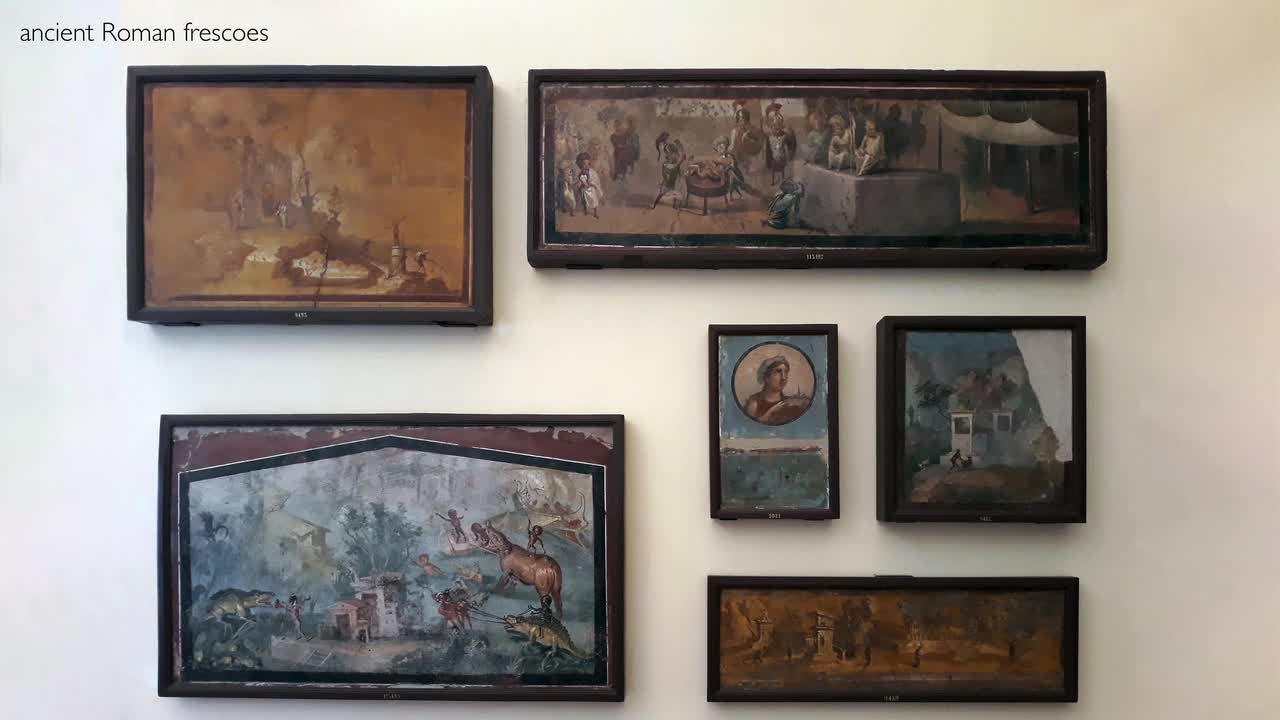
나폴리 국립 고고학 박물관에 전시된 수많은 프레스코화는 서기 79년 베수비오 화산 폭발로 인해 화산재 아래 묻혔던 폼페이와 헤르쿨라네움의 찬란한 유산이다. 이 그림들은 회화라는 매체가 청동 조각이나 대리석, 도자기보다 훨씬 'fragile(취약한)'하다는 점을 고려할 때, 역설적으로 화산재라는 매개체를 통해 우리에게 전달된 매우 귀중한 자료다. 만약 이 작품들이 보존되지 않았다면, 우리는 당시 로마 시대 회화의 실체를 거의 알지 못했을 것이다.
시간을 가로지르는 여인의 응시
박물관의 수많은 작품 중에서도 특히 관람객의 시선을 사로잡는 것은 벽에서 떼어낸 작은 사각형 프레스코화 속의 한 여인이다. 그녀는 마치 'looking back at me through time(시간을 넘어 나를 되돌아보는)' 듯한 강렬한 존재감을 뿜어낸다. 그리스·로마 신화나 일상을 묘사한 다른 작품들과 달리, 이 여인은 정면을 응시하며 관람객과 직접적인 시각적 교감을 나눈다. 그녀의 입술에 살짝 닿아 있는 'stylus(스타일러스, 필기구)'와 왼손에 든 'wax tablet(밀랍판)'은 그녀가 무언가를 쓰기 위해 깊이 사유하고 있음을 암시한다. 이 장면은 고대인과 현대인의 사고를 연결하는 'mirroring(거울 효과)'을 창출하며, 수천 년의 간극을 넘어선 지적 공감을 불러일으킨다.
예술적 기법과 상징성: 사포인가, 모델인가?
고고학자들은 이 작품이 실존 인물의 초상화라기보다는 'a type of figure(전형적인 인물상)', 즉 사유하고 글을 쓰는 여성의 표준화된 표현이라고 분석한다. 그녀가 누구인지 명확히 밝혀진 바는 없지만, 고대 그리스 시인 'Sappho(사포)'라는 이름으로 불리는 이유는 그녀가 풍기는 지적인 분위기 때문이다. 금색 머리망과 귀걸이, 빛을 받는 아름다운 곱슬머리는 당대 여성의 우아함을 보여주지만, 이는 특정 개인을 넘어선 상징적 의미를 담고 있다.
빛과 그림자를 통한 3차원적 구현
작가는 'roundel(원형 틀)'이라는 독특한 구도를 사용하여 여인을 더욱 돋보이게 한다. 평범한 회색 배경 속에서 작가는 'light and shadow modeling(명암법)'을 극대화하여 평면적인 그림에 3차원적인 생동감을 부여했다. 높은 곳에서 비치는 빛은 그녀의 얼굴뿐만 아니라 손목, 손가락, 스타일러스를 쥔 손, 그리고 그녀가 걸친 망토의 주름까지 세밀하게 묘사한다. 이러한 빛의 처리는 그녀가 마치 지금 이 순간 우리 곁에 살아있는 듯한 'present(실재하는)' 느낌을 준다.
결론: 파괴 속에서 발견한 보존의 의미
이 프레스코화는 세월의 'ravages of time(시간의 횡포)'을 견뎌냈음에도 불구하고, 여전히 그 당시의 예술적 정수를 간직하고 있다. 폼페이의 화산재는 파괴의 도구였지만, 동시에 고대 회화의 흔적을 미래로 전송하는 타임캡슐이 되었다. 우리는 이 그림을 통해 고대 로마인들의 삶과 사고방식, 그리고 그들이 추구했던 미학적 가치를 시공간을 초월하여 마주하고 있다.