
[The Silent Muse: Reflections on the Portrait of 'Sappho' from Pompeii]-[Portrait of a Young Woman (known as Sappho) from Pompeii]
📋 Summary
The Silent Muse: Reflections on the Portrait of 'Sappho' from Pompeii
Introduction: A Glimpse Through Time
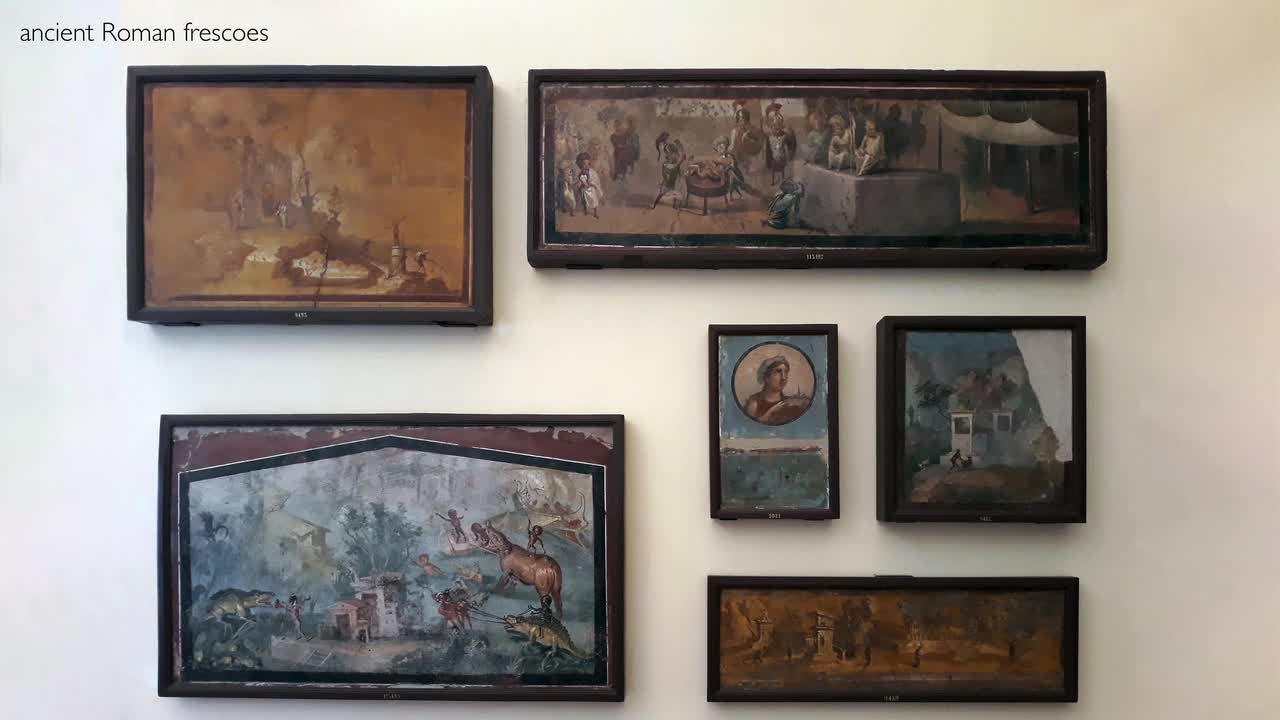
Standing within the National Archaeological Museum in Naples, one is immediately struck by a collection of frescoes salvaged from the ruins of Pompeii and Herculaneum. Among these, a small, square fresco—often colloquially known as "Sappho"—commands particular attention. This portrait, depicting a woman in a moment of contemplation, serves as a bridge across millennia, inviting the modern viewer into a silent dialogue with the past. The painting, likely created in the decades preceding the catastrophic eruption of Mount Vesuvius in 79 CE, captures a fleeting moment of intellectual activity that feels remarkably present even today.
The Anatomy of Contemplation
What distinguishes this portrait from the mythological scenes and daily life depictions common in the museum’s collection is the subject's direct engagement with the viewer. She is captured with a "pen, her stylus, just touching her lips," an intimate gesture that signals she is "thinking about what she's about to write." Her left hand holds a "wax tablet," grounding the image in the tangible reality of ancient literacy. This "mirroring that's going on across millennia" is profound; as she pauses to deliberate, the viewer is invited to pause and reflect alongside her.
The Debate of Identity and Representation
Despite her evocative presence, archaeologists caution against viewing this as a literal likeness. The subject wears a "gold hairnet and gold earrings" with "lovely curls that are catching the light," yet experts suggest this is not a specific portrait of a real individual. Instead, it is interpreted as a "type of figure, a sort of a standard representation of a woman in the act of thinking and writing." While she has been assigned the name of the ancient Greek poet "Sappho," the truth remains elusive, as "we have no idea whether it's really Sappho or not." This ambiguity, however, does not diminish the power of the image; it elevates her to a universal symbol of the creative mind.
Artistic Mastery: Light, Shadow, and Form
The artist’s skill is evident in the composition and technical execution. Encased within a "roundel" against a "plain gray background," the subject is pushed to the forefront, demanding undivided attention. The painter employs "light and shadow modeling" to achieve a sense of depth, making the woman appear "three-dimensional and present." The interplay of light is meticulously rendered, visible not only on her face but also on her "right wrist," her "fingers," and the folds of her "cloak." This careful attention to light from a "high vantage point" reinforces the realism that makes the painting so captivating.
The Fragility of Memory and the Legacy of Vesuvius
Finally, the existence of this fresco is a testament to an ironic historical accident. Painting is inherently "much more fragile than bronze sculpture or marble or even ceramics." Under normal circumstances, such works would have vanished entirely. However, because Pompeii and Herculaneum were "buried by ash" following the eruption of Vesuvius, these delicate treasures were shielded from the total destruction of time. Without this tragic event, "we would have very little idea what Roman painting looked like at this period." The "ravages of time" have left their mark, yet the survival of these frescoes allows us to witness the artistic sophistication of a lost world, reminding us that the preservation of human history is often as precarious as it is precious.
Deep Learning with ListenLeap


