Every year, people leave their doctor's office with an unusual prescription.
Instead of traditional treatments like a pill, shot or cream, they're sent home with a recommendation for light, or more specifically, light therapy.
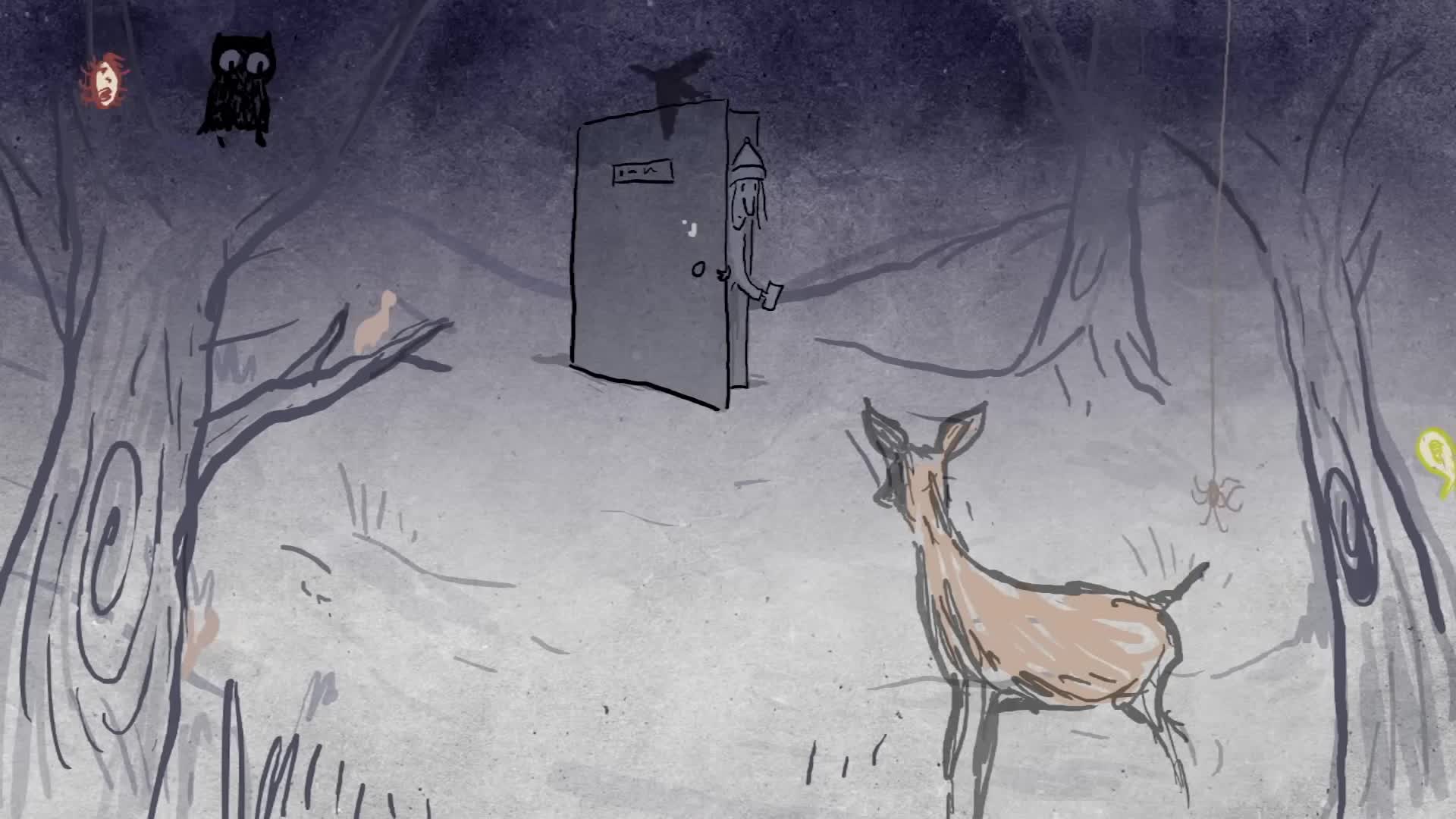
To understand how this works, let's step out of the office and into this valley.
Here, as winter approaches, shorter days spark a cascade of changes within the brains of its inhabitants.
As a result, groundhogs retreat to their burrows for hibernation, weasels' coats turn from brown to white and birds cease their singing.
And scientists are finding that seasonal behavioural changes similarly happen for some humans.
Around 1 of people experience seasonal affective disorder or SAD, a mood disorder marked by episodes of depression that recur at certain times of the year.
Most SAD cases appear during the fall and winter months, when days are shortest.
And while many people experience mild changes in energy or appetite during winter, SAD is much more serious.
Its symptoms largely overlap with non-seasonal depression and can include pervasive feelings of sadness, loss of interest in activities, unshakable fatigue, dramatic changes in sleep and weight, and suicidal thoughts.
There's still a lot we don't understand about SAD, but researchers have two main theories on what may trigger it, both of which involve changes to our body's daily rhythms, also known as circadian rhythms.
When sunlight reaches our eyes, light-sensitive cells in the retina send a signal that travel along the optic nerve to our suprachiasmatic nucleus.
This part of the brain is sometimes referred to as our biological clock, because it regulates our daily rhythms of alertness, body temperature, hormone production and cell growth.
Each night after sunset, this biological clock signals the release of melatonin, a hormone that triggers sleep.
For most people, this melatonin release is consistent, regardless of the time of year.
However, one theory posits that this isn't the case for some people with SAD.
Instead, as the days get shorter, their biological clocks signal melatonin to be released for longer each night.
This kind of circadian change isn't entirely unheard of.
Weasels and groundhogs change their appearance and behaviour in winter due to a prolonged release of melatonin.
But it's unclear why this would happen in certain humans.
One idea is that, unlike most people, some individuals with SAD have retinas that fail to adjust to be more sensitive to light in winter.
A second hypothesis proposes that SAD isn't related to the duration of melatonin release, but rather to a complete shift in the timing of circadian rhythms during winter.
This could manifest as a phase advance or a phase delay .
A phase delay could explain why many people with SAD struggle to wake up in the morning.
Essentially, their hormones are telling them that it's still nighttime.
But since it's unclear how any of these circadian changes could cause such significant shifts in mood, most researchers believe other factors are at play.
For example, as with non-seasonal depression, people with SAD are more prone to repetitive negative thinking called rumination.
They also tend to be more pessimistic about wintertime.
So much so that some experts believe living in cultures that embrace the winter season may offer some protection against SAD.
And while there is no single SAD gene, there are multiple genes that put you at higher risk, which may be why SAD can run in families.
Another mystery is that some people with SAD experience the opposite seasonal phenomenon summertime depression.
This may be triggered by too much light, but perhaps also heat and humidity.
Thankfully, despite these mysteries, doctors do know how to help with this condition.
Treatments used for non-seasonal depression, like antidepressants and cognitive behavioral talk therapy, can improve SAD's symptoms and prevent future episodes.
There's also light therapy, which typically involves spending 30 minutes or more each morning using a device that emits full-spectrum light while filtering out harmful UV rays.
Light therapy should be started under the guidance of a healthcare expert, as it can be difficult to figure out dosage and timing, and it can cause side effects.
But with regular use it's thought to help shift circadian rhythms back to their sunnier, summer-like position.
Keep feeding your mind while learning how it works.
Subscribe to our channel or watch these videos.
Your brain will thank you.