It's pretty tear-inducing just how much can go wrong in love because we fail to master a basic sounding, hugely important skill that would probably have been in place if our childhoods had given us the right experience.
That is, the art of saying how we feel relatively close to when we actually feel it, in a way that can be heard, with gentleness and self-possession, before our affections are irreparably affected.
In a better arranged world, we would have been trained to speak up from an early age.
Alongside lessons in physics and geography, we would have learnt in our emotional communication classes exactly how to speak about our most intimate needs without causing upset.
The teacher would have told us to begin with a fundamental conviction.
Our needs are legitimate.
For example, there isn't anything wrong with us for not liking garlic or not wanting to go on exhausting country walks or not being thrilled by horses.
These aren't problematic positions, they are just us.
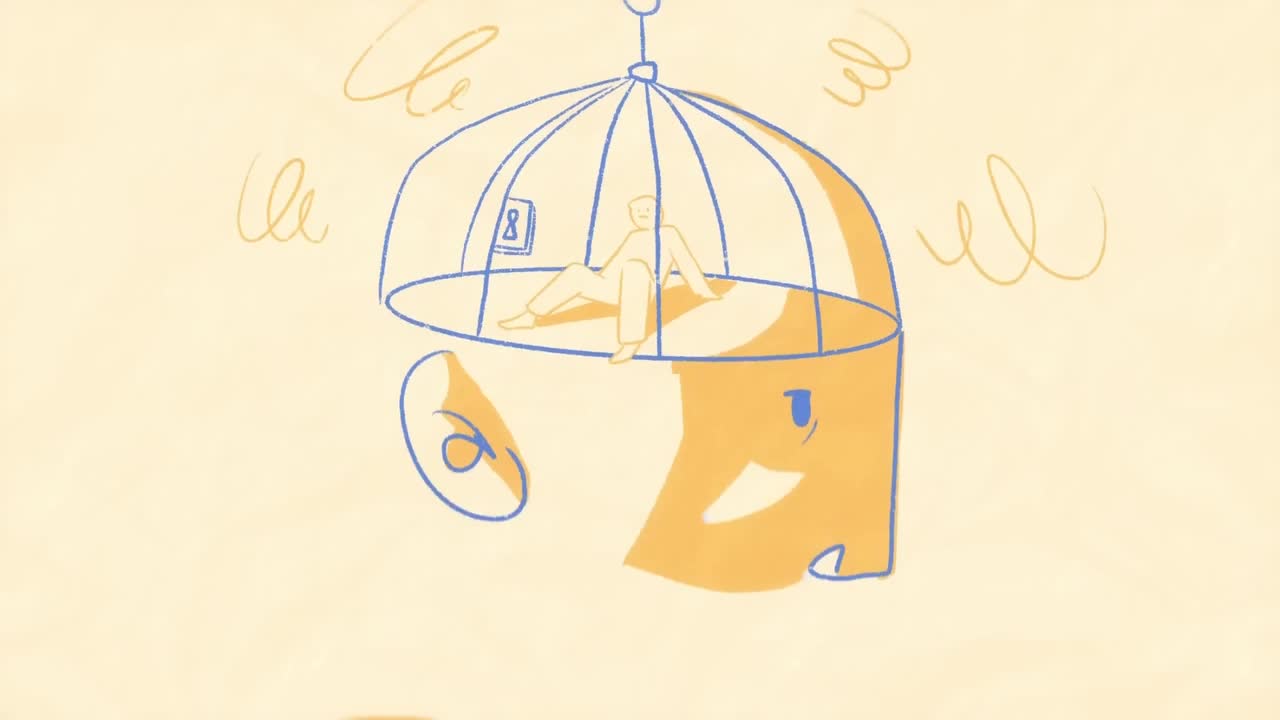
At the same time, it isn't fair or kind to say nothing at all to other people and then, when we are at the end of our tether, to begin to shout our needs, to act out our rage, to blame them for not being able to read our minds – minds which we've never taken care to open up to them.
It's incumbent on other people to listen, of course, but it's equally incumbent on us to speak.
We have to find our way to a poised manner of imparting difficult messages.
There would, in this ideal school, be competitions playfully testing us on how to handle the most awkward messages in the most effective ways.
There would be prizes for the victors and a marshalling of the best competitive spirit.
Examples of questions might include, You're frightened by your partner's religious convictions.
What should you say to them?
You're uncomfortable by how close they are to their sister.
What should you say?
They think you adore their cooking, but you don't really.
What should you say?
To prepare for these competitions, there would be modules on the constituents of successfully phrased complaints.
Firstly, start with reassurance.
I love you a lot.
There's just this little thing that.
Please know that I'm only speaking because of how much I care about you and about us.
My respect for you is boundless.
I wouldn't be here otherwise.
It's just that there is this thing.
State your position with a thorough conviction of your right to speak.
For example, there's an issue i have about sleep, or for me, poetry has always been a business of or.
I know most people don't see eye to eye with me on this, but give them room to disagree.
They don't have to adopt exactly your position, they just have to acknowledge the differences with grace.
You aren't looking for perfect alignment, only good enough understanding.
It's fine that we might not be on the same page or I know you can't agree with me on this totally but hopefully.
Fourthly, once we've done all this, it should work and if it doesn't, if the other person gets furious or starts to blame us, we've done ourselves an enormous favour.
We've actually caught a problem early and we must with sadness but also haste remove ourselves from the situation and look elsewhere.
Someone who has no space for our politely worded complaints cannot, whatever qualities they may have, be a person for us.
So we might say something like it's been a pleasure to get to know you to this point.
But I don't think we'd be doing either of us a favour if
If all this matters so much, it's because too many relationships founder on the basis that someone loses their tongue.
There is a limit to how long we suffer in silence before love goes cold.
We can't keep having sex in a way that makes us feel uncomfortable before we go off sex entirely, or we can't keep going sailing until we despise them for making us tired and sunburnt.
We need to catch problems while there is still some goodwill left.
It can seem sometimes, as though the enemy of love is being difficult, that in order to be a good partner, we shouldn't introduce too many discordant needs.
But with time, what we stand to realise is that it's not being able to speak one's needs.
That's the real enemy.
We are allowed to be as complicated as we are so long as we can explain to the other person how the world looks through our eyes.
We don't have to have so-called normal sleeping patterns or normal tastes in sex or normal views about animals.
What we need is a skill at taking our partner into our world so they can understand that we are at once good people and different people.
We need a profound conviction that it is entirely possible to be ourselves and to be loved, so long as we have spoken gently but clearly, and that we won't accept anything less of them or of ourselves.