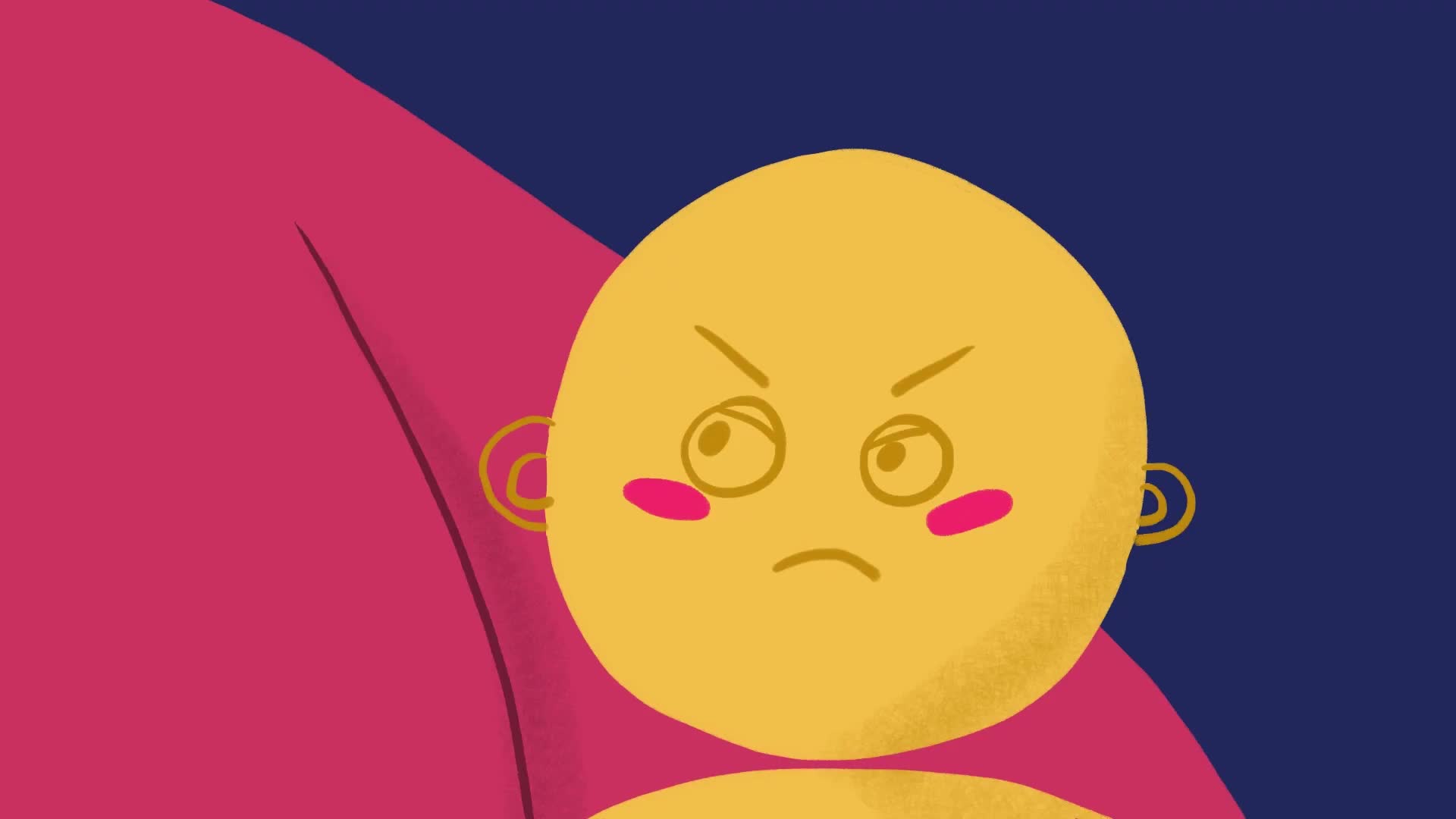
One of the stranger but more powerful discoveries of psychotherapy is that the average baby firmly believes it has two mothers.
Mother one is kind.
She comes when it calls, she gives it milk as soon as it needs it.
She is sweet-natured and generous, wondrous and eminently deserving of love.
But then there's another mother, a far more challenging and terrifying proposition.
Whom we can call mother to
And she sometimes doesn't give baby milk exactly when it wants it.
She occasionally fails to interpret its needs.
She can misjudge the temperature of the water at bath time.
She has friends who come round and distract her and a phone that rings.
She gets it wrong.
Babies are creatures of intense emotion.
To mother one, the baby directs deep and boundless love.
To mother two, it gives pure and unalloyed hate.
It wants to scream, chew her up and put her in the bin forever and ever.
With time, and by now the baby might be a toddler, a shocking realisation is made.
Despite evidence to the contrary, it emerges that mothers one and two are in fact the very same person.
The mother who can, at one moment, be completely delightful and gratifying is, it appears, the same mother who, at another moment, is profoundly enraging and enervating.
This definitely isn't common sense and it takes a good long while to digest such a sobering notion.
Indeed, it's such a wounding and complicated thought.
Psychotherapy tells us that many of us don't manage to accept it properly until late on in adulthood, after we've caused ourselves and others a lot of pain.
For years, we can be inveterate dividers.
Like babies, we also decide that good and bad, pleasing and frustrating cannot exist within the heart of a single decent person.
In the early days of a relationship, we are certain that we've met lover one, a delightful being who tells us kind things on our initial dates, someone with whom we might go to Venice, who understands us completely, whom we want to marry and set up home with,
But then, somewhere along the way, this person seems to give birth to a body double, someone with their exact height and width, with the same eyes and hairstyle, who occasionally sneaks into the room while we're not looking and whom we might turn lover to.
And this person is a much less enchanting soul.
They leave their wet towels on the bathroom floor.
They have three annoying friends.
They don't respect our hobbies.
They say really a bit too often.
For a while, just like an enraged baby.
We decide that the best place for lover two is at the bottom of the bin, which will mean letting go of their twin as well.
But on the way to telling them it's over, we may be struck by a more nuanced ambivalent, yet ultimately liveable idea.
That lovers one and two are, in spite of all the signs to the contrary, the same person under the influence of different moods and circumstances, and that good and bad stand in a complex relationship within anyone and that perfect people do not exist.
These are sad thoughts, in many ways tragic ones even, and we may kick against them for an understandably long time, hopping from one partner to another while we do so.
But eventually we may learn to apply to other people the same degree of pessimistic generosity we give ourselves.
We might allow them to be, though we dearly wish they weren't sometimes as wicked flawed, disappointing and silly as we know we are.
We can eventually recognise that there is something yet more important than finding a lover who never lets us down.
That is, a lover who exists.
A lover who is real.