NPR.
This is The Indicator from Planet Money.
I'm Waylon Wong here with friend of the show, Nate Hedgie from the public radio podcast Outside In.
Hey, Waylon.
Hello.
Hey, you are a fish fan, right?
The food, not the jam band, of course.
I like the fish food ice cream.
I do like fish generally, yes.
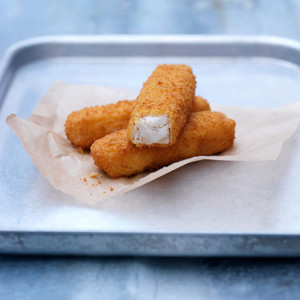
So if you're in a grocery store grabbing a bag of frozen fish sticks for the kids, or maybe a can of – Yeah, or yourself,
Or maybe a can of pink salmon, you might see a label that says product of China.
You toss it in the cart.
You think nothing of it.
But if you follow those fish sticks through the maze of international shipping lanes and processing plants – you might find that they weren't actually caught in China, but instead Russia.
And those fish fingers are helping fund the Kremlin's war in Ukraine.
That war entered its fifth year this week.
Today on the show how Russia has dodged import bans to keep selling billions of dollars worth of seafood every year.
The U.S. has been trying to stop it, but how successful has it really been?
This message comes from Capella University.
You know that feeling when there's a spark building inside you, that you were meant for more?
That's your own drive pushing you towards what's next.
Capella University gets that.
With their FlexPath learning format, you can set the pace and earn your degree without putting life on pause.
You've built experience and know what you're capable of.
Now, this is your time to turn that momentum into more.
The only real question is, what can't you do?
This message comes from NPR sponsor Verizon Business.
If you have a small business, you could be wasting money on your business mobile plan, paying for stuff you don't actually need.
But with my biz plan from Verizon Business, you can choose exactly what you want and only pay for what you need for your business.
Visit verizon.com slash business today to learn how you can make every dollar count.
Waylon, do you remember that SNL skit from almost 20 years ago when Amy Poehler was playing Hillary Clinton and Tina Fey was playing Alaska governor and vice presidential nominee Sarah Palin?
Yes, the golden age of political impersonations.
I believe that diplomacy should be the cornerstone of any foreign policy.
And I can see Russia from my house.
Now, obviously, Sarah Palin could not see Russia from her house in Alaska.
But it is true that Russia and the United States are neighbors, sharing the vast icy waters of the North Pacific.
And in those waters swim one of the world's most popular fish, pollock.
If you're eating imitation crab or maybe a filet-o-fish at McDonald's, you are eating pollock.
And while more than half of it is caught on the American side of the North Pacific, the rest is caught on the Russian side.
Those pollock help drive that country's multi-billion dollar seafood industry, along with other fish like herring, cod and pink salmon.
And that industry has raised vast sums of money for the Kremlin through taxes and export duties.
And at least one of the seafood industry's top titans, has close ties to Russian President Vladimir Putin's inner circle.
So, when Russia invaded Ukraine in February of 2022, seafood was one of the myriad industries the West targeted with bans.
The idea behind these bans was to knock the wind out of Russia's economy.
While seafood isn't the economic powerhouse that say, oil and gas is for Russia, it still plays a major role.
Before the war began in 2021, the country exported about 6 billion worth of fish, including 1 billion worth to the United States.
But actually banning a product isn't as simple as checking for a Made in Russia sticker at the border.
Jessica Gephardt is an assistant professor at the University of Washington who studies the seafood trade.
It's not as if the seafood that shows up says where it was harvested automatically.
It says where it's coming from, but it does not actually say who caught it.
Jessica recently co-authored a paper about how Russian fish entered the US over the last couple of decades, before the current war.
And what she's talking about here is a trade law concept known as substantial transformation.
Essentially, the country of origin on a label isn't necessarily where the fish was caught.
It was where it was last radically transformed.
So if you take a whole block of frozen fish and you process it down into breaded fillets and you import it as a bunch of breaded fish fillets that are frozen and you're picking up that box at the market, the name of the country on that box is going to be the place that did the processing, not the country that did the harvesting.
And in this case Russians are catching fish and then selling them to giant processing plants in China.
Russia can really take advantage of China's expertise and specialization in fish processing and low labor costs to process that fish and re-export it.
Once in China, the fish is transformed into stuff like breaded fish fingers, canned pink salmon or imitation crab.
Then it's sold to the United States and other countries with a label that says it's from China.
Russia has been doing this for years, way before the war in Ukraine began.
And they aren't the only ones.
Lots of other countries export their fish to these Chinese processing plants as well, including some American companies.
It makes the seafood more affordable.
There are low labor costs.
They're very specialized and very efficient at that processing.
And so it keeps prices down for consumers.
But that also makes it too easy for Chinese processors to mix Russian fish in with fish from other countries and put them in the same bag, or can?
If they are getting the same species from multiple countries.
The only way to know for sure that none of that is Russian would be if they're perfectly segregating their supply chains.
And the chances are they aren't.
In her recent study, Jessica found that before the war began, about 90 of the Russian seafood sold in the US came through these Chinese processing plants.
But looking at the most recent data she has today, she says that number didn't really budge, despite Biden's initial ban.
This loophole isn't the only way Russia has bolstered its seafood industry during the war.
It also has less strict environmental and labor regulations than the United States, which means the Russians can sell their fish for a lot less money on the world market to countries that don't have bans.
Alaska fishermen like Linda Behnken say this undercuts their bottom line.
We share an ocean, clearly, with Russia.
We have fish that move back and forth across international lines.
So where they are over-harvested in another area has a direct impact on the sustainability of our resource.
Case in point.
After Putin invaded Ukraine, Russia had a banner year harvesting pink salmon.
They're one of the most commonly eaten salmon in the world.
And just like Pollock, they are a shared resource in the North Pacific.
Russia was pumping out a lot of pink salmon and just dumping that on the market to help fund that war.
The worst of it was the impact, of course, on the people in Ukraine, but also really had a huge negative effect on the markets for Alaska salmon.
By dumping Linda means Russia was flooding the global market with pink salmon at rock-bottom prices.
They just undermined our markets and had a big impact on our fisheries.
Russia was sending a lot of the salmon to those processing plants in China.
That meant because of the loophole, it was turning up in the U.S.
Now, since that war began, the seafood industry and Alaska's congressional delegation have been pestering the federal government to tighten its bans on Russia's seafood industry.
And the calls have kind of worked.
Yeah, there's since been layers of new rules and executive orders on Russian seafood, including a ban on the fish that comes through that China loophole.
But Jessica says it's a pretty imperfect system that she thinks needs to become much more robust.
We then need systems to actually validate that data, whether that's audits or actually testing sort of species and using some of our scientific tools to try to verify information.
But there has to be some layer beyond just asking for more reporting.
Now Jessica hasn't analyzed data from last year to find out exactly how much Russian fish is still entering the US despite these new rules.
But Russia's commercial fishing industry says 2025 was a banner year for them, with record revenues and a big increase in shipments to China.
So bottom line, buyer beware.
Though Waylon, I do want to tell you, because I know, that you love the Filet-O-Fish from McDonald's.
I do.
If you're buying it here in the U.S., the company says it does come from Alaska Fisherman.
Made in the U.S. of A. I can see a McDonald's from my house.
I can see a McDonald's from my house.
This episode was produced by Cooper Katz-McKim and engineered by Kwesi Lee.
It was fact-checked by Vito Emanuel.
Kicking Cannon is our editor and The Indicator is a production of NPR.
On River to River, we talk to people impacted by change.
Unless they hear our stories, it's not going to have the same effect.
And how to accept change.
A little bit of humility and a little bit of genuine human interaction really matter.
Understand our changing state on River to River an Iowa Public Radio podcast part of the NPR Network.