When it comes to gifting, everyone on your list deserves something special.
Luckily, Marshalls buyers travel far and wide, hustling for great deals and amazing gifts.
So you don't have to.
That means your mom gets that cashmere sweater.
Your best friend, that Italian leather bag.
Your co-workers unwrap their favorite beauty brands.
And your nephews, the coolest new toys.
Go ahead.
At prices this good, you can grab something for yourself too.
Marshalls.
We get the deals.
You gift the good stuff.
Shop now at marshalls.com or find a store near you.
This episode is brought to you by eBay.
Before all the algorithm-fed blah and the endless sea of dupes, shopping used to feel more fun.
Find that feeling again on eBay.
It's not mindless scrolling, it's a fashion pursuit.
And when you score that rare Adidas collab or the Dior saddlebag you've been manifesting it's a rush.
EBay has millions of preloved finds from hundreds of brands, backed by authenticity guarantee eBay things people love.
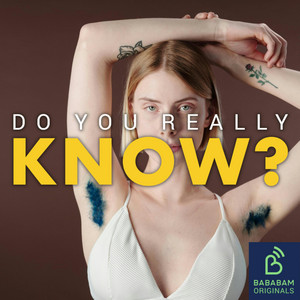
How did female body hair become taboo?
Thanks for asking.
According to Healthline.com, the human body has around 5 million hair follicles.
Now you might not have guessed, but that figure is around the same for both men and women.
And body hair has a lot of important functions.
It helps regulate body temperature by keeping us warm or retaining sweat to cool us down.
It also protects sensitive parts of our bodies from infection like the eyes and genitals.
And yet women often go to great lengths to have their body hair removed.
And there's a taboo around having hairy armpits or other body parts.
It's in no small part down to gendered social control.
Is body hair removal a recent development?
Not at all, actually.
Humans have been removing body hair since ancient times.
Within many civilizations, like the Mesopotamians, Hebrews and ancient Indians, it was seen as a form of purification.
In ancient Greece and Rome, having body hair was linked to social class.
Poor people simply couldn't afford to have it removed.
But the real change in the modern age is how body hair became a gendered issue.
In all those historic civilizations, both men and women removed their body hair, but these days it's female body hair which is taboo.
How did that come to be?
You could trace the origins of that trend back to the second half of the 19th century.
In his book The Descent of Man, Charles Darwin suggested that modern day humans have less body hair than their ancestors due to evolution, meaning that people with less body hair were more sexually attractive.
Other medical experts linked body hair to a range of physical and mental health problems.
Then in the 20th century, myths around female body hair were used to sell beauty products.
Gradually, every visible part of a woman's body had to be hair-free.
And the idea started out in the United States, before spreading to the whole of the Western world.
Advertisers used words like embarrassing and unsightly to describe underarm hair.
In 1915 Gillette brought out its first female razor in the United States.
Then it was the turn of leg hair to get the same treatment.
During the Second World War, there was a shortage of nylon stockings in the United States, and leg hair removal became the norm.
What about pubic hair?
A number of factors contributed to female pubic hair becoming taboo in the second half of the 20th century.
These included the introduction of the bikini and the rise of pornography, first in magazines like Playboy and then on the internet.
Getting a Brazilian was made popular by TV shows like Sex and the City and celebs like Victoria Beckham and Eva Longoria.
Over the years, feminists have done their best to break the taboo around female body hair, arguing that women should have the right to choose how their bodies are.
Since the turn of the century, the body positive movement and the acceptance of gender fluidity have seen things progress, with body hair being embraced by more and more young women.
There you have it.
Now you know how female body hair became taboo.
In under three minutes, we answer your questions and help you understand the true meaning behind the trends, concepts and acronyms that are making headlines.
Listen along and you will really know for sure.
The holidays mean more travel, more shopping, more time online and more personal info in more places that could expose you more to identity theft.
But LifeLock monitors millions of data points per second.
If your identity is stolen, our US-based restoration specialists will fix it.
Guaranteed or your money back.
Don't face drained accounts, fraudulent loans, or financial losses alone.
Get more holiday fun and less holiday worry with LifeLock.
Save up to 40% your first year.
Visit LifeLock.com slash podcast.
Terms apply.