When I was in the fifth grade, I bought an issue of DC Comics Presents, number 57, off of a spinner rack at my local bookstore.
And that comic book changed my life.
I immediately fell in love with the medium of comics, but I'd never brought them to school.
Instinctively, I knew that comic books didn't belong in the classroom.
Eventually, I became a published cartoonist, writing and drawing comic books for a living.
I also became a high school teacher.
This is where I taught Bishop O'Dowd High School in Oakland, California.
I remember telling my students on the first day of every class that I was also a cartoonist.
I was hoping comics would make them think that I was cool.
I was wrong.
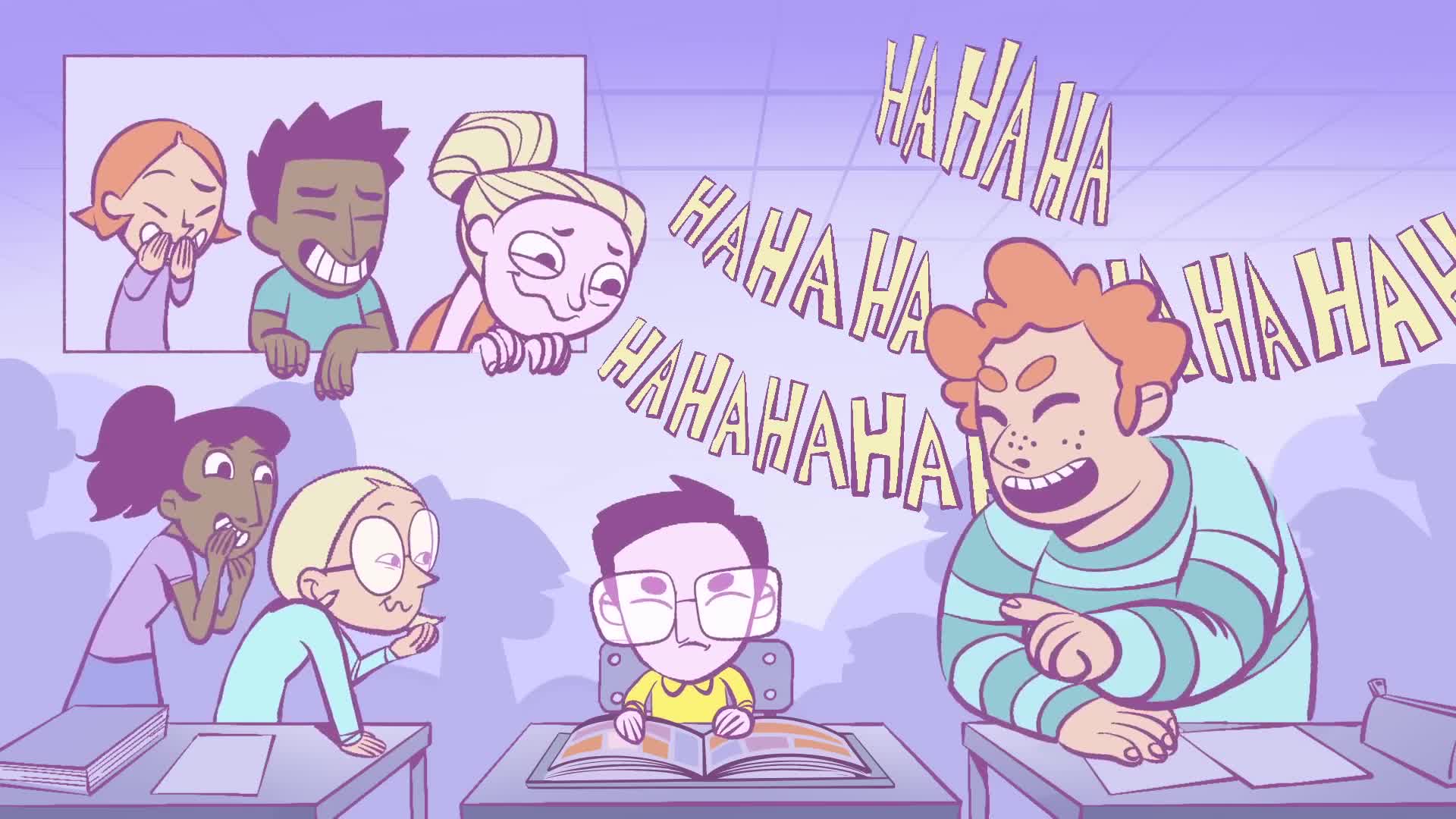
They thought I was kind of a dork.
They would use comic books as a way of distracting me.
They would raise their hands and ask me questions like Mr Yang who do you think would win in a fight?
Superman or the Hulk?
It seemed like my instincts in fifth grade were correct.
Comic books didn't belong in the classroom.
But again, I was wrong.
One semester, I was asked to sub for this Algebra 2 class, but there was a problem.
Every couple of weeks, I had to miss one or two periods.
In an effort to provide some sort of consistency for my students, I began videotaping myself giving lectures.
I tried to make these videos as engaging as possible.
These video lectures were a disaster.
I had students coming up to me and saying things like Mr Yang, we thought you were boring in person, but on video you are just unbearable.
So as a desperate second attempt, I began drawing these lectures as comics.
Much to my surprise, these comics lectures were a hit.
My students would ask me to make these for them, even when I could be there in person.
It was like they liked cartoon me more than actual me.
I began to understand the educational potential of comics.
Comics lectures taught visually.
Our students grow up in a visual culture, so they're used to taking in information that way.
In a comic, past, present, and future all sit side by side on the same page.
This means that the rate of information flow is firmly in the hands of the reader.
When my students didn't understand something in my comics lecture, they could just reread that passage as quickly or slowly as they needed.
Comic books first became a mass medium in the 1940s, with millions of copies selling every month.
A lot of innovative teachers began bringing comics into their classrooms to experiment.
But then along comes this guy.
This is child psychologist dr frederick wortham, and in 1954 he wrote a book called seduction of the innocent where he argues that comic books cause juvenile delinquency.
He was wrong.
In the 1940s and 50s almost every kid in America read comic books.
Dr Wertham does a pretty dubious job of proving his case, but his book does inspire the Senate of the United States to hold a series of hearings to see if, in fact, comic books caused juvenile delinquency.
These hearings lasted for almost two months.
They ended inconclusively, but not before doing tremendous damage to the reputation of comic books in the eyes of the American public.
It wasn't until the 1970s that a few brave souls started making their way back in.
And it really wasn't until pretty recently, maybe the last decade or so, that comics have seen more widespread acceptance among American educators.
And this is even happening at Bishop O'Dowd, where I used to teach.
Mr. Smith, one of my former colleagues, uses Scott McCloud's Understanding Comics.
In his literature and film class.
Mr Burns assigns a comics essay to his students every year by asking his students to process a prose novel using images.
And Ms.
Murock uses my own American-born Chinese with her English 1 students.
Over in the library, Ms.
Counts has built a pretty impressive graphic novel collection for Bishop O'Dowd.
The School Library Journal article stated that the mere presence of graphic novels in the library increased usage by about 80 and increased the circulation of non-comics material by about 30.
American cartoonists are now producing more explicitly educational content for the K-12 market than ever before.
More comics and graphic novels are starting to tackle math and science topics.
STEM comics and graphic novels really are like this uncharted territory, ready to be explored.
America is finally waking up to the fact that comic books really do belong in every educator's toolkit.
The educational potential is there, just waiting to be tapped by creative people like you.
Education is the ultimate idea worth spreading.
That's why we have a channel dedicated exclusively to celebrating and elevating the ideas of educators.
Visit our Educator Talks channel, where you can also learn more about our educator programs or watch the unabbreviated version of this talk here.