take your plans out of the group chat and get long weekend ready and new abracomby from day to night pack new outfits for every part of your itinerary grabbing brunch throw on the ANF Mila dress then head to your dinner reservation in their new bubble hem mini dress and yes permission to over pack for pics with the girls abracomby's best -selling scarlett squirt deserves a post in your feed your plans are worth it shop abracomby's new long weekend and collection online or in store.
Don't miss your chance to spring into deals at Lowe's.
Right now, get a free 60 volt Toro battery when you purchase a select 60 volt Toro electric mower.
Plus, buy three 19 .3 ounce vegetable and herb Bonnie plants for just $10.
It's time to give your yard a grow up.
Lowe's, we help, you save. Valid to 423, selection varies by location.
While supplies last, discount taken at time of purchase.
Actual plant size and selection varies by location.
Excludes Alaska and Hawaii.
The History Channel Original Podcast. History This Week, April 27th, 1856.
I'm Sallie Helm. There is a pregnancy in the imperial palaces of Beijing's Forbidden City, and preparations have been underway for months.
Not because of the mother — she's a low -ranking concubine named Cixi — but because of the father, Qing Emperor Xianfeng.
He's a sickly man who has not yet produced a son, so he and the royal court have done everything they can think of to ensure the birth of a healthy boy who will one day be the leader of the Qing dynasty.
Sishi's mother has been summoned to the Forbidden City to care for her daughter.
The court astrologer is leaving nothing to chance.
He's arranged for a ceremony to be held behind the concubine Sishi's apartment.
Someone has dug a hole in the ground and placed inside a pair of chopsticks wrapped in red silk.
The word for chopsticks sounds similar to the phrase, to produce a sun quickly.
And today, April 27th, it all pays off.
Sishi gives birth to a baby boy.
The emperor finally has an heir.
The birth also changes Sishi's fortunes dramatically.
As the mother of the emperor's only son, she's immediately awarded a higher rank.
In the list of imperial women at the Forbidden City, Cixi is now second only to the Empress.
Harmony reigns. But this is the imperial court.
The top prize is ultimate power.
So that harmony will not last forever.
By the time this baby boy is five and a half years old, his father will be dead, And his mother will be plotting a coup.
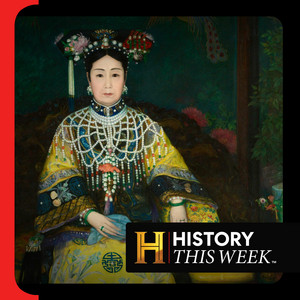
Today, the Empress Dowager Cixi.
How did a low -ranking concubine rise to power and end up serving a 50 -year reign at the head of China's last dynasty?
the Forbidden City, 1852.
Outside the back gate of this 178 acre palace, there's a line of wooden carts, hundreds of them each decked out with blue silk drapery.
Inside each cart is a sleeping teenage girl, and beyond the gates of that palace is the man they've come here to see, Chinese Emperor Xianfang, who, at 21 years old, is finally ready to choose his royal consorts.
Professor Yingchen Peng told us girls from all around China have been called to Beijing to present themselves as part of a massive selection ceremony.
It was the ritual that was held every three years.
The scale was just mind blowing because all the single menchu teenage girls had to be presented to the court.
One of these girls is a 16 -year -old who will come to be known as Sishi.
We don't actually know her birth name.
That was only recorded for boys.
She'd grown up in the maze -like districts around the Forbidden City.
At this time, the Han are the majority in China.
They emphasize Confucian principles, like higher learning, for men.
But Cixi and the emperor are Manchu, an ethnic minority that makes up the Qing Dynasty's ruling elite.
Manchu girls, like Cixi, are allowed some education.
The Manchus were more respectful about women's rights.
they could actually inherit the property of their deceased husband or their fathers.
And they did not have to find their feet.
They had more say in the family.
Sishi's family was fairly well off, and she'd been allowed some say in family matters.
She's intelligent and confident, which she's going to need when, at first light, the palace gates open.
And Cixi, along with other noble Manchu and Mongol girls from all around China, is called before the young emperor.
Cixi and the other girls enter a hall in the palace harem.
They're dressed in simple gowns, while the Emperor Xianfeng sits in judgment on an ornate throne.
For those good looking or those with special talents, they would be kept in the court for a couple of years.
And among them, the lucky few would be favored by the emperor and received their first formal title is the emperor's concubine.
The girls have just a few moments to make an impression.
They're supposed to show beauty, grace, class, brains, all while standing in front of the emperor.
And some girls don't cut it.
They're sent home to their regular lives.
They can marry someone else.
But Cixi is one of those chosen to stay.
She's not a royal concubine, but she has a foothold inside the Forbidden City.
And with that, she has just moved much closer to the center of Chinese political life.
Emperor Xianfeng is trying to maintain the strength of the Qing Dynasty, which, remember, is ruled by Manchus, the ethnic minority.
Previous dynasties have mostly been Han.
And author Yung Chong told us at this moment, in 1852, things aren't exactly going well for the emperor.
The emperor was in trouble at the time.
You know, there were foreign invasions.
There were peasants' uprisings, and the dynasty was really warbling.
China is only recently, and tentatively, coming out of a long period of isolation.
They're responding to Western powers who have been beating down their doors, demanding access to trade.
China has recently also fought and lost a war against the British.
And the Qing dynasty is facing internal divisions, anti -Manchu rebellions and uprisings.
It's a lot to deal with.
The situation really demands a statesman.
But Emperor Xianfeng...
...was not a statesman.
If he had been given the choice, he probably would not have wanted to be the Emperor.
He was basically an artist. He painted quite beautifully.
And what he really loved was Chinese opera.
The Emperor is preoccupied with the arts, so she takes note.
She knows that she needs to stand out to have any chance of being promoted to royal concubine, which would allow her to remain at court.
And so Dr. Pung says, Sushi gives the Emperor what he likes, art.
She once painted a painting and Xianfeng seemed to be very happy with that painting and even ordered his unit to mount the painting.
And he loved painting.
So that was a big deal for him.
Exactly. So you can say that Sushi was a very clever girl.
She knew how to please the Emperor and she also knew her strength very well.
It works. Emperor Xianfeng officially chooses Sixi as a royal concubine in the Forbidden City.
But she's sorted into the lowest ranking group of consorts.
Sixi, for many years remained a lowly concubine.
Yung Chang speculates that Sixi might've done something to earn the emperor's disfavor.
She might have tried to involve herself in politics.
So she thought she loved the emperor, her husband, and was trying to give him advice.
But this only annoyed the emperor because women were not supposed to be involved in politics in court.
And so the emperor didn't promote her to higher rank of the concubine.
Instead, he promotes a woman named Se -an.
Se -an and Zixi know each other well.
They went into court together in the same group.
They'd been in blue curtain carts outside the palace gates on that same momentous night.
But Se -an quickly outstrips Zixi.
She becomes the highest ranking consort, which makes her the empress.
She gets more servants, more food and more time with the emperor.
It was not because she was particularly beautiful, it was not because she was particularly energetic but because she had the quality to make peace in the court, to administer the court.
That was the job of the Empress.
Zian is magnanimous towards the other consorts, including Sixi.
Both women are ultimately at court for the same reason.
Once all 17 consorts are in place, the emperor begins calling them one by one to his bedroom to produce a healthy son who would continue the Qing dynasty.
The court anxiously awaits the results.
And to everyone's surprise, the big news comes from Cixi.
She's the second consort to be pregnant by the emperor.
The first gave birth to a girl.
So there is rejoicing when Cixi gives birth in 1856 to a boy.
His name is Tongzhe.
And as the mother of the emperor's son, Cixi gets promoted.
Very quickly, she advanced to the second rank when she was only 22 years old.
Si Xiyi is now the second most important woman in all of China.
But Dr. Peng says when it comes to baby Tongzhi, the first most important woman in China, Empress Se An, is very much a part of the picture.
Per the Menxiu Law, she was the foster mother of Tongzhi because she was the empress.
Si Xiyi and Se An are kind of like co -parents.
Dr. Peng says, they took different roles.
Céan was caring. Cixi was tough.
She hired the best scholars to be his tutor, and she interrogated those tutors constantly, wanting to check on the progress of Tongzhi's learning.
The boy might need to learn fast. His father, Emperor Xianfeng, is in his late twenties, but he's not doing well.
He's been sickly since birth.
His frailty has earned him the nickname, Limping Dragon.
In winter, he shivers through his days in the cold palace.
In the warmer months, he spends time at his vast Summer Palace on the outskirts of Beijing, listening to opera, and trying to ignore the increasingly chaotic world outside.
In 1860, the British and the French invade China to force a further opening of trade.
Emperor Xianfeng resists.
He and his advisors believe that submitting to what these foreign powers want would weaken China.
They end up torturing some captured British officials, And in response, Nhengchang says, the British burn the beautiful summer palace.
The court fled to the north and Emperor Xianfeng was heartbroken.
He didn't want to go back to Beijing to see this burnt -out summer palace.
In the north, his health worsens.
He coughs up blood and loses consciousness at unexpected moments.
By 1861, he can barely leave his private rooms, so they become his office.
Because of these arrangements, Sixi had the opportunity of helping Xianfeng with his work.
Dr. Peng says that the Emperor asks Sixi to begin reading and writing official communication.
He had once demoted her perhaps for offering political advice.
Now, she's by his side as he conducts imperial business.
This was already a very big deal, because in the Chinese tradition, women were forbidden from participating in any form of politics.
And Xianfeng definitely knew that.
But he relies on her help.
Or maybe he's just too weak to put up his usual resistance.
Soon, he's bedridden, which means that Cixi takes on an even greater role in politics.
This change is not lost on the emperor's advisers, who are working closely with him on these crucial policies, especially whether and how much China should open to the West. They believe it shouldn't, and they're not happy that the dying emperor has brought this female interloper into such sensitive discussions.
During his last days all these men agreed that Sushi was clever, but she was also dangerous.
The advisors take their concerns to Emperor Xianfeng.
She's a woman, they say.
She should have never gotten involved in politics.
And they're also fixated on the transition of power that will happen when the Emperor dies.
His son, Tongzhe, is only five years old.
He'll have to wait eleven years before he can officially rule.
And during that time, he'll need a regent to act for him.
The advisors try to block Cixi by ensuring that one of their own will become the regent, not her.
They say she's too cunning, too ambitious.
The emperor agrees, and he makes a plan for what will happen after his death.
What he arranged was a very subtle balancing of power.
He appoints not one, but eight of his advisors to act as regents for the young Tongjie.
All the edicts would be drafted by these eight advisors.
Which means that no one man can become too powerful.
And the emperor adds another check and balance.
These edicts would not become valid unless they bore two seals.
These seals bear the emperor's insignia.
They can be used as literal seals of approval on official edicts or as vetoes.
They carry a lot of power.
So the question becomes, when the Emperor dies, who will hold these seals?
Jianfeng makes his decision.
He loops in one woman that he trusts.
Not Cixi, but Zhe 'an.
One seal would be kept by Zhe 'an, the other would be held by the young Emperor.
But neither of those is Cixi, right?
So one of them is Se 'an, and the other is the emperor himself, the young five -year -old emperor.
Yeah, that's the tricky part.
So who's gonna hold that seal for him, right?
He was only a five -year -old.
Exactly. So that definitely gave Xi Xi the opportunity to plot something.
Emperor Xianfeng suspects that she might start plotting.
And so he goes to the Empress Se 'an.
Yunchang says there's a famous story about what happens next.
He tells her if Cixi tries to grab political influence, you can take drastic measures.
The emperor actually also said to the Empress and gave the Empress an edict which said that if after I die, she goes on doing this, you can show this edict and have her killed.
In the autumn of 1861, Emperor Xianfeng dies in the northern wilderness without ever having returned to see the shell of the Summer Palace where he loved to watch opera and paint.
By this time, Cixi has been privy to the workings of China's imperial government for nearly a decade, and she has some opinions about policy, about the direction of the country.
but she has no formal say in any of that.
Still, the new Emperor Tongzhe is her son.
She knows that she might be able to wield power through him.
What she doesn't know is just how dangerous that might be.
Because her co -parent, the Empress Se 'an, holds the emperor's last secret edict.
at any time she can have Sushi killed.
McDonald's meets the Minecraft universe with one of six collectibles and your choice of a big Mac or 10 piece McNuggets with spicy Nether Flame sauce.
Now available with a Minecraft movie meal.
And participating McDonald's for a limited time, a Minecraft movie only in theaters.
In 2009, three days before Halloween, a grisly crime stunned the seaport town of Anacortes, Washington.
I can only describe it as evil, something horrible, something terrible.
The scene was at the house of a popular dog trainer named Mark Stover.
From 48 hours, this is Trained to Kill, the dog trainer, the heiress and the bodyguard. A love triangle between Mark Stover.
He couldn't control his obsession.
You know, he chronicled his obsession.
And Aris, who wanted a new life and her new lover.
It's a beautiful love.
In my opinion, it's legendary.
Throughout this case, detectives wondered, who was the hunter and who was the hunted?
Follow and listen to Train to Kill, the dog trainer, the Aris, and the bodyguard on the free Odyssey app or wherever you get your podcasts.
Ryan Reynolds here from Mint Mobile.
I don't know if you knew this, but anyone can get the same premium wireless for $15 a month plan that I've been enjoying.
It's not just for celebrities.
So, do like I did and have one of your assistance assistants switch you to Mint Mobile today.
I'm told it's super easy to do at Mintmobile .com slash switch. Upfront payment of $45 for three month plan, equivalent to $15 per month required.
Intro rate for three months only, than full price plan options available.
Taxes and fees extra.
See full terms at mintmobile .com.
Autumn 1861. News of Emperor Xianfeng's death spreads throughout China.
The direction of the country is now in the hands of the Eight Regents, the same men who had advised the late emperor to close China off to the world.
Now they're telling Tongji, the young emperor in waiting, that it's better to make no deals with the Western powers at China's doorstep, better to keep them at bay by force.
But Cixi feels very differently.
She thinks this is one of the policies that is weakening the Qing dynasty.
Shishi knew that if they continue to give the same advice to her son, China keeps on suffering defeat.
Defeats like the burning of the Summer Palace.
She thinks that the country will be weaker if they continue to forgo diplomacy and trade.
She could see that the Chinese empire was in trouble because of the wrong policies.
Sishi believes that now is the time to increase China's trade with the West, slowly and on favorable terms. But to make that happen, she'll need an ally.
So Sishi approaches Sian, this woman who started as a fellow teenaged concubine.
and so she lays out for her a program of modern reform, one that would encourage strategic contact with the West. Then, so she makes a bold proposal… Make me co -empress with you.
Together, we'll stand up to these regents.
It is exactly the kind of moment that the late emperor's last edict was designed for.
Ceyang could, with a snap of her fingers, produce that edict and sentence her former rival to death.
But that's not what she does.
She agreed with Cixi's vision for the future.
Not only that, Ceyang agrees to Cixi's proposal.
Soon enough, the two become the co -Daoist Empresses of China.
The regents accept the women's ceremonial roles, but keep them shut out of politics.
So Sashi raises the stakes.
She approaches Sae -an with another proposal.
Work with me, she says, to rid China of these regents and lead it into the future.
It is breathtakingly risky.
She's talking about deposing the most powerful men in the empire.
And again, Seon has an easy way out.
She can pull out the edict.
And she does. Seon shows Sushi the document that can end her life.
she showed this piece of edict to Cixi and then burned it.
This crucial piece of leverage she tosses it into the flames.
Yunchang says, Sae -an reveals herself in this moment.
She had guts and she also had brains.
With the edict destroyed, Shashi and Se -an are officially a two -woman rebellion.
Two women, both in their 20s.
I think they took advantage of the fact that the officials didn't think much of them because they were women.
Chong imagines the women quietly plotting as they stroll through the palace gardens, sitting near the Koi pond, lounging in the shade of a gingko tree.
People assumed they were just doing girl's stuff, but in fact, they were plotting a coup for this country, which then had a third of the population in the world.
plotting a coup, a move that Sishi and Seon must keep secret.
If the coup failed, the punishment would have been death by a thousand cuts.
You would be cut to death alive, life after life.
I mean, they were afraid of that.
If the coup is gonna work, the women will need allies.
especially the officials who control the palace guard. So they come up with a plan.
They have a court official propose that the Empress should serve as Tongja's regent.
That proposal was immediately turned down by the aid advisors.
Dr. Peng says Sushi and Se 'an never actually thought the proposal would go through.
It was just a way to gather intelligence, observing the reaction, seeing who is an enemy, and who might be a potential friend.
That plan was very clever in the sense that it gave the two women an opportunity to see who could be the potential alliance in the court.
Because during the process of debate, you had voices from both sides, right?
Some members of the court did argue in favor of this change.
And afterwards, the women quietly approach them to gain their support.
Then they move on to the next stage of their plan.
The second step of the coup was to create this kind of opinion in the court about how the aid advisors were acting dominantly, not showing the due respect to the young emperor.
They have to provoke this sense that the regents are overstepping.
So one day, when Sushi and Sian are caring for the young Tangjie, they lure the regents into a room with them.
And then they pick a fight, needling the men, until the regents are yelling and stomping around in anger, creating a loud scene.
so loud that the child emperor, Tongjie, wakes up and starts crying.
Tongjie may have been just a kid, but he's still the emperor, the most respected official in all of China.
Upsetting him, as the regions have just done, is a grave offense.
Cixi makes sure that everyone knows about it.
She writes an edict condemning the regent's behavior and calling for their removal from power.
She says they should be arrested.
Her allies in the court agree, and the palace guards take the regents into custody.
The coup is almost complete.
The Dowager empresses begin writing royal edicts and making them official with Emperor Xianfeng's SEALs.
They hold the power now.
And to solidify it as the last stage in their coup, they decide to get rid of the eight regents altogether.
So she issues a series of orders.
Out of the eight co -regents, she sentenced the white man to death, public execution, and ordered two others to commit suicide by sending them each a long, white silk scarf to hang themselves with.
Of the regions not sentenced to death...
A few co -regions were dismissed, the ones sent into exile, but there was no otherwise upheaval.
This episode is brought to you by LifeLock.
Not everyone is careful with your personal information, which might explain why there's are victim of identity theft every five seconds in the US.
Fortunately, there's LifeLock.
LifeLock monitors hundreds of millions of data points a second for threats to your identity.
If your identity is stolen, a US -based restoration specialist will fix it, guaranteed, or your money back.
Save up to 40 % your first year by visiting lifelock .com slash podcast. Terms apply.
Yum Chang says that by the standards of the time, taking power with only three deaths is pretty restraint, so she doesn't go mad with revenge.
Five of the eight regents are left alive.
But in the palace, the two women are in charge.
The division of work was very interesting.
After the coup, Seon takes on the daily administrative tasks of the court.
And so she controls foreign policy.
She controls all major government decisions — on behalf of her son, of course.
When she first took power, she was not even supposed to see her officials face to face.
She had to sit behind the screen.
In front of the screen, there was a chair for the child emperor.
And she was sitting behind the screen.
But the preteen Tongji shows little interest in ruling.
Professor Peng says he has no knack for it.
Tengzi was definitely not fit to be an emperor, just like his father.
So we could really comment on him as an emperor because he did so little.
The person really calling the shots at the top of the Qing Empire is Cixi.
Who was once the bottom tier concubine.
She authorizes small steps toward the West, like opening foreign language schools and expanding Shanghai's trading port.
Meanwhile, the passage of time is moving Tongjie toward the throne.
He comes of age at 16, which means Cixi must retire as his regent.
But just before Tongjie turns 19...
He died prematurely in 1875.
He died of smallpox.
Emperor Tang Jie dies without an heir, leaving a power vacuum that Cixi rushes to fill.
She adopts her three -year -old nephew, installs him on the throne, and becomes his regent.
Yung Chang says, It's at this point that Cixi begins to pursue a policy she's long favored of more fully introducing China to the world.
China had been isolated, had self -imposed the isolation and closed its door about a hundred years ago.
She then asked a question, why can't we open the door and have trade with the West and benefit our country.
She also launches an ambitious program of industrial development.
She introduced railways, telegraphs, telegrams, a modern army and navy, and open mines, building factories, sending ambassadors abroad, establish the diplomatic relations with the west, foreign trade, you know, everything.
When her nephew comes of age in 1889, Sisi officially retires as regent again, but she's still consulted on all important government matters.
In fact, Sisi leads or advises China's final dynasty until her death in 1908.
A period of nearly 50 years.
Those years see enormous change.
The end of China's ancient civil service exam, an official foreign affairs office, a new constitution and China's first popular election.
Cixi has a hand in all of it.
Today, her legacy is still very much debated.
Some see her as greedy and despotic.
The Chinese communists who came after her and who still rule the country see her as a pawn of the Western imperial powers.
Others say she's a scapegoat blamed for all of the Qing Dynasty's problems despite the decades of misrule that preceded her.
She had been maligned for more than 100 years and is still maligned today, I mean nearly all Chinese still think of her as this evil wicked woman who was responsible for dragging China behind, for, you know, the problems the old China had.
Dr. Peng says, so she was in power so long, she oversaw so much change, that it's hard to boil her down to just one thing.
Looking at Su Xi or any complicated historical figure, It's like looking through a kaleidoscope.
If you turn your angle, then you have a completely different picture.
So she herself tried to control her image throughout her life.
And you can't separate that from the fact that she was a woman in a man's role.
She upended the extremely restricted view of what women were and are capable of.
And when she died, that is the symbol that she wanted on the outside of her tomb.
From the outside, you see a lot of decorations of phoenix flying here and there on the column, or on the floor.
The phoenix is a symbol of female power in Chinese symbolism.
But inside, Sishi gave expression to something else.
The part of her that was unapologetically in charge, and at times, ruthless.
She made herself into one of the most powerful people in the world, even if she began her rule from behind a curtain.
And inside her tomb, you can see that Sashi.
It was decorated by hundreds of golden dragons, the symbol of Anowky.
She had the ability, but I feel that she kept that ambition of becoming a true monarch in her heart.
Special thanks today to our guests, Yoon Chung, author of Empress Dowager Sushi, The Concubine Who Launched Modern China.
And Professor Ying -Cheng Peng, author of Artful Subversion, Empress Dowager Sushi's Image -Making in Art.
This episode was produced by Corinne Wallace and co -produced by Morgan Givens.
It was sound designed by Brian Flood and and story edited by Jhm O 'Grady.
Our senior producer is Ben Dixteen.
History this Week is also produced by Julia Press and me, Falle Helm.
Our associate producer is Emma Fredericks.
Our supervising producer is Mikami Lin, and our executive producer is Jesse Katz.
Don't forget to subscribe, rate and review History This Week, wherever you get your podcasts, and we will see you next week.