Architecture is for people, right?
It's not for the architects.
So you want to have this, really the involvement and the ownership of the local people.
I think building or making architecture isn't our ultimate goal, not at all.
It's really through the architecture how you can revive the local heritage legacy and to bring the potential, bring back the future, the confidence for the future.
By the time when I was in school and the early years when I started independent practice, the mainstream concept of our architecture is that, one of the day you're going to build this large-scale high-rise, all these monuments, which architecture was appreciated in the physical volume in the making of this monumental scale.
But I think it's a very different concept, understanding of architecture by now.
When we have this new time of our history and when we face all these difficulties, global challenges, climate change and also disparity everywhere around the world, I think maybe the younger generation of approaching of architecture is shifting already.
It's more about what architecture can do instead of what I could make.
So it's probably to take yourself out of this thinking.
And so I think it's not about the area of star architecture anymore, but rather what's the potential, the capacity of architecture?
How can you make an effective impact to the society, to the environment?
We have been working within this method called architectural acupuncture.
So this may be the right term for you know the whole process that we started with the diagnosis at the end, providing a treatment right.
And so by saying that you already identified this symptom, this issue and the architectural intervention can really engage to make a positive impact to such issues or urgency.
And acupuncture intervention means that the engagement of architecture is rather minimal intervention.
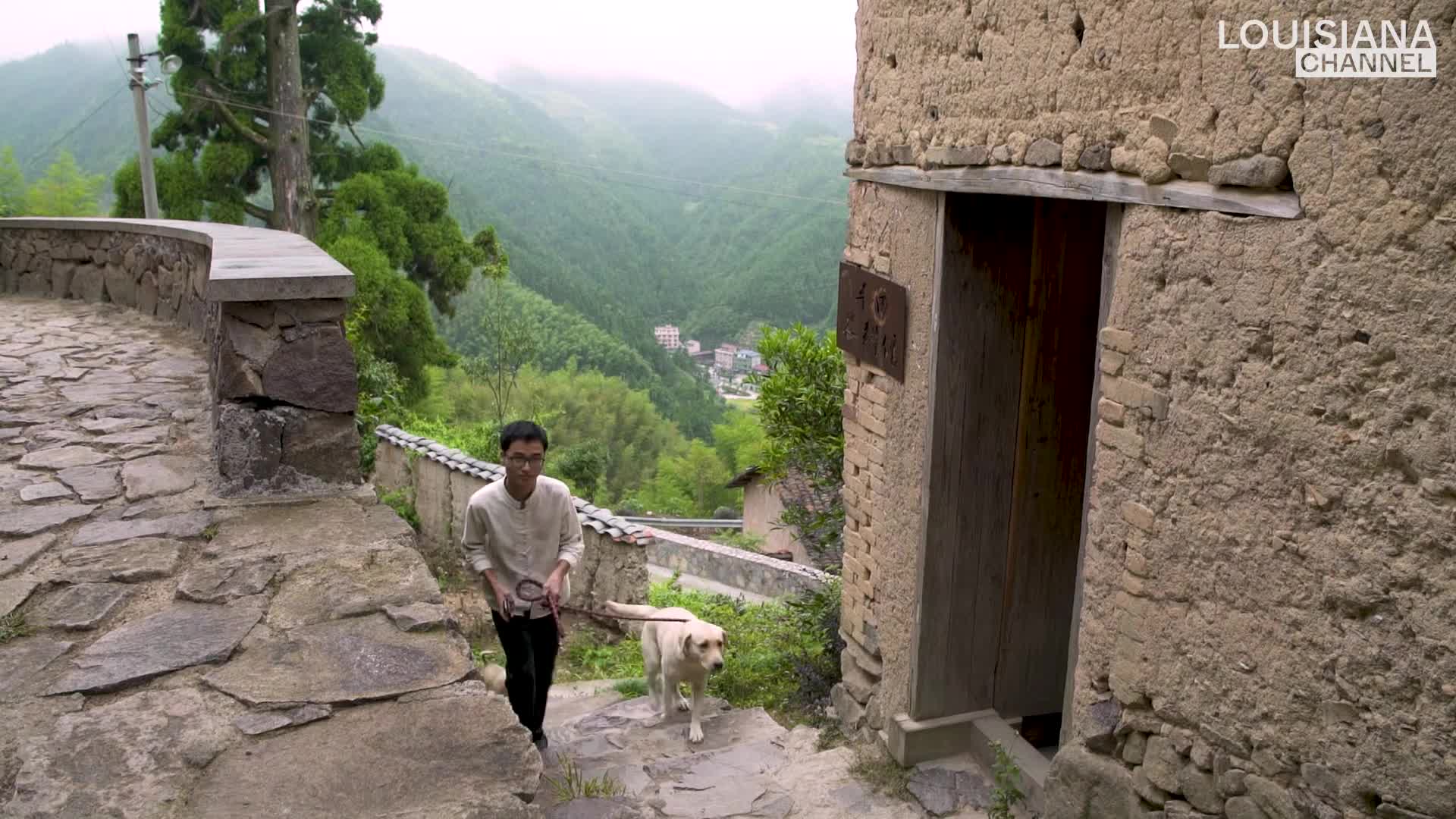
It's not looking for the large scale monuments, but really working with the necessity, really working with the local available materials, elements and cultural contexts.
So to engage, really to blend in, engage in the legacy that is already belonging to the place, instead of introducing something completely alien.
Acupuncture is an alternative medical operation that is to stimulate the circulation for the overall well-being.
So it's a healing process.
And also the way how you see the architecture is not the end.
The architecture is really the engagement.
You have to provide the precise treatment.
So similar to how acupuncture released a blocked energy within your body to boost the circulation.
It's also similar that within the village, when you introduce, with this architectural acupuncture as a minimal intervention, that with the program that's and the design tailored to the heritage, the context.
It's not something coming from outside, but it's rather growing within the context within the village.
So it's a sense of ownership for the local communities, for the local people and to restore the pride and honor.
And it also will bring the motivation for the local community.
A lot of the villagers will start to think about what they can do following these acupuncture projects.
We often see, you know, the villagers will start a small restaurant, a small shops or new businesses or homestay business after these acupuncture projects.
And there's always new initiatives coming from the local village community by how to use these different types of acupuncture buildings.
For example, at the tofu factory.
The community invented this educational program only for young kids coming with parents.
So it becomes a very popular weekend or holiday destination with a cultural program for young families, which also bring new revenue, important revenue, to the community.
So I think acupuncture isn't too focus, zoom into this specific building itself.
It's rather that the building, the design of each acupuncture project is just a starting point to see the continuous new initiative happening within the village and by the villagers themselves.
So there's a lot of potential to think about or to rethink about how we can reuse these spaces.
I think that the process, how we practice always starts with the diagnosis in the beginning, not only to understand the context, but also to find out the complications or even confusions.
And through this process that you will start to work together to understand what's potential.
And so everything is really contextual.
I would say in this way and we don't necessarily in introducing new volumes, But we would prefer to look for whatever existing available spaces, including abandoned quarry space, abandoned vernacular structures, ruins as well, abandoned production facilities like cultivation ponds everything can potentially become architecture.
If we think about architecture as the space, the space already exists in the nature And every place you know, the concept of space is very different.
It's also based on the local climate, the temperature.
So the level of sheltering people It's very different from one place to another.
So we can't just take architecture as building only.
Of course, in the very cold weather like here in Copenhagen, that you would need a more protected space with sufficient heating system in the winter time.
But let's say, if you go to my home region for most of the days you don't really need a protected space.
You're rather open to the fresh air.
Maybe in the summertime you need a roof, or in the rainy days you need a roof.
But the space was already there and you would enjoy the space of nature more than the space within the building.
So then this is really the discussion of what is architecture?
Do you need a building to isolate you from the nature?
Not at all.
Yes, I think in that sense the monumental buildings as architecture doesn't really work in this context anymore.
It's really the monument of the nature itself.
Very often a commission with already a defined program and sites is not necessarily done by professional architects or with the engagement of professional architects.
I don't know who came up with this proposal, but as an architect, very often you would question is it really the right scale?
Is it really necessary to make a building like that? the right program.
In order to make better architecture.
We, as architects, need to step into this early phase in the decision-making phase, together with the community and also with the local authorities authorities.
I think it's difficult to talk about beauty.
Beauty is quite a tricky word in our architectural discourse, right?
And we all agree that beauty alone is quite dangerous.
If you only try to make things beautiful but and ignoring the other side's perspectives on making of the architecture, that I think it's dangerous and, like i said, you know how we learned from this vernacular way of building things is through a very spontaneous and practical and economic perspective which turned out to be something that is really beautiful.
For me, that's the Maybe, that's the real meaning of beauty.
So something that is working, something that can really work, something practical and that can pass through generations, that has already been proved to be practical and sustainable in the long term, that is definitely beautiful because it's accepted by people passing through generations and recognized as local identity.
So you will definitely understand why this is beautiful, why this is considered as the beauty.
Is there a connection between beauty and simplicity?
You know, just by adapting anything that's available, but make it into a way that is also very efficient.
Working with the necessity, that is beauty.