Hello, welcome to Roundtable where we serve up piping hot debates on the issues that sizzle in China and beyond.
I'm Niu Honglin.
Around the world, cities are drowning in what they throw away.
Landfills spill over oceans, choke with plastics, and the pace of modern consumption keeps accelerating.
That's why China has been experimenting with something different, redesigning entire cities around the principle that waste should be minimized, reused and repurposed long before it becomes a burden.
From agricultural straw turned into new products to waste sorting systems, reshaping everyday habits.
The zero-waste city push is moving from a project to a reality, redefining urban life.
Today we're looking at how far this transformation has come and what it tells us about the future of living sustainably.
For this episode, I'm joined by Yu Shen and Steve Hatherly.
Now grab your virtual compass and follow us to the heart of the discussion.
If you have ever stared at an overflowing trash bin and wondered how your home produces so many bags in a single week, welcome to the club.
Modern life is a generator of endless packaging, leftovers, take-out boxes, and receipts.
But some cities in China are asking a radical question.
What if we redesigned the entire system so that waste barely exists?
The Ministry of Ecology and Environment just dropped a progress report on its ambitious Zero Waste City initiative covering 109 urban centers.
So how do you transform a massive urban blueprint into a tangible, livable, zero-waste reality?
Can cities succeed where individuals often struggle?
So let's talk about this and let's start with the concept of zero waste city.
Am I allowed to throw trash out if I live in a zero waste city?
Of course you do.
Because the concept of a zero waste city does not signify that the city generates no waste at all, because that's basically impossible.
Nor does it mean that solid waste can be fully utilized.
Instead, It is fundamentally a cyclical urban development concept and a zero waste city refers to an urban development and management model focused on reducing the generation of solid waste, promoting its recycling, minimizing landfill and also reducing the environmental impact of the solid waste through the promotion of green development and also green lifestyles.
Yeah, it's kind of a misnomer, isn't it?
Zero waste city.
It makes people think, oh, well, there's zero waste at all, right?
No, yeah, it's not the case at all.
But you bring up an interesting point right away there, Niu Honglin, when you say is it possible for a city to be zero waste when individuals struggle so much with it?
And I think we're going to talk about what the connection can be there, how one can help the other.
But the overall concept of zero waste is to reduce the amount of solid waste from the source.
And that source can indeed be individuals, but it can go further than that.
It can go to companies as well.
It can go right down to the packaging.
When the product goes into the package.
How can we eliminate that problem so it doesn't become a problem later on?
Yes, and China has been working on promoting the goal on constructing cities to that end, to that lifestyle, to that new way of living an urban life for a really long time.
Indeed, actually, as I remembered, the concept took place in 2017.
I mean, the concept was brought about by the mission and they say that there is the possibility of reducing the kind of waste by sorting them, by reuse them.
That is the reducing part and, of course, the reuse part.
And even there has been the recommendation of building Xiong'an new area into a flagship zero waste zone, and it received a very high level attention from nation, national leaders and around the country, and that's why, in 2018, we started the idea or the work plan was launched to promote the building of zero-waste cities.
And from there, there also have been some milestones.
Actually, first of all, as you said, China launched this work plan in 2018.
And then in 2019.
11 cities and 5 areas were selected to pilot these waste-free programs, including Shenzhen downtown Chongqing, Sanya in Hainan, the Xiongan New Area you mentioned it and also the China-Singapore-Tianjin Eco City.
It is a project in the city of Tianjin.
It's one part of Tianjin.
Yes.
And also then in 2022, the Ministry of Ecology and Environment announced a list that included about 100 cities nationwide for the development of waste-free cities during that five-year period.
And now...
In 2025.
The Ministry of Ecology and Environment recently introduced a comprehensive evaluation of 109 prefecture-level cities progressing with zero-waste city construction, and the evaluation assessed construction progress, changes in solid waste generation intensity and also achievements in key areas.
And what we can see is that The whole phase of this project is from constructing one into the almost completion phase.
Before we jump into the details of different metrics, different index, exactly what is solid waste?
Yeah, because I was wondering, too.
I mean, it kind of makes sense.
It's self-explanatory in a way.
But in another way, I didn't quite know what it meant.
So you can think of it in some different ways.
And one of those ways is the everyday pile.
And this would be kind of like your trash at home, like the packaging that you throw away, the plastic wrap, the boxes, the bottles.
And then maybe, if you've got kids, maybe the broken toys, old clothes, worn out shoes, plus your plastic bags, your milk cartons and newspapers, things like that, if you still do read a hands-on newspaper.
Then you've got the construction pile, too.
This would be like broken concrete bricks, lumber scraps, drywall wiring and then the industrial pile, which would be scrap metal, chemical byproducts and things of that nature.
So that's why I wanted to take a second and just kind of define what it is we're talking about, because it makes it a little bit more clear as to why it's so difficult to achieve the goal of a zero waste city, because we're not simply talking about the plastics that we throw away from our home.
We're talking about construction materials byproducts, chemical byproducts, And it's a very, very challenging and ambitious goal.
And according to that, or based on that, now we have a better understanding about different types of landfill or the solid waste we're talking about.
And Yushun mentioned, we are relatively successful in the pushing of these initiatives.
And many were.
Let's say, 72 cities showed relatively strong progress but require continued deepening of efforts, while 37 cities demonstrated significant achievements in the construction of zero waste cities.
On what ground?
Yeah actually, within the 109 cities, In 105 evaluated cities, the intensity of industrial solid waste generation dropped by 53 compared to 2023.
And another data is 71 city involving agriculture.
The comprehensive utilization rate of crops draw surpassed 95.
Because that can be another big issue when we are doing agriculture, because every year there's going to be a lot of that straw crop.
Yeah, it's the leftovers, right?
And then 91 cities achieved 100 collection and transportation of domestic waste in administrative villages.
And 91 of them established informational supervision platforms for construction waste.
And the volume of hazardous waste waste disposed of in landfills decreased by 45 percent compared to to 2023 in the 109 cities.
This is actually very interesting because there are other indicators when it comes to the construction or the percentage of completion of the construction of zero-waste cities.
On top of what yushun said, there is another system, a three-tier indicator system.
Um, there are we mentioned three tiers and the top level are five primary indicators that include not only source reduction of solid waste, resource utilization, final disposal, capacity building and public satisfaction.
So the indicators or the metrics Yushun mentioned are more like the area or the industries or where do these different types of waste are from?
But the ones that I'm explaining currently is more like different side of the overall arrangement and the overall management of the cities.
Yeah, it's just a different way of gauging the level of success exactly.
So we are looking at the problem from different angles and different perspectives and trying to make sure that when we are walking on or walking on the path of building a zero waste city, we are looking at all grounds, we're being as comprehensive as possible and we are doing a lot of things to make our cities zero waste.
Is that really necessary?
How is it really that important?
Well, it's not just one city's problem.
It's not just one country's problem.
It's a universal environmental issue that affects every single person on the planet.
And as economies continue to modernize and grow well, then the volume and also the complexity of the waste they're increasing as well.
So if those wastes are poorly managed, you can have some pretty serious consequences.
On a global scale.
You could be talking about the contamination of the oceans or clogging drains that would cause flooding.
Transmission of diseases would be on the extreme end, but also a potential problem here.
Respiratory issues for people, that would be from airborne particles.
So lots and lots and lots of huge problems could come from poor waste management.
Because think about it, you know, if you have A country that has a lot of cities such as China.
And if you have a country that continues to grow and expand, such as China, through all of these construction projects well, think about the amount of waste that that would generate.
So you have to do it in, you have to take care of that in a responsible way so that we don't run into that list of problems that i just mentioned.
The list of problems are the overall picture and i remember one specific case i think it's in 2005, indonesia and there was this landfill and once they, when we say landfill, we think about the garbage being buried under the ground, but actually in a lot of landfills you would see this pile of garbage, a garbage mountain, like hills, and that specific hill i'm about to mention is as 10 meters high and it collapsed.
That resulted in over or around 40 casualty, 10 people were hurt and over 100 people were missing because of that.
So even for one, just one specific example, we see how harmful the problem could be.
Can be, yeah.
And again to give a global example, There's an estimated 25 almost 25 billion tons of municipal solid waste that's generated every single year.
But the issue is only 55% of that is managed in controlled facilities.
And that amount is projected to rise to almost 4 billion tons by the year 2050.
It's an issue with low-income countries because they could be highly vulnerable to this, with over 90 of their waste generated openly, dumped or burned, disproportionately affecting the lower income families in the lower income countries.
It's a serious problem.
When these issues are coming up harm to animals, humans that unknowingly consume the waste, or just, you know, the air is polluted and the negative impacts on economic development and such as diminished tourism is also one of the issues, because some of the countries can be highly heavily relying on tourism.
So everything that are actually connected.
When we're thinking about the waste or zero waste, maybe we think about the environmental issue, but actually it can affect the whole situation of a whole country.
It certainly can.
And speaking of connected, going back to just the pure definition of this, you know, if you think of The way in, let's say, old city versus new zero-waste city,
Well, an old city would be like a one-way street.
You buy a product, you use it, you throw it away.
A zero-waste city, the idea is more cyclical.
So you buy a product that hopefully is not packaged in something that would harm the environment.
You make use of it.
And when you put that product out to waste, it gets broken down, recycled to make new material somehow someway, or just put to use so that it becomes cyclical and it doesn't end up hurting the environment.
That's the goal here.
And it's not easy to do, but the reasons we just stated are the reasons why we need to be headed in that direction.
Well, I think it's well established.
We do need to build our cities into zero waste.
So we've done something.
There are some relatively successful or at least prominent examples.
We're promising examples here.
And there are other things that we can do.
Any...
Well, I do have some examples, but I want to listen from Yusheng first.
What can we do?
First of all, achieving zero waste begins with minimizing the waste entering the system and effectively managing what remains.
So China used to be the world's biggest recipient of overseas trash and gradually reduced the solid waste import license since 2008.
2017 and implemented a complete ban on importing importing solid waste in 2021.
That was a Turning point.
Yeah, I was reading about this earlier today.
So they banned at the time the country banned the import of most plastic waste and heavily contaminated mixed paper and there a specific percentage was put into place.
It was a strict 05 percent contamination limit and And the reason that the country did that is because of environmental protection.
Their own landscape was becoming...
A dumping ground.
I don't know if that might be too extreme a term, but anyway it was too much.
I guess the country decided.
And from that point on, the decision to go in almost the complete opposite direction was made.
And also back then I remember the whole nation was having the wind of calling like telling people to sorting and classify different types of garbages.
So there is a mandatory garbage sorting activity or campaign, I would say.
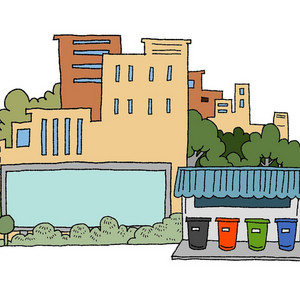
Implementing garbage sorting is considered the first step in domestic waste management, and this pilot waste sorting regulations typically divide municipal solid waste into four categories recyclables, like the paper or glass and plastic, and perishables, like food waste, hazardous materials and also residual waste.
And currently, garbage sorting is carried out in 297 Chinese cities.
Yeah, and that's something that we see every day, right from our own homes, where we have to put the plastic bottles in the plastic bottle space, things like that, but things that we don't see.
Sorry, did you want to make a Yes?
Yes,
I was about to say that was actually a gradual process.
You see your community moving from having one garbage bin to having three different ones and you are supposed to throw them in the three separate garbage bins based on the education you received during your weekends while you are summoned to the community center.
Oh, really?
Yes, and we would have different types of classes and they are being very educative and entertaining.
It's kind of like a free home economic lesson.
They'll tell you how to reuse the stuff you have at home, how to change one of your takeout box into a very fine looking container that you can use at home.
And they'll also tell you where to put the huge bone you just finished eating, eating the meat out of it and also eating i think it's the spine area in it.
And where does that one go?
Because it sounds easy, but if you really think about it, each and every little item might belong to one of those garbage bins and after that, i think after one or two years, in my community, for example, they have also put the categories, or making sure that the categories of different garbage bins are being even more dedicated and even more classified, further classified.
And for those who do not know just yet how to sort their garbage, they can also ask for help from those who are working in the garbage stations.
And they'll even help you doing all that.
If you have time, you can learn from them.
If you don't, they help you do it.
So it sounds easy but, grassroots level, a lot of work have been accomplished.
Those people I saw a term for those people that help you I think the term I saw was green guardian and they'll do this out.
They'll have these people in public locations as well, at recycling bins, so that people know exactly where they're supposed to throw.
What The point that I was going to make before was yeah, this is stuff that involves us on a daily basis.
But then there's, again, the other side of things.
And one of those sides is the agricultural sector.
You know, China has a really large agricultural country, producing about 900 million tons of crop straws.
That's the term. that you used earlier, Yushan.
That's the leftover stalks and stems from a grain crop.
Now, you might think, all right, well, what's the big deal?
Just, I don't know, leave it somewhere or burn it.
But that's not a good strategy at all.
Straw burning, which was previously a major source of rural air pollution, has been banned altogether.
So again, it's these things that might seem like they're inconsequential on the surface, but doing something like burning straw stalks after a harvest can really do damage to the environment.
So that's what they do.
In Heilongjiang province turned about 73 of its collectible crop straws into fertilizer in 2020, and also used these straws to transform them into items like Pet houses, fruit bowls, flower baskets, that kind of thing.
They're quite good quality and beautiful handicrafts, I would say.
And a lot of people are buying them for not only the good-looking side, but also the environmental-friendly side.
Yes, and you should mention Heilongjiang.
Heilongjiang is famous for being a province with its strength on agriculture, for sure.
So I think different provinces, different cities, they have different situations.
For example, Sanya.
We know Sanya as a beautiful place.
I've visited there on private trips, business trips.
It's adjacent to the sea.
It's very nice.
It's on the island of Hainan, right?
Yes.
But if you really think about it, that place would also think about how to make sure their sea is also clean.
And that is why they have land-sea coordination.
They have marine sanitation program.
They would strengthen their river and land cleanup.
And they even have each river and each lake would have a river chief and lake chief.
That is their system of guarding the water areas.
And they try to raise public awareness as well, but not as my community that only tells me how to sort my garbage.
They would also... make sure that people understand the marine environment.
They have a marine environmental education center so that they can engage the public and expand ocean protection outreach.
And they even joined the WWF's No Plastic in Nature initiative so that lovely birds seagulls, all these animals will not be hurt because of the plastic waste in the sea.
So different cities, different places have different challenges to tackle and they are working on these problems based on the resource they have and also trying to be more innovative in doing so.
That's a cool job title too, Chief of the Sea.
Yeah, well, River Chief.
They don't really have a sea chief.
You can try. to see if you can get that job.
And if we're already talking about Sanya, one other thing is it's quite important, like Yusheng said, for the tourism industry to make sure that the city is clean so that the tourism industry is not affected.
And doing that...
It's not only Sanya who's doing it, Qingdao is doing it.
And for those of you who already have an idea about the capital city of Shandong province here in China, you know their beer is quite famous and they have beer festival.
And now they have a zero waste themed beer festival.
Oh, cool.
I wonder would you just recycle all of your glass or beer bottles, or do you have to bring your own container for the beer?
If you send me, I will come back with the answer.
And so all that being said, are we just, you know, all well in a good direction?
We're working on it.
We will.
Many of the cities, over 30 cities, have done a really good job.
Some other cities would need a bit more work.
But are we all on track?
There's no challenges at all?
There are shortcomings and areas for improvement that still exist in the development of the whole zero waste city project.
Actually, high volume of solid waste storage is one thing.
Participating cities still face the problem of like high cumulative volumes of stored solid waste, to varying degrees.
And crucially, the sources indicate that the momentum of the cumulative volume increasing has not yet been reversed.
And also gap in hazardous waste management is another thing that is raising concern.
The proportion of hazardous waste disposed of through landfilling still falls short of the national requirement of 10.
So and as you mentioned before, actually there are probably like 70 or basically 70 of the city still have the space for improvement.
And so the whole project is ongoing.
We can see some achievement, but still we need more effort on it.
Yeah, and the perception from the public needs to be in line too, right?
There were reports that in some cities these achievements that were done or the outcomes of the zero waste construction that were accomplished, they don't yet really align with the personal experiences that people might have or the feelings that people might have about achieving goals toward a zero waste city.
And I think that you know you talked about bringing people in to a community center for education to let people know what's going on.
I think that would be a really wise step, because So having the public involved and having the public doing what they can is a major step towards achieving these zero waste city goals.
So rather than just putting policies in place, it creates a wall.
I feel like an invisible wall where there's no real connection between the people that live in the communities and the communities themselves.
But allowing people to have more access to information and letting them know what they're doing that's actually helping, tangible outcomes would really go a long way.
And we should continue, definitely continue talking about this.
Because, if you really think about it, after a really tired working day, you're home, you finished your takeout.
You really need that push in your heart so that you can get up from your sofa, from your comfortable chair, and start sorting everything, putting them into different bags and then making sure that you throw them in the right garbage bin.
And having today's conversation gives me that nudge and hopefully it can give you the nudge to make your effort in making our city zero waste.