Welcome to Spotlight.
I'm Roger Bassing.
And I'm Alice Irizarry.
Spotlight uses a special English method of broadcasting.
It is easier for people to understand, no matter where in the world they live.
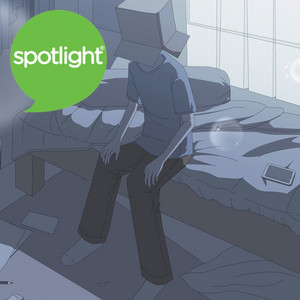
Ito wakes up at six in the evening.
He wears the same clothes that he did yesterday.
His crowded room is filled with empty drink bottles and food wrappers.
A huge desk takes up one side of the room.
When Ito wakes, he does not get ready for class.
He does not get ready for work.
Instead, He goes to his computer and he plays video games for the entire day.
Sometimes his mother comes to bring him food.
He thanks her but says nothing else.
Ito's life is the same the next day and the next.
He has lived without seeing other people for the past three years.
Ito is one of Japan's Hikikomori.
A Hikikomori is someone in Japan who withdraws from society.
Usually, these are young men.
They isolate themselves from other people.
And they depend on their parents to survive.
Today there may be a million people living like Ito.
But why?
Today's Spotlight is on the Heikikomori.
Japan has a very unique society.
Traditionally, parents and children live together for many years.
Several generations often live together at a time, and each family member supports the other.
Younger people take care of the older, and everyone takes care of the children.
This can be very positive for family members, knowing they will always have help.
But it also lets people become hikikomori, A hikikomori knows someone will take care of them.
So, they do not need to find a job or go to school.
But people do not become hikikomori because they do not want to work.
It is usually because of a great pain.
A hikikomori might have lost a job.
Or they might be bullied in school.
They see these events as failures.
And once they have failed, it is difficult to try again.
Masaki Ikegami is a journalist who writes about the Hikikomori.
He told the Japan Times, The Japanese society makes it difficult for people to succeed once they have made a mistake.
I think most hikikomori have had difficulty with their working life.
They have been hurt by their human relationships there.
Other cases might be people who have had bad experiences at school or they have been through troubles, accidents or illnesses.
Some have stopped working to stay at home and look after their aging parents.
There are many different reasons.
It can happen at any age.
Many hikikomori isolate for economic reasons.
After the Second World War, Japan's economy grew quickly.
College graduates got jobs easily.
A person could get a job in a company and that company would employ them for the rest of their lives.
But in 1991, the economy crashed.
Companies stopped hiring, or they continued to employ older workers.
It became harder and harder to get a good job.
Many people had to find lower paying work.
Or they did not find work at all.
This economic time period is known as the Lost Decades.
The Lost Decades hurt a lot of people.
In Japan, Much of a person's self-worth is based on their job.
Not having a job or not doing well in a job causes a lot of shame.
And some people feel so worthless that they stop trying at all.
Naohiro Kimura was a hikikomori for 10 years.
He told the Japan Times If you finish university in Japan but do not get a job, people look at you strangely.
People have a strong sense that you should be working.
I was embarrassed.
I did not want anyone to see me.
When I saw someone wearing nice clothing, I would feel like I had caused trouble.
I hated seeing working people.
I would compare myself to them.
It would make me feel very bad.
I felt a strong sense of shame.
Many hikikomori also have depression, a kind of extreme sadness.
Often a depressed person will want to move.
They will want to work on things.
But they feel that they have no worth.
They believe their efforts will not change anything.
So they feel even worse and become more depressed.
It is difficult to recover from this way of thinking.
Vosad Ikeda is a Hikikomori in his 50s.
He became a hikikomori when he returned to Japan after living in a different country.
He felt that he could not fit into Japanese society.
So, he became very depressed.
He told the Japan Times, I closed all the curtains.
But the light outside still reflected on the curtains.
I could see it from the back of the room.
It felt like society was continuing on without me.
That feeling made me lonely and insecure.
Curtains were not enough.
So I blocked more light from my windows.
I made it like a cave.
It made no difference whether I slept in the daytime or nighttime.
Having a hikikomori child is also very difficult for parents.
Many feel that they must continue to support their children. but they also feel responsibility.
Most do not know how to help.
And some fear talking about their children because they also feel shame.
Maika Elan is a photojournalist.
She helped document the lives of many hikikomori.
She told Muse Magazine.
Parents know that people will see them differently if they talk about their children's lifestyle.
They expect them to return to normal for months or years before seeking help.
Most parents feel that a hikikomori child shows they have failed.
Having someone help with it is like getting rid of your responsibility as a parent.
It is like getting rid of your child.
Once a person becomes a hikikomori, it is very difficult to go back to normal life.
Most do not know how to live by themselves.
And they do not have the skills to find a new job.
The Japanese government has opened up some jobs for hikikomori.
And there are special programs to teach them skills, like cooking."
But the most helpful programs for the hikikomori help them find friends.
After all, a person who is lonely or depressed does not only need a doctor.
They do not only need help with getting a job.
They need someone They need someone who will try and understand them.
To make them feel like they are not alone.
Do you know anyone who is lonely?
How could you reach out to them?
Tell us about it on our website at www.spotlight.com.
You can also find us on YouTube, Facebook, Instagram, and Twitter.
The writer of this program was Dan Christman.
The producer was Michio Ozaki.
The voices you heard were from the United States and the United Kingdom.
All quotes were adapted for this program and voiced by Spotlight.
You can listen to this program again and read it on the Internet at www.radioenglish.net.
This program is called Always Alone, The Story of Japan's Hikikomori.
You can also get our programs delivered directly to your Android or Apple device through our free official Spotlight English app.
We hope you can join us again for the next Spotlight program.
Goodbye!