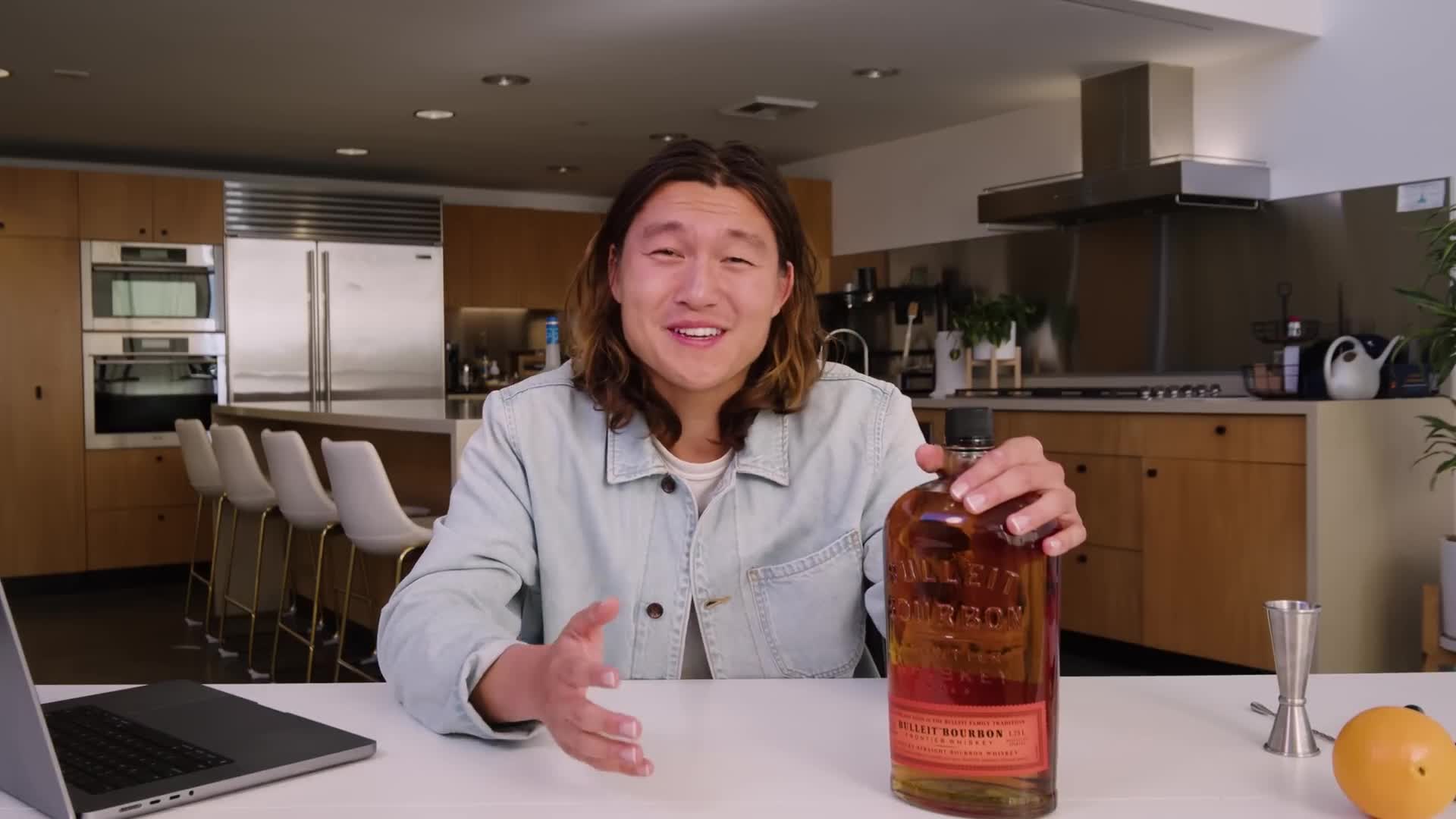
I have had a super long week this week, so I'm gonna pour myself a drink, get a little tipsy and share with you guys the 10 things that I wish I knew before I started a company, in hopes that your journey is a little bit easier and less stressful than mine.
So imagine this you started a company and you've thrown your whole life into it and your first few years you really struggle, but eventually this company really takes off.
You take it public And then over the last few years, it becomes one of the most successful companies of all time, now worth one and a half trillion dollars like trillion dollars.
And so when you think about if you were to ask this entrepreneur to give advice to first time entrepreneurs, you think they give some pretty exciting or optimistic advice, right.
Well, you would actually be surprised because this is a real life situation.
Specifically Jensen Huang of Nvidia, one of the most successful companies of our generation that's writing the crypto and AI wave gives some very, very different advice from a clip that is one of my favorites that I'm going to play for you right now.
If you were magically 30 years old again today, in 2023, and you're talking about starting a company.
What are you talking about starting?
I wouldn't do it.
I know.
And the reason for that is really quite simple.
And it goes back to why it's so hard is building a company, and building NVIDIA turned out to have been a million times harder than I expected it to be.
Any of us expected it to be.
And at that time, if we realized the pain and suffering And just how vulnerable you're going to feel and the challenges that you're going to endure,
I don't think anybody would start a company.
Nobody in their right mind would do it.
And I mean just pausing this like think about this.
Guy runs a one and a half trillion dollar company.
Like this is one of the most successful companies of all time.
And so he's literally here saying like, it is insanely hard.
Like I'll play this other clip for you guys.
I just think starting successful companies are insanely hard.
It's just insanely hard because I just know that it's insanely hard.
One second, I have an idea.
Anyways, thank you for humoring me.
But think about this.
This guy is one of the most successful entrepreneurs of all time.
And he's sitting here saying my number one piece of advice, actually of the 10 things I wish you knew, which is don't do it.
I cannot stress enough to you how painful the company building process is where like, most people fail, like 90 plus of people who want to start something fail.
You learn a lot, but you fail.
And even the ones who do succeed, I've met so many of them.
They're not actually all that happy.
And so this is why it's so important that if you do want to start a company, you have to really, really want it.
Like you have to be in love with the problem.
You have to be on a mission because if you're just in this because you've been told to growing up, or society and the media has glorified this path like you, are not going to make it.
Like do not do this.
And I don't say this to necessarily scare you away, because my second piece of advice here is actually on how you can succeed without being as miserable as a lot of people who end up failing through this process.
But before I do that, I realize I need some ice.
So the second thing that i wish i knew before i started was that you could actually walk before you run.
Basically, there's this myth in society that you have to like full send it in order to start a company, where you have to like quit your job and then work on something for three years in your parents basement and eat ramen all day in order to be successful.
But you can actually start something for yourself with way less risk, and that's because we are now in the age of the side hustle.
Like looking back, i don't think i would have just quit my job and full send it the way i did.
Instead, i should have realized and i hope you take this route too, if you haven't started yet i could actually work in my full-time job and just have a side hustle where i tell myself i'm going to commit an hour a day or a couple hours a week for an entire year to progressing on something and once you see traction with it, once you are making a little bit of money or you're like you know what, i see the data and i see the opportunity, then you can decide whether or not you want to take this side hustle which is probably really cool, and turn it into your full-time thing and actually send it.
Basically, you can have the full optionality and benefit of having your full-time nine-to-five job while also starting to generate a meaningful side hustle income for yourself.
And I'm also just now realizing I need to get the bitters.
I'll be right back.
So that actually leads me to the third thing that I wish I knew, which I actually think is the number one piece of advice I have for anyone starting their own company, which is that the sooner you focus on helping other people and not so much on yourself, the sooner you will become successful.
Because the number one mistake that I actually made super early on in my career and I think it's because I had such a chip on my shoulder
Like I just desperately wanted to succeed and prove myself, is that I was always so focused on padding my own resume?
Like I remember, like I wanted to be in this undergrad club or get this job, because like I wanted it for myself, to prove it to myself,
But it wasn't until the last few years where I realized that kind of mentality will get you pretty far in life in terms of getting these achievements.
But if you actually want to unlock insane levels of success for yourself, you have to not focus on yourself but instead focus on other people.
And I understand that that sounds probably pretty woo-woo like oh, help other people, you'll be successful.
But just to break that down for you, I just want you to think about, let's say, you're excited about health and wellness for people and you think about all the people out there who are struggling with weight gain or just want to lose weight.
Basically, if you think about the fact where am i?
This is, i think this is supposed to go in the drink.
Um, if you, if you think about the two different mentalities you might have, one is like oh, i want to go build a successful billion dollar health and wellness company, versus like I really really want to help these people lose weight.
Think about just how much more successful you'll be in the latter camp.
Or if you're just throwing yourself into being like hey, what are your current health problems right now?
How can I help make sure that you're eating the right things, exercising constantly, taking good care of your body?
And you're so obsessed with helping someone actually achieve their goals, or you're following up with them, you're texting them constantly, you're sending them notes like hey, you know, I was thinking about how maybe you could actually get through this block or succeed in this way, and what if I helped you do this?
And you drag them into success because you just care about how much you want to help them, versus like oh, I want to.
Like, build a business and a successful company.
Like, think about how much money, if you were able to help someone actually lose weight and succeed, they would actually pay you.
And then think about how many people they would recommend you to.
Basically, the point of all of this is just that karma is real, which leads me to the fourth thing that I wish I knew as I take a sip of this.
Not bad, a little strong.
And that is one of my favorite African proverbs, which is if you want to go fast, go alone.
But if you want to go far, go together.
And this concept for me was so powerful because I think, growing up as an only child, I was so used to just like willing things into the universe alone, like just working super hard of my own accord to achieve something.
And once again, I think that's a great mentality early on to have in order to actually achieve things.
But to do anything of meaningful scale and meaningful impact.
So if you do want to build a multi-million dollar, multi-billion dollar income stream for yourself, then you have to be able to learn how to lead and manage teams.
And this has been one of the hardest transitions of my working career that I'm still going through of learning how to go from like an I mindset to a we and a team mindset.
And it's super hard to like shift out of this perspective, but it is so beautiful when you start to figure it out because like one of the best parts of my job now is not only am I unlocking, actually, my efficiency brain's always like, how do I unlock more scale, more productivity?
How do I optimize this?
But not only am I doing that by hiring and training awesome people, but on the people side and the meaning and fulfillment side, think about it I get to invest into my team and see them develop and succeed in their own right.
But the thing about all of that joy that I get to have with my team now is when I first started I didn't realize how long of a time it would take to get to this point of success.
And we're not even that successful yet, right?
You know, we've had the success of growing from zero to now 15 million in annual recurring revenue, but we have so long a ways to go to be like yeah, we're a billion dollar company, or one of the greatest companies of all time.
But think about the last three years for me.
It has been absolute pain.
And there have been so many rejections from investors and potential customers and so many footfalls, so many mistakes that I've made.
And the perspective that I didn't have when I first started, when I was younger, is that success just takes a really, really long time to compound.
And so I think about this image here all the time.
I'll throw it up right here.
But basically we've all heard the 10 000 hours things.
Right, it takes 10 000 hours to actually be good at something in terms of seeing your hard work actually compound.
You need to see that happen over the long term because, like you'll see in this chart i think it'll go this way is that in the beginning you'll see like the small bars?
It feels like nothing.
Like there's so many times they'd be like, this isn't working.
Like this is so crappy.
And it actually was working.
It was just on such a small scale relative to my expectations that I didn't realize.
No, you just have to do the boring work, the hard work, 10 hours a day, and just crank if you have the right thing and then trust the process.
I think the other way to put it is there is no such thing as a get rich quick scheme.
Like yeah, you hear about the stories of someone getting super rich and getting lucky off crypto or winning the lottery.
Those are exceptions to the rule.
I would actually argue those people as well are the first ones to lose their money as well.
But anything of real inherent value takes years, if not decades, to truly compound and build.
So the advice that I would give my younger self when I first started this is actually the sixth thing that I wish I knew, which is that entrepreneurship is just a test of pain tolerance.
Like entrepreneurship, in my opinion, is just a game of survival.
Basically it's like do you have the grit and persistence and resilience to actually make it through this test, to see whether or not you deserve to have the success?
Like, once again, what did Jensen say?
Insanely hard.
It's just insane.
But I'll share an example from one of the first pieces of content I used to create, which was way back in the day before podcasts were a huge thing.
So I get to be a hipster here.
The first kind of content I ever started creating was actually a podcast, where I actually started the podcast because I just wanted an excuse to get in the room with people that I otherwise had no business with.
And so I started this podcast called Pattern Recognition, where I just find 20 billion founders or entrepreneurs or investors.
I would just cold email 20 of them, hoping that like one or two would respond and say yes.
And so I built this list and I got to talk to dozens of really famous people.
Like I'll throw the list up here of all the episodes and they were super helpful.
I learned a ton and I did dozens of these.
Like I got to meet so many cool people and there was only one consistent pattern across all of these people.
And it's just that they never, ever, ever, ever gave up.
And so that actually leads me to the seventh thing that I wish I knew.
I wish I could go back in time and actually tell myself which is just like don't give up on yourself, because there were so many times where I was so stressed.
I was like so deep in it that it was so hard.
And I just, I was just like, this isn't going to work.
I was so stressed.
And If I just had the perspective I have now as a boomer and typically I still get stressed all the time still if I could just like have pulled myself out of there and be like John trust the process, trust your values, trust your hard work, like you will make it.
Like I wish I could tell the early 20s version of myself that.
And so I hope, as you think about your process like, whatever you're feeling right now, like I hope you just make me the promise of like don't ever ever, ever give up on yourself.
But here's the thing, and it's funny that I just chugged my drink for this next point, because you can't do it alone.
Specifically, the number one thing that I'll recommend you do is you also should get a therapist.
And let me break this down for you really rationally, because some people are like oh, I don't want a therapist, like emotionally, whoa whoa.
That is stupid, and hear me out for this.
Think about all the most successful, the greatest athletes of all time.
Michael Jordan, Serena Williams, Lionel Messi.
These are the GOATs of their respective sports.
And what did they all have?
They all had a coach.
They all had a therapist.
They all had trainers.
And so if you're gonna sit here and tell me that you wanna be the greatest of all time at what you do, which is a mental game entrepreneurship is a mental game.
It's all about can you think and can you execute and can you take care of your brain?
You're gonna tell me the GOATs people that are so freaking successful in their industry had people that they learned from and people that helped them process things.
And you're gonna sit here and tell me that you're gonna be successful in your own right without also the same.
Like I see business as my sport.
We are athletes of the mind.
And so every single week, I know that I need to go see my therapist to cleanse and relax my mind and release all the crap that comes from running a company or just being a human being on this planet, in order for me to make the best possible decisions for my business.
And so as I pour my next drink, I will give you number nine of what I wish I knew.
And that is that love is the best medicine. not alcohol.
So at the risk of sounding super woo-woo here, I'll explain this for you really tangibly.
Basically, there have been multiple points in this process, especially early on, where I really, really struggled.
Because when I think about my first two years starting Stan, it was so hard on me.
There were so many dark moments.
And the one thing that kept me sane was my friends.
I'm so grateful for them.
I love them so much.
They've taken such good care of me.
So when I think about how you can stay sane in this crazy journey that is starting a business and trying to will something into this world, it's about having a support system.
Because for me, at this point I'm pretty confident that this team that we've built here at Stan.
They are so incredible.
There is a non-zero probability we will build a multi-billion dollar company.
So when you hit this point where money might no longer be a concern, you kind of sit up and you're like wait a minute, what am I doing all of this for?
It gets pretty existential.
You're like, wait, what is the purpose of all of this hard work?
What is the meaning of life?
What should I be doing with my time?
And I say all that because over the last few years I've actually met so many successful people who've made a lot of money what have you?
And a portion of those people are really miserable.
They have a huge mansion, but they're completely alone in life.
And so it's like yeah congratulations, you built this sick company, but you have no one to enjoy that with.
And that, to me at least, is a pretty miserable outcome.
And so all that leads me to number 10 on the list things that I wish I knew, including now.
I wish I was better at this, which is just to enjoy the journey.
Like so often even now, I always say to myself oh, if I just achieve this one accolade, then I'll be happy.
Like I get this one thing that society told me would make me happy, like I'll actually be happy.
But I think oftentimes in reality we'll achieve that thing and be like wait a minute, I like still feel fully empty inside.
And so the work that I'm trying to do now for myself is like how do I, even in the moments of stress, how do I like, take a step back and be like Like I'm here, this is life?
Like the ups and the downs, the love moments, the stress moments, the laughs along the way.
Like, how do I just enjoy that journey?
Because if you follow all the other pieces of advice I gave you here, which is never ever, ever give up and help other people, I guarantee you on a long-term horizon like think about you in 10 years you will be successful.
And so you can either be miserable in that or you could just enjoy the journey.
So cheers to you guys and I'll see you soon.