
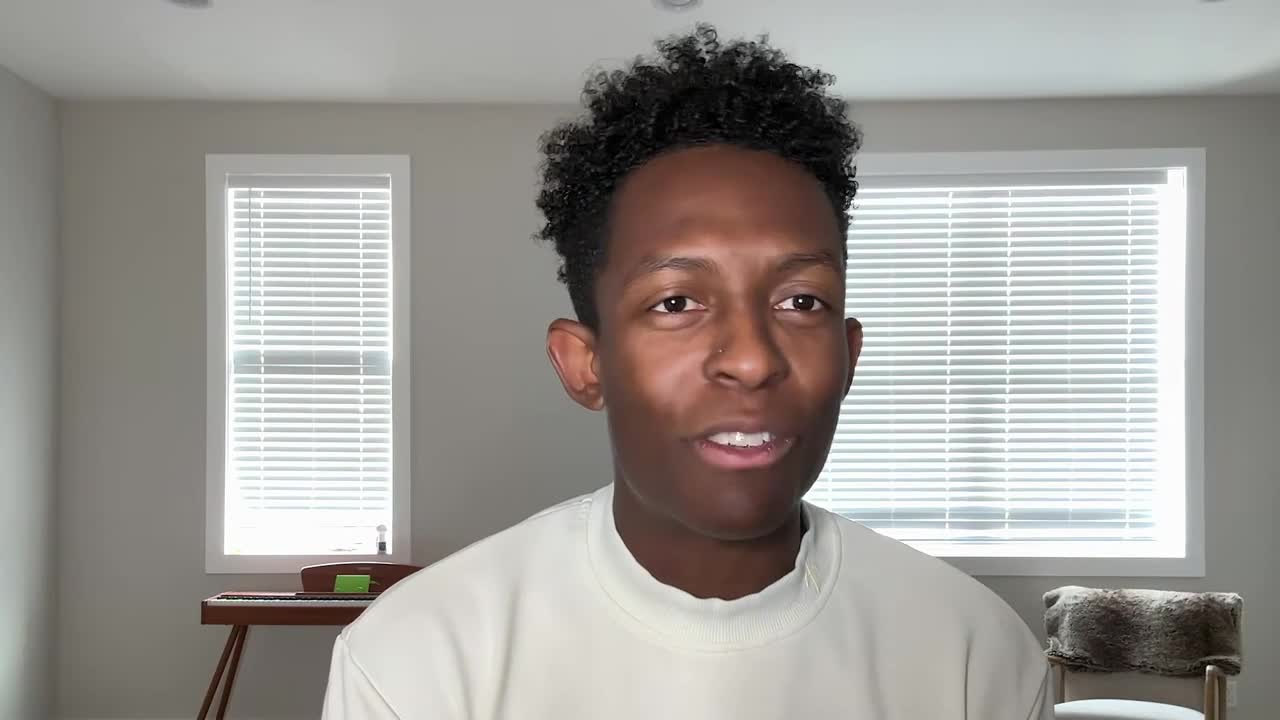
[The Art of Persistence: From Rejection to Creative Mastery]-[Write every day, even if it’s terrible | Think Like A Musician]
📋 Summary
From Devastation to Dedication: The Power of Repetition
Daniel Breeland’s journey into the music industry began with a moment of profound discouragement. After securing a meeting with industry heavyweight Lior Cohen, Breeland was abruptly dismissed after only two minutes. Cohen’s blunt assessment—"this is a waste of my time. You're not ready yet"—left Breeland "devastated for a good week." However, rather than retreating, Breeland chose to "double down." He committed to a rigorous schedule of writing and recording a song every single day. This initial year of discipline resulted in 365 songs, marking the beginning of a relentless pursuit of excellence that would define his career.
Scaling the Creative Output: The Junior Year Experiment
Driven by the belief that his craft needed to improve, Breeland escalated his commitment during his junior year, aiming to "write and record two songs a day." This period of extreme focus saw him "barely going to class," prioritizing his art above all else. By the middle of that year, he had amassed "700 plus songs" with no immediate audience. This lack of exposure led him to adopt a proactive strategy of "cold calling people in the industry," including songwriters, producers, and managers. By reaching out via email, DM, and even handwritten letters, Breeland finally began to receive the critical "insight on how songs are actually written" and identify exactly "where I'm falling short."
Mastering the Creative Process: Humility and Service
Breeland emphasizes that "writer's block is real," but his extensive practice has taught him to detach his ego from his work. He argues that the "right way to produce a song is to listen to the song and give the song what it needs." This approach requires a specific "level of humility." Instead of forcing a song into a familiar, successful formula, an artist must remain open to what the piece demands, acknowledging that "maybe it's something that I've never thought of before."
He suggests that creators "can't rush the creative process." For Breeland, gaining perspective involves a mix of strategies: listening to the track repeatedly, walking away for days or weeks, or "playing the song around other people." He notes that "it's not an exact science," and the time taken to reach a finished product varies wildly—some songs are completed in a single day, while others require months or years.
The Value of the "Missed" Song
Ultimately, Breeland views the creative journey as an accumulation of experience. He frames the songs that do not get finished—the ones that don't quite come together—as essential learning tools. He posits that even these "so-called 'duh' songs" are vital, as they "help inform the way that I write songs in the future." He concludes that the "great songs that you end up getting" are often the direct results of the lessons learned from the songs that were missed. His advice to aspiring artists is to avoid getting "too down on yourself" when progress feels slow, emphasizing that consistent work will eventually lead to the breakthrough the artist is seeking.
Deep Learning with ListenLeap


