Ho ho ho, Santa here.
Coming to you from the North Pole, with the elves in our podcast division of Just Completed Work on this season's best gift for public radio lovers.
NPR Plus, give the gift of sponsored free listening and even bonus episodes from your favorite NPR podcasts, all while supporting public media.
Learn more at plus .npr .org.
Ho ho ho. Hey, it's Erika Barris.
A quick word before the show to talk about this year.
And all the different kinds of stories you heard on Planet Money.
This year, we brought you stories about inflation, disinflation, stagflation, skimpflation, dynamic pricing.
What is Teemu? Banking apps, rum taxes.
The main potato war of 1976.
So many stories about so many different things.
Semiconductors. And the one thing they all have in common, AI, trade fraud, is we work really hard on each of them.
International shipping so that they make you smarter.
And they're fun to listen to.
Tiny soda cans, zombie mortgages, why flying sucks, and another edition of Planet Money Summer School.
So this is the time of year when we say, hey, if that stuff was useful to you, if you made us a part of your day in the car on the train while you were doing dishes, chip in and help keep us going.
Your support matters so much that NPR basically invented an entire new product that we will give you to incentivize your donation.
We're talking about NPR+.
Maybe you're already a plus supporter.
If so, thank you. If you're not and you sign up today, you get perks for more than 25 different NPR podcasts, sponsor free listening to all of them.
And bonus content for some of our biggest shows, including this one.
And exclusive access to special Planet Money merch in the NPR shop.
You get all that as a thank you for investing in NPR and our work at Planet Money.
So go to plus dot NPR dot org to sign up.
Plus dot NPR dot org.
That link is in our episode notes.
And thank you. This is Planet Money from NPR.
Bueller. Bueller. In the Venn diagram of iconic pop culture moments and critically important economics history lessons, there is an overlap of roughly 40 seconds.
So first, I guess I want to ask you, do you do you know this scene from Ferris Bueller?
Of course. Doug Irwin, economist at Dartmouth.
Can you do it without looking like do you know it by heart?
I can do the first part.
In 1930, the Republican controlled House of Representatives passed the Anyone, Anyone, a tariff bill, the Hawley Smoot Tariff Act, which anyone raised or lowered, raised tariffs in an effort to collect more revenue for the federal government.
Did it work? Anyone?
Anyone know the effects?
Anyone? Anyone? No, it did not work out well.
And the economy sank further into the Great Depression.
Not bad. Not bad. Almost word for word.
And by the way, Hawley Smoot, Smoot Hawley.
Doug Irwin says you can say it either way.
And when it comes to Smoot Hawley, you were kind of like the Smoot Hawley guy.
Is that right? There aren't many competitors, I guess, that would be one way of putting it.
I mean, I think everyone sort of knows of them, but no one has done the deep dive like I have, I guess.
Doug wrote a book about the Smoot Hawley tariffs, including an explanation of how it became the most infamously boring high school lesson in movie history.
They'd cast the actor Ben Stein, who is the son of a famous economist Herb Stein.
So they wanted him to be a boring high school teacher, but they didn't actually script what he was going to say.
So they let him rip.
And he talking about the Smoot Hawley Tariff.
But why do you think it works as a punch line in that scene?
Well, first of all, it's delivery mainly.
Because I think you can make Smoot Hawley exciting.
It's during this conflagration, the Great Depression.
It has a lot of drama, has really funny names, Smoot and Hawley, interesting characters, unintended consequences.
And I guess now it has a tremendous amount of relevance to today.
Yes. Hello, and welcome to Planet Money.
I'm Kenny Malone. And I'm Sally Helm.
And did we all skip class on Smoot Hawley Day?
We are now 40 days away from the start of Donald Trump's second presidency.
And he has promised sweeping tariffs on products coming in from Mexico, Canada and China.
He says they can help American workers without hurting American consumers.
And economists are not so sure.
They point to Smoot Hawley as one of the key reasons.
Today on the show, we're going back in history to update an episode that Sally and I did in 2018 about the most notorious names in tariff history and this big old tariff law that helped drag down the world economy.
And we'll get an update on how Trump's tariffs from his first administration worked out.
Stick around. How much can one person change in four years?
The answer comes down to who he puts in charge.
Trump's Terms is a podcast where you can follow NPR's coverage of the people who will shape Donald Trump's first 100 days in office and what their goals are.
We will track his cabinet picks, his political team, his top military leaders to understand who they are, what they believe and how they'll govern.
Listen to Trump's Terms from NPR.
The Indicator is a podcast where daily economic news is about what matters to you.
Workers have been feeling the sting of inflation.
So as a new administration promises action on the cost of living, taxes and home prices, S &P 500 biggest post -election day spike ever.
Follow all the big changes and what they mean for you.
Make America affordable again.
Listen to The Indicator, the daily economics podcast from NPR.
Okay, so President Trump is weeks from his second term in office and has promised even bigger tariffs than his first term.
The exact numbers have fluctuated but at different times, he's talked about like a baseline 20 % tariff on all imports, 25 % on goods coming in from Mexico and Canada and up to 60 % on imports from China.
Compare that to what he did in his first term back in 2018 when we originally reported this story.
We will have a 25 % tariff on foreign steel and a 10 % tariff on foreign aluminum.
He'd also put some tariffs on washing machines and solar panels.
By the end of President Trump's like tariff spree, he had imposed tariffs on about $370 billion in imports from China.
It was a political move by the Trump administration in part to punish China for what the administration said were dirty tactics in the trade world.
And also partly a protectionist tax to help people who were a big part of President Trump's voting bloc, aka manufacturing sectors left behind by globalization.
Economists tend to not agree on much, but it was hard to find one who thought those first term tariffs were a good idea, let alone these way bigger, way broader tariffs that he's talking about for the second term.
And a big reason for that is this kind of economics horror story.
It's used to scare young economists around the campfire.
The tale of Smoot Holly.
We're thinking the best place to start is probably with the election in 1928.
That's the perfect place to start.
Again, Doug Irwin. So in 1928, the US economy was doing exceptionally well.
The stock market was booming.
Employers were hiring.
The unemployment rate was very low.
There's no great depression in sight whatsoever.
And so one question is, what could the parties fight about in that campaign to try to win voters?
And it turns out while the overall economy is doing well, there's one sector that was being left behind and was not doing well.
And that was agriculture.
Farmers were feeling forgotten.
Desperate even because they're losing their jobs.
The economy is shifting away from them and towards a fancy newfangled techie industry, benefiting the coastal elites.
In this case, back then, the hot techie industry is manufacturing.
Yeah, that's right.
Making things like cars and sewing machines.
So this became an election issue.
Save the farmers. Save the people who are being left behind.
And the Republicans and their presidential candidate, Herbert Hoover, they win the election.
Herbert Hoover, now president of the United States, stood before the people.
His platform had been prosperity for everyone.
By the time Hoover was giving his inaugural address, Republicans in Congress were already trying to make good on this, protect the farmer's promise.
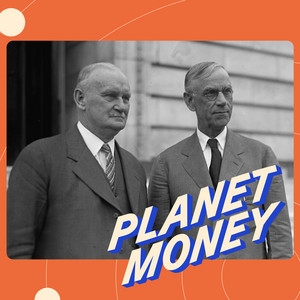
Most notably, Reed Smoot and Willis Holly.
You want to try and describe these men for our listeners?
So one of them is sort of tall and lean.
That would be Reed Smoot.
And the other is a little shorter and a little squatter, a little fatter.
And that would be Willis Holly.
Do you know the Muppets?
Yes. Do you know Stadtler and Waldorf?
They're my favorite Muppets.
Yes. They're the guys, the old guys in the balcony, who are jeering at the act on stage.
They can improve the whole show if they just change the ending.
Put it closer to the beginning.
Could we do another one?
Let's do one more. For once they've given us something other than second rate entertainment.
What's that? Third rate entertainment.
Do you not like the Muppets?
I don't think I'm as big of a Muppets person as you.
But it's okay. Well, fine.
It's good. Good Muppets.
Anyway, Reed Smoot was a senator from Utah.
Willis Holly was a representative from Oregon.
They were the heads of the committees in the Senate and the House that were in charge of tariffs at the time.
That's why their names are on the bill.
And the two agricultural products that were facing the most foreign competition at that time were wool and sugar.
So you can imagine one version of this where the politicians just say sugar and wool.
Okay, let's just put a tariff on imported sugar and wool.
And then, you know, we could debate the benefits of that.
But that is not even how the debate went at all.
Partly because of something called log rolling, which is basically vote trading.
So say you're a representative from a corn state like Iowa, then you're like, wait, why would I vote for your sugar and wool tariff?
I am not supporting that unless you put a tariff on corn.
But then the representative from Ohio would be like, wait, why am I going to vote for your sugar and wool and corn tariff?
If you don't protect my goldfish producers.
And everyone's like, goldfish producers?
Apparently, there was one firm in Ohio that raised goldfish.
And they thought that imported goldfish were eating into their market.
Are we talking like a little goldfish in a bag in a fair?
I think that's what we're talking about.
Really? Like an orange goldfish for your bull at home, like a goldfish?
That's right. Did they get a tariff?
35%. Industry after industry was lining up asking for a tariff, asking for protection, and the congressmen were overwhelmed.
They worked day and night.
There were a lot of complaints of members of Congress saying how they had to stay up so late listening to people groaning on about clothes, pins and oil drums and certain types of chemicals.
New York State Grain and Hay Dealers Association, they made the plea on behalf of the humble buckweed industry.
And just to be clear, is humble buckweed a quote from what actually happened then?
I think the buckweed industry is portraying itself as humble.
So they say we are the humble buckweed industry.
There were so many industries asking for protection that the Senate heard from more than 1 ,000 witnesses who gave more than 8 ,000 pages of testimony, like when it was all printed out.
And it's worth noting, unlike sugar and wool, a lot of these industries barely had any foreign competition.
It's unclear that the tariff would even help them.
But once the floodgates were open, the humble buckweed growers, the clothespin makers, the goldfish growers, I guess, they were like, come on, why not us too?
Yeah, why can't we get a little protection?
Right. And so instead of this being a tariff on sugar and wool and maybe one or two other agricultural industries, the ultimate number of tariffs that increased was how many?
I think over 800. Over 800?
Right. And look, of course, Congress has passed tariffs before, since the beginning of the country.
But this particular group of congressmen seems to be going pretty tariff crazy.
There is one group watching from the sidelines and thinking, oh, what are you doing?
Yeah, the economists.
When politicians start talking about tariffs, economists get very exasperated because tariffs, it might seem like they're solving one problem, but they can cause a million other problems.
That is true even for the people the tariffs are supposed to help.
I think we want to sort of help people understand like why this was going to potentially backfire.
Like imagine Sally is a wool farmer from then.
She is a sheep farmer.
Sheep, yeah, what should we be saying here?
Wool producer sheep farmer.
She's a shepherd. I'm a shepherd.
So if you raise the tariff on wool, that's definitely going to help sheep farmers and wool producers.
They definitely want that.
That's why they are fighting for it.
But also raises the cost of all the manufacturers of woolen goods, trying to produce coats and pants and others for consumers.
This is known as a downstream effect.
And so that is one problem.
A tariff on wool may help Sally the shepherd, but it has these unintended ripple effects for other people.
And Smoot -Holly was not just a tax on wool.
So now whatever benefits Sally the shepherd is getting, they are probably canceled out by the fact that tons of other things she needs to buy, those are going to cost more because Sally can't get these things at the global competitive price.
And another thing economists hate about tariffs is that they can cause chain reactions around the globe.
Like you can't just put a tariff on something and expect other countries to sit back and let that happen.
There will be counter tariffs.
And this is yet another unintended consequence that lawmakers apparently had not thought through back in 1930.
They didn't anticipate that there would be retaliation.
I mean, that's so crazy.
Like why not? Why would they not see that coming?
Well, because this was considered domestic legislation, pure and simple, and there would be no foreign ramifications.
And that was the way it was thought about at the time.
So those were like a few of the reasons that economists were screaming into their pillows about the Smoot -Holly bill.
And before the bill made it to the president's desk, the economists tried to explain all this one more time very clearly.
A group of more than a thousand economists got together.
A thousand economists.
Adjust for inflation.
That is like 5 ,000 economists by today's economists.
Easily 5 ,000 in today's economist.
And they wrote and signed a letter begging President Hoover or Congress to stop this Smoot -Holly nonsense.
We have a copy of that letter right here.
And it outlines all of the ways these tariffs will be a disaster for the economy in beautiful, passionate, meticulously detailed language.
Okay, may I say that?
Yes. Hoover, the politicians, they were like, nah, these ivory tower elites, they've never worked a day in their lives.
Hoover signed the tariffs into law.
And virtually everything the economists warned would go wrong, went wrong.
One of the most insane examples is eggs.
American egg producers theoretically got the benefit of one of the many Smoot -Holly tariffs.
So the tariff on eggs went from 8 cents to 10 cents a dozen.
But Canada, they were so incensed, they raised their tariff from 3 cents to 10 cents.
Whoa. So that was reciprocity.
They wanted the same tariff as we did.
And here is the beautiful boneheaded twist of Smoot -Holly.
American egg producers were exporting eggs.
They were making a ton of money by sending their eggs to Canada, or at least they were before Smoot -Holly.
Our exports fell from almost a million dozen to 13 ,000 dozen eggs over the same period.
So our exports of eggs really got whacked.
We lost a lot of dozens.
And Canada was not the only country that got pissed off at Smoot and Holly and America.
This kicked off an unprecedented wave of protectionism across the globe.
Protectionism aimed specifically at the United States.
There were a bunch more counter tariffs.
Countries formed trade blocs against the US.
Global trade fell by 26 percent in the years after this.
Because of Smoot -Holly and the protectionism that followed it, but also because of a little thing called the Great Depression.
Yeah. Smoot -Holly was in the works before the Great Depression, but it didn't pass until things had already started to go south.
And so probably the nicest thing anyone says about Smoot -Holly is, well, it didn't cause the Great Depression.
Yeah. Economists generally agree.
You know, a lot of things caused the Great Depression, monetary policy, et cetera.
But then the passage of Smoot -Holly, it sure as hell did not help.
We tried bouncing some metaphors off Doug Irwin.
So the Great Depression caused the US economy to basically flail in the water, drowning, and the passing of Smoot -Holly was the equivalent of sort of throwing it a brick to help.
Or a line with nothing attached at the other end.
That's so mean. That's like worse.
Because then you're giving people hope, but then you start pulling on it and there's nothing there.
And how did Smoot -Holly work out for the politicians involved?
Anyone? Anyone? Did it work out?
Anyone? And it turns out both Holly and Smoot were kicked out of Congress by their constituents ultimately.
So it didn't work out for them.
It took decades to truly undo the damage from Smoot -Holly to untangle the tariffs and the counter tariffs and the counter counter tariffs.
But slowly we did. The world moved away from protectionism towards free trade.
Agreements were made.
The World Trade Organization was set up as a kind of referee.
And then for years, you could shut down a conversation about tariffs by just saying, Smoot -Holly.
In fact, in the 1990s Al Gore was debating Ross Perot.
Perot was against the North American Free Trade Agreement.
And Gore brought a photograph of Smoot and Holly to the debate to be like, see where this got us last time.
Now I framed this so you can put it on your wall if you want to.
Thank you. Thank you.
Thank you. That is the sound of Ross Perot kind of slamming this photo face down onto the desk.
And that's because Smoot -Holly had become shorthand for, remember the last time we tried this?
Protectionism is a bad idea.
Of course, things have changed a bit since then.
We have to protect and build our steel and aluminum industries.
After the break, Smoot, Holly and Trump.
Attorney's at law. On the Ted Radio Hour, don't you hate it when leftover cilantro rots in your fridge?
I have to tell you, cilantro is like my nemesis.
Food waste expert Dana Gunders says that's just a hint of a massive global problem.
Food waste has about five times the greenhouse gas footprint of the entire aviation industry.
Ideas about wasting less food.
That's on the Ted Radio Hour podcast from NPR.
Breakup stories are going super viral online.
Normalize posting while you broke up on the internet.
I cannot believe I'm about to tell this breakup story and expose myself like this.
On It's Been a Minute, we're asking the big questions about dating.
Like what's the line between a juicy story and an invasion of privacy?
To find out, listen now to the It's Been a Minute podcast from NPR.
Tis the season for rich meals, twinkly lights, and New Year's resolutions.
At LifeKit, NPR's self -help podcast, we're here to help you make those resolutions less of a December and January thing and more like a year -long affair.
We've got shows that'll help you draw plans to meet your goals, whatever they are.
Get the tools you need all year round with the LifeKit podcast from NPR.
This message comes from the Kresge Foundation.
Established 100 years ago, the Kresge Foundation works to expand equity and opportunity in cities across America.
A century of impact, a future of opportunity.
More at Kresge .org.
So a couple of things you may have noticed about the recent tariffs situation.
We're talking through Trump's first term and then through the Biden administration, which kept a good chunk of Trump's tariffs in place.
So for one, you may have asked yourself where where was Congress in all of that?
Tariffs were seemingly enacted with no hearings, no vote.
There was no goldfish lobby.
No, no. It appeared as though the president was able to just tariff.
Yeah, he kind of was.
A huge difference between the Smoot Holly days and the Trump days is that the president now has a lot more power to set tariffs.
And look, you know, Trump and Biden did actually have to follow a process here.
They had to come up with justification for the tariffs in the case of the steel and aluminum tariffs.
It was national security, but like clearly they were able to get the tariffs done.
And this fact, the fact that the president can now levy tariffs, Doug Irwin says that is part of the legacy of Smoot Holly.
Yeah. After Congress went tariff crazy in 1930, they basically said, maybe we should have our tariff privileges revoked.
Congress delegated powers to the president to oversee the whole tariff system.
So essentially Congress said, look, we made a mess of it.
This didn't work out so well.
They were like a bunch of children who'd been let loose in a candy store and realized they couldn't be trusted to moderate their own intake.
They overate, they got sick, and they said they need some restraint on themselves from doing that again.
So they just, you know, delegate it to another party.
Over time, they delegated that power to the executive branch and to the president.
They decided that is the better system.
And arguably we watched that better system in action in 2018 because when Congress dealt with tariffs, the game was stacked against narrow tariffs.
You want to protect like only wool and sugar?
Well, good luck, buddy, because it snowballs quickly.
But when President Trump wanted to protect steel and aluminum, no snowballing.
He didn't have to trade votes to get it passed.
And so we're not seeing hundreds of tariffs like in the days of Smoot Holly.
Instead, we're seeing these very targeted, very political tariffs.
And it could stay that way.
But these tariffs still have economists like screaming into their pillows again, because even narrow tariffs are going to cause the same web of problems downstream effects, ultimately shooting ourselves in the foot.
Back in 2018, when we first reported this episode, we asked Professor Doug Irwin, like, do you think in 20 years somebody is going to write a movie scene about a boring high school teacher teaching the lessons of the Trump tariffs?
And he was like, who knows?
Probably not. But if they do make Ferris Bueller 2, Doug Irwin will be ready.
Do you want to give it a shot like doing the Ben Stein thing, but based on Trump's tariffs?
I could give it a shot.
Give it a shot. Ben Stein improvised.
Come on, Doug, you're here.
Okay. In 2018, the Republican administration of Donald J.
Trump instituted higher tariffs on anyone, anyone, steel and aluminum in an effort to protect the jobs of steel workers.
Did it work? Anyone, anyone?
It did not work. And we lost jobs in downstream user industries and it failed to revitalize the steel industry.
That is, that was off the top of your head.
Yes. Well done. Well played.
That was six years ago.
So this past week, we called up Doug Irwin one more time for an update.
We played him his impressively ad -libbed Ben Stein impression.
I guess if we were doing that again, I would do the same riff, but include China.
But unfortunately the result would be the same as did the tariffs work?
No, they really didn't.
China didn't change its policies.
They retaliated against US farm exports and bilateral trade went down.
And what's interesting is that the Biden administration didn't really pull back any of those tariffs in their time in office.
Most of the steel and aluminum tariffs are still in place today.
And Biden hiked the tariffs on China even further in 2024.
And Doug says that that has not changed our relationship with China.
If anything, they've doubled down on their economic model.
And now we can take a look to see exactly how these tariffs worked out in other ways.
For example, who bears the cost of them?
Well, in general, when a country imposes an import tariff, it's taxing its own consumers and other countries are not paying that tax.
So we see that very much with the economic evidence, this accumulated from the Trump administration's tariffs during the first term.
There have been multiple studies by economists that show that basically there was full pass through of those tariffs to the final purchasers or consumers of those goods.
Yeah. You know, the tax foundation, a self -stated nonpartisan, but conservative leaning think tank estimates that the Trump Biden tariffs amounted to a two to $300 tax increase on average for American households.
And a reduction in long run GDP by 0 .2%.
And Doug says, again, we have some history here to lean on.
In the late 19th century, when sugar tariffs were reduced, we saw a similar reduction in prices for consumers, one to one with the tariffs.
So that implies once again, sort of full pass through.
And we don't see this just with tariffs, but quotas or other trade restrictions, they all can cause ripple effects beyond the specific products being restricted.
When we saw that President Ronald Reagan in the 1980s limited how many Japanese cars could be sold in the US market, the price of Japanese cars shot up quite a bit.
And the price of domestic cars went up as well because it shifted demand to those cars and capacity was limited in the short run.
And so the prices went up.
Now, Trump has promised via Truth Social to impose tariffs of 25 % on all imports from Canada and Mexico, and an additional 10 % tariff on all imports from China when he takes office for his second term.
He has also mentioned like a baseline 20 % tariff on all imports coming in from anywhere.
It's a little unclear how much of this will get implemented.
But if it does, there is a little bit of that Smoot Holly energy poking through that has economists worried yet again.
So the similarity between Trump's proposals and Smoot Holly depends a little bit on which Trump proposals you consider.
If we're just talking about the special tariffs on Mexico and Canada, that's not really a Smoot Holly scenario.
But if we're talking about the 10 or 20 % across the board tariffs, that's in the ballpark of a real Smoot Holly increase.
And also in the ballpark of Smoot Holly, Mexico and Canada have already warned of similar tariffs in response.
Today's episode was originally produced by Laina Richards and edited by Bryant Erstat.
This update was produced by Sam Yellow Horse Kessler.
Previous update in 2020 was produced by Irina Huang with help from Gilly Moon.
Fact checking by Sierra Juarez.
Alex Goldmark is our executive producer.
And also we have a TikTok account.
And it's hilarious.
It is seriously worth a watch.
It is funny. They're incredibly unique.
And if you like adults swim and economics, you're going to love Planet Money TikToks.
We are at Planet Money on most social media.
I'm Sally Helm. And I'm Kenny Malone.
This is NPR. Thanks for listening.
And for what it's worth, Doug Irwin, popular at parties again.
Most people avoid economists at parties because we're known to be not exactly the most scintillating of personalities.
But all of a sudden, my phone is ringing once again, asking about historical analogies and what's going on with tariffs today and what the prospective impact might be.
So my holiday is over.
Lately, on the NPR Politics podcast, we're talking about a big question.
How much can one guy change?
They want change. What will change look like for energy?
Drill, baby, drill.
Schools. Take the Department of Education.
Close it. Health care.
Better and less expensive.
Follow coverage of a changing country.
Promises made, promises kept.
We're going to keep our promises.
On the NPR Politics podcast.
What are the best albums of 2024?
Find out on the latest episode of NPR's All Songs Considered.
There's a lot of people who could sing that exact line.
And I would be like, you're under arrest.
But she pulls it off.
Download new episodes of All Songs Considered every Tuesday, wherever you get podcasts.
Consider this is a daily news podcast.
And lately, the news is about a big question.
How much can one guy change?
They want change. What will change look like for energy?
Drill, baby, drill.
Schools. Take the Department of Education.
Close it. Health care.
Better and less expensive.
Follow coverage of a changing country.
Promises made, promises kept.
We're going to keep our promises.
On Consider This, the afternoon news podcast from NPR.