
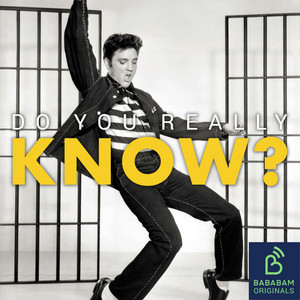
[The Musical Revolution and Enduring Legacy of the King: An Elvis Presley Retrospective]-[Why is Elvis known as the King?]
📋 Summary
The King of Rock and Roll: A Cultural Phenomenon
Elvis Presley remains one of the most significant figures in music history, a status cemented by his meteoric rise in the 1950s and his long-standing influence that persists decades after his passing. As noted in the podcast, Elvis is "indisputably a figurehead" of the rock and roll genre, serving as a primary influence for countless successful artists who followed in his footsteps.
The Anatomy of a Musical Revolution
Elvis's ascent to global superstardom was driven by his "inimitable" rhythms and a stage presence that consistently "wowed the public." His vocal delivery was characterized by being "filled with emotion," allowing him to transcend mere performance. The title "King of Rock and Roll" was first bestowed upon him in 1956 by journalist Robert Johnson, who identified the young performer as a "fledgling king." His commercial success was unprecedented for the time, boasting a catalog that included "18 number one hits," effectively leading a "real musical revolution."
Versatility and Artistic Controversy
Beyond his singing career, Elvis was a "cinema star" who achieved success across two distinct entertainment fields. His impact was so profound that his versions of cover songs, such as Chuck Berry’s "Johnny B. Goode" and Little Richard’s "Tutti Frutti," often eclipsed the originals in popularity. However, this prolific output came with friction. His "artistic overproduction" occasionally alienated fans, and his relationship with manager Colonel Tom Parker was fraught with tension, as Parker was often perceived as "exploiting the star for his own gain." Elvis himself was not immune to these pressures, candidly admitting to singing songs he "didn't personally like."
The Decline and Tragic End
The latter years of Elvis's life were marked by a struggle with "alcohol and prescription medication." His health suffered significantly, leading to hospitalizations following overdoses in 1973. Despite these challenges, he remained a touring artist; however, his concert appearances became "unpredictable." He would oscillate between looking "frail" and being "fighting fit," yet he continued "pushing himself too far" by remaining "always on the road."
Posthumous Legend and Enduring Influence
On August 16, 1977, Elvis passed away from a heart attack, an event that drew over 80,000 people to his funeral. His death did not diminish his fame; rather, it "elevated him to legendary status." The fascination with his life and death remains a cultural staple, with some fans questioning the official cause of death or even engaging in theories that he is "still alive." His legacy has only grown in "esteem" over the years, proving that his influence is timeless. Even songs that were initially commercial failures, such as "Always On My Mind," saw a resurgence to become fan favorites years later, underscoring the permanent mark Elvis Presley left on popular culture 45 years after his death.
Deep Learning with ListenLeap


