You're listening to Ted Talks Daily, where we bring you new ideas to spark your curiosity every day.
I'm your host, Elise Hugh.
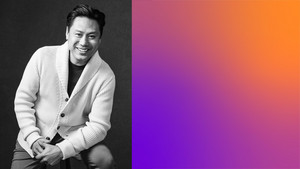
Filmmaker John M. Chu has enjoyed a really successful run over his career, directing films like Crazy Rich Asians, In the Heights, and the upcoming highly anticipated Wicked Film in theaters this November.
On top of all that, he's out with a new memoir, so we are thrilled that he sat down with Ted curator Whitney Pennington -Rogers to talk through how he nurtures creativity, embraces failure, and how his own family and other influences figured into both, coming up after a short break.
And now our Ted Talk of the Day.
Hi, John. Hey, everybody.
Hey, Whitney. How are you doing?
Good. How are you? Very good.
It's amazing to see people from all around the world.
Yeah, it's very fun.
Keep those coming, guys.
I think it's always exciting to sort of check out how people are coming here in the middle of the night to be part of these conversations, which is really cool.
And I just dropped off my kids.
I have four kids, seven, five, three, and one.
I have another one on the way, so dropping them off at school and then coming here to talk to the world is pretty mind -blowing.
Oh, my goodness. Congratulations on that and also on all the other things.
I'm so tired all the time.
Tired from family life, it sounds like.
And then also from what we hear, you have lots of other things happening professionally that are probably also making you very tired.
It seems like it's been a very exciting year for you from your memoir coming out and the first installment of Wicked.
So far, how would you say 2024 has stacked up and how are you feeling as you round the corner on the end of the year?
I feel very focused with a new baby coming and working on Wicked and feeling the pressure, feeling all the fans wanting certain things and what we need from a movie, you know, the cinema as just the business itself and the election.
And there's just so much.
But I feel very focused.
I feel like I know what I need to do.
I'm trying not to get distracted and just focus on getting the work done so I can deliver a movie that says something relevant, but is entertaining and fun and crazy.
It has big musical numbers and people can take something for the end of the year and celebrate with and share and all those things.
Well, I'm excited for that.
And I'm excited for us to get into all of that during this conversation.
And I thought maybe we could start actually with your book, which in a lot of ways feels like a nice sort of prequel to the film.
You you've obviously accomplished so much already in your career, but it's really clear that you're just getting started.
So why did you why did you decide to write this book right now?
Well, I felt like especially during the pandemic, there was sort of a shift in me as Elphaba would say in Wicked, something has changed within me, something's not the same.
And I realized that it wasn't just me, it was I felt like the whole world was feeling this sort of discomfort with who they are with what they got comfortable with.
And and so I started working with Jerry McCarter, my co -writer on this and talking about because there was a lot of things converging, technology and culture and identity and entertainment and data.
It was all colliding.
And so I felt like, oh, wait, I grew up in the Silicon Valley, and came to L .A.
to escape it, to do entertainment.
And I was finding my cultural identity crisis and all this stuff was all colliding.
And I was in a very unique position to tell what it felt like to be on the front lines during this change.
And there's a lot more of younger generation and people who are older who are going through this similar thing right now.
So I wanted a manual that I wish I had going through when I was chasing my biggest, most ambitious dreams and what the ups and downs would come with that.
So hopefully this guides a little bit or gives you a little comfort in your journey from whatever you're chasing or if you're in the middle of your chase to just keep going.
Hmm. Well, I mean, I was surprised in reading the book to see that it is it's so much more than just like a telling of your life story and even beyond just this how to guide for nurturing creativity and navigating Hollywood.
I was surprised to find that it's also in many ways a leadership book.
And I think above all else, it feels like a love letter to so many people and places.
And I want to sort of, I guess, break down each each part of that.
So if if we could talk about the leadership book part of it, throughout you have sort of these little sidebars where you offer insights into how you think about life and creativity.
And I'm not a Hollywood director.
And I found myself writing down a lot of little nuggets for for myself to come to later that things like creativity thrives on obstacles.
And I'm just curious if your intention was for people to gain sort of these like actionable tips from your own experience that you mentioned sort of a guide, but very specific things that they could write down and turn to later.
Yeah, I think some of my the biggest lessons of my life have been from actually making movies or trying to get an idea from nothing into a reality of something and not just on my own because making movies isn't a singular person's journey.
It is I have hundreds of people that I have to communicate with and be comfortable communicating with and be comfortable leading in certain ways and finding how to use their creativity and their storytelling skills to build.
Because I think the magic of movies is when we create something that neither of us could create separately, that we had to find each other to build together.
So it sort of came naturally in the storytelling of it.
I grew up in a big family.
I'm the youngest of five.
And my parents have a Chinese restaurant in the Bay Area called Chef Chews.
And it's still there.
Fifty three years later.
And I watched their leadership, I watched them not just lead.
It wasn't just running a business.
My dad and my mom and not just running our family, which was a whole thing in itself, but it was also leading a community in the 80s.
And for them in the 70s, when they started this restaurant as one of the first Chinese families in this community, maybe the first Chinese family that a lot of people in the community would meet and eat food at and and host.
And so I just think I just watched them a lot.
And I think those are the skill sets that I found that were the most compelling to to keep me going, I guess, through my through my journey.
And I feel like, as I mentioned, for me, definitely.
And I think there's so many things that are will be relatable for people no matter where they are in their in their journey or what sort of work they do, which is really cool.
And I think one of the hardest ones of that is like, you know, leading is not glamorous.
We're not on the red carpet.
Most of the time, I'm not doing interviews.
Most of the time, I'm usually alone in the dark in my room or in the edit suite with my editor or on set and everyone's whispering behind your back about what decision you just made or an actor doesn't agree with the thing or they're saying something that you can't seems like a good idea, but that's
not the way you planned it.
It's like all those little struggles.
Also want to put in the book just to make sure that you knew that when you're going through your day, it doesn't feel glamorous.
It doesn't. But that's actually the job that the secret is that it's like not actually magic.
It's grit. And survival and moving forward and getting through.
So hopefully those little stories also help get people through those things.
It's really a treasure trove of do's and don'ts.
And I feel like you also acknowledge how in many ways your story is very much just your own and singular and and and unique.
So I'm curious what you hope young creatives get from reading the book.
Well, when I got first got into the business, I had just come out of college, so I was really I felt very lucky.
You know, Steven Spielberg saw my short film and I got all these like Hollywood deals.
But I actually hadn't I didn't make a movie for five years or six years until I got my first movie.
But and I think those years are very I think those are hard.
And when you get through that, you know, when you won the lottery, when you're like get lucky and are starting your business, most of the time, I think a lot of people feel the imposter syndrome.
I felt even more so like, oh, I just I got really, really lucky.
And so you try to keep buying more lottery tickets.
But but actually, you need to spend that time learning the craft that you are that that you've been rewarded for the potential of having.
And that took some time to realize for myself of like, oh, no, I need to I need to learn this craft.
And and actually, there's there's a good and bad part of it.
I felt like I needed to prove myself.
And proving yourself can be a motivating factor.
And I still feel like that on days.
But there was a certain point after 10 years of doing that, after doing seven movies, doing many red carpets, doing many interviews that I still didn't feel good enough.
But I remember making Now You See Me Too.
And I was on set with all these great actors, Woody Harrelson, Michael Caine and Morgan Freeman and Mark Ruffalo.
And and I could almost feel hitting those ten thousand hours.
There was just like a surrender.
Like, I did. I was working.
These great people were amazing.
And I felt like, oh, I can hang with them.
And. I remember that that switch, that light bulb switch in my head of being like, then why am I here right now?
Like, what what am I contributing to this movie that only I can do?
And what do I actually want to say with this?
And it and I didn't have a full answer.
And I think that that completely shifted of, OK, what am I what do I want to say?
If I actually do belong here, if I am a filmmaker, like I finally can call myself an artist and not wait for someone else to call me that.
I can call myself a storyteller.
I can call myself a director.
Then what is it that you really want to say and do?
And that was that that woke me up.
And that was one of the hardest things to do, because it's not just about like, oh, I'm proud of myself.
I know who I am. Of course, you know who you are and you can go do your thing.
But, like, to to really find who you are, you have to put yourself through the fire.
You have to actually like go to your wounds and go to the thing that scares you most and confront that first.
And if you're an artist, that means maybe doing it publicly as well.
And that that that is terrifying.
So that's almost where the journey begins, not where it ends.
And interesting at the at that 10 ,000 hour moment is when you feel like it starts to get it gets exciting.
Yeah. Yeah. And you you suggested this just a moment ago that the book is really talking so deeply about failure and sort of thinking about survival.
And and you see in the book sort of how your thoughts about this evolve.
And I'm curious how how you're thinking of this has changed and how you embrace failure now that you have been through the fire, as you say.
Yeah, I mean, I look back at like my younger self starting in the business, I look at myself even just like seven years ago.
And I have empathy for that person still, because I've changed a lot in those seven years.
I mean, kids will change you immediately.
But. I have empathy for that person because.
I felt a long time, I felt guilty for not complaining.
You know, I was taught my family never complain, never complain.
You just do your work.
That's what my parents as immigrants who came to this country, they're like, America is the greatest place.
But you got to just like fit in and and and do hard work and you will accomplish anything you want.
And I believe that fully.
And I'm so glad I got taught that because that's what I did.
Never complain. And I think that gave me a lot of advantages that I didn't have to be.
I wasn't chained down by resentment or anger.
I just I actually believe that I could just keep doing this.
And I but I don't blame that kid for feeling that because when you're not in a position of power, it is hard to complain because.
You have no power to complain.
No one listens to you anyway.
And so I have empathy for that.
And I'm glad that I kept going as that person.
Now, as a a little further down that journey, when you have power, I think that's also the other switch that changes.
It's like, wait, I couldn't complain then, but I need to complain now.
Not just complain, but do stuff to change it.
I'm in a position where.
You're you have a privilege to to speak out and make action.
And so that that's where and that's a hard thing to take on because it's scary and it's a lot of responsibility and you know, you're going on the front lines and are going to get attacked, but you're just going to go do it.
And so when I think of my journey in those sort of chapters, I find it a great privilege to be on the front lines.
I find a great gratitude to be trying to make change at this moment in our culture and history when we're all trying to find our story.
I feel like we've taken down the mystery of the author.
Everyone's a creator.
So who are we as a people, as an as America, as the world?
What do we stand for?
What have we what mistakes have we made and and what is the new story?
And so and I'm a storyteller at this moment.
And so I and I've gone through some shit.
And so I feel very privileged to be here and to do that stuff.
And it's not easy, but I, but I so I guess when you're asking about failures and stuff, I feel like this is the line of work we're in.
This is this is the service we've decided to take and.
And we're all going to learn together, and so it's like link arms and go.
Hmm. That's the only way I can think of it too.
Honestly, to think, you know, I don't write about this stuff.
I don't. But it's just we are creators.
So the only thing we can do is just keep creating.
And hopefully there's other people in this community that can change certain laws or make certain other things changes.
And our journalists that write about and do it and put it out into the spotlight for the world to see.
But for us, we make.
And so that's why I stay focused on.
Hmm. I mean, and I think what's really compelling to this idea of like people from different spaces who can also contribute and in different in some of the ways you're describing it is that in the book, you sort of make this parallel between your own story and the story of your parents who are not in the entertainment
industry and are in the restaurant business, the hospitality industry and and how they sort of experience some of these same.
You know, you talk about their failures and their triumphs and how it fueled them.
And and so I think, you know, one thing, too, that's also interesting about this book is the you you end your TED Talk notably with love is the most important thing we can give to this planet.
And the book is is very much a love letter to many things, to technology, Silicon Valley, Steve Jobs, filmmaking.
And I think above all, your family and your parents.
And so I'm curious to hear a little bit from you also about how you think about love and the way that it influences the work you do.
How does it how did it factor into writing the book?
Let's maybe start there.
Yeah. I mean, love is, as we all know, like the most powerful thing, I think it's way more powerful than hate.
And we're in a world where there's a lot of pessimism and a lot of hate because that's easy, it's easy.
Love is harder. And I again, I feel very privileged to have grown up in a family with a lot of love.
So I know the value of that.
And so Hollywood is also a very cynical place.
But also movies stories are what set the vision, what set the horizon for all of us.
It's what's what what inspired me to go into storytelling.
It's why we go to Disneyland, frankly, it reminds us of our childhood, it reminds us of a time.
It's it's why we drink a Coke because we had a Coke when we were in the garage with our moms or dads or whoever.
Like, I think that that that love is in every single story because it is it is the it is the conduit for which we connect to others.
And so I think I got into the storytelling business because I had an abundance of love given to me, and I felt maybe my cup runneth over and I wanted to share more in that.
That doesn't mean that's easy.
And it doesn't mean that I didn't evolve through that.
But I think that was the most pure moment.
I also felt like I found that the camera and the camera helped hide me, too, because it's a mask.
You know, everyone loves you when you have a camera in your hand, everyone wants to invite you over if you and get interview or whatever.
Like, it gave me a reason to talk to people and an easy way to get into it.
But I think when I look back at where I'm at and my family, I think that I've learned a lot about how difficult love can be even to my family, especially writing about my family, because my family can be frustrating at the same time.
But I think writing this book helped me one, understand that I can't change.
I can't change my parents, as many of us know that I've tried many times.
I've tried to clean the garage and it always gets messy again.
I've tried to make them remember their Wi -Fi password.
They'll never remember it.
So. I'll remember for them.
Fine, fine, fine. But I think I have a lot of learning about their journey, gave me so much love, extra love for them, because leaving a country to come over to another country for with nothing to start a family, to give us every opportunity and to let us go run away and be storytellers.
Like, that is so rock star and so courageous.
I know now with kids, I don't know if I could do that.
I could not leave everything here.
Even if I hated this country and walked away, like, I don't know.
I don't think I could do that.
So I respect them so deeply now, especially as an adult when I look back and know how that journey could go.
So I also have a lot more empathy of, you know, we talked about stories they've told us and they keep the stories keep changing.
I didn't know how to like.
And I would get frustrated, like, just tell me the truth.
And they're like, this is the truth.
And it's like, well, it could have gone that way.
And you're like, ah, and as someone who's growing and trying to put all my life in sort of categories, it really doesn't fit that for me.
And I think I learned to understand that we do actually have a language barrier, even though I don't see that and feel that because we talk.
And that there is a language barrier still that.
When I show them my movie, I think they're watching my movie, they're laughing at the right parts.
But I remember showing it, we premiered in China and I brought my parents and their subtitles in Chinese and my dad watched the movie and his eyes lit up.
He's like, oh, I love your movie.
I'm like, what? You've watched my movie eight times.
What are you talking about?
He's like, oh, no, no, I get all the things.
I'm like, so you've been watching this movie and not understanding half the words or you have.
He's like, no, I get it.
I just so I just also like there's there's also like details that that connect with my my parents.
I find that now when I have my kids, I look at my daughter, I don't try to fix my mom, but I see her wounds and I try to make sure that my daughter has the comfort and the love that my mom gave me to heal some of those wounds that maybe she didn't have.
So I try to focus my my attention a little bit forward in that.
But I'm still figuring it out.
I have no idea all these.
So. Well, that's beautiful.
I mean, I I I feel like there's so many things you can relate to when it comes to families and the things that you experience in your family, no matter what your background is.
And and I openly wept at the end of your book, I will say, and I think hearing your relationship with your your parents, it's beautiful.
And I'd love to to move now to Wicked.
And you know, I think you get to wicked at the very, very end of you find her.
So in many ways, where the book ends is where your life is picking up at this very moment.
And it's clear that directing this film has been a lifetime in the making for you.
So what does it what does it mean to you?
What does it mean to you to helm this project?
Well, when I am, I'm a fan of Wicked.
I saw Wicked in San Francisco at the Curran Theater before it ever went to Broadway.
So I was in the same room with all the creators on the earliest days.
And I had no idea my my mom and dad would take us to the city every weekend to see shows when I was growing up opera season, ballet season or musical season and and and this.
I was at college. It was like my freshman year.
And so they're like, hey, there's a new Stephen Schwartz musical.
You should come see it.
And so my mom and I went.
So it was like old times again with us and watch the musical.
And I was just blown away.
Even in that form, in that rough form, I think they had cut songs after that and stuff.
But but even that workform, I was so moved by this.
Which who isn't a witch at all, who is seen as different because she's green, who feels out of place, has a narrative set on top of her and has to like.
Overcome that has to ascend above that and taking this the most American fairy tale, Wizard of Oz, maybe other than Star Wars, the Wizard of Oz and flipping it in a new perspective, to me, was like so compelling as a young person to watch that.
So for 20 years, I was like, this needs to be a movie.
I but never thought that they would ever hire me to make that movie.
So but 20 years later, it did come.
And I'm really grateful to it's a beautiful story.
And especially at this moment, there feels like an urgency to tell this story in the most again, American fairy tale at the time when America is going through our own identity crisis at the same time that cinema itself is going through its own survival crisis at the same time that musicals are the most
American genre of cinema being sort of reinvented and re found again right now.
To me, exploring those ideas and identity through all of that through at this moment is is is is is a moment I could not pass up so.
And in fact, you I think you've said that you're glad it took you so long to get to the Emerald City.
So I think beyond just even this moment, it sounds like for a cultural moment that there's something personal for you that that makes this this moment better for you to direct this film than any other.
Can you share more about that?
Yeah. Some people say that.
Like, oh, John, what's the movie that you always wanted to do?
And if that were the I would probably say Wicked, you know, have many years ago, I wrote it down on a piece of paper.
However, you don't get the luxury of choosing whatever story you want to tell.
You get to tell. Like, I think that's a misconception that I want to tell the story.
I'm going to go tell it.
Just give me a camera.
I'm going to I actually think it's more spiritual to that.
I think that the author and the idea, it's like of spiritual marriage that you can have an idea.
But if you don't give it a if it doesn't choose you to then it goes nowhere.
And so there is a wooing of an idea, an exploration, a curiosity of trying to understand it more and see if it grows somewhere.
There is a dating period of an idea for Wicked.
That was like. My dream girl, and I and but I could want it as much as I wanted to.
But if it wasn't right and it wasn't right time and it wasn't the right moment that this planet wanted us to make it, then it would have never happened.
And so when those things start to happen, when I got the call, I and I and it took me I mean, I think every movie that I did led up to this point of Wicked.
I had to do through step up movies in order to learn how to one, deal with a fan base that was on my space that really loved the step up movies.
How to work with dancers, how to find discover all these other dancers, young dancers with such beautiful, different forms of poetry.
I had to learn how to shoot that, how not to ruin their performance, how to understand the performance.
I had to go be with Justin Bieber and do a Justin Bieber documentary in order to learn for myself how how to sometimes you don't have to cut around everything.
Sometimes reality and truth is without the author in the way.
And you just shoot.
And sometimes you get to see how a kid going through this isn't meant to do that.
And so there's certain there's certain things I had to learn.
GI Joe had to learn visual effects and working with a comic book crowd and a toy company and and all those things leading up to crazy rich Asians about how to do the thing that's most scary to you about your cultural identity.
And then in the Heights, in the same way, and do it on the streets of Washington Heights all led to Wicked.
And so, yeah, I feel like every step got to this point and it chose me and I chose it.
So I'd help you get the results of that because I think it's beautiful when we when it all comes together.
And now back to the episode.
Well, obviously, Wicked is a deeply beloved story.
The you know, the play, of course, was a smash hit.
And we actually I'm going to start to bring in some questions from the audience because we have one from the author of a book called Finding Oz, where he tells the stories.
Evan, who's a TED member, tells the story of how L Frank Baum created the original novel, The Wonderful Wizard of Oz.
And he asked if your vision for the Wicked films goes back to the Baum novel at all for inspiration, either visually or in any way about the ideas behind the icons there.
Yeah, absolutely. That that is our main source of inspiration, other than the musical itself.
That is that L Frank Baum, even Elphaba is named Elphaba because of L Frank Baum.
And we have lots of we took characters from the novel, from the Denslow drawings that are in the, you know, in this movie that are in Emerald City or along the way.
You know, it's hard because it is sort of several different source material based off of the same thing.
L Frank Baum, Baum's, of course, which, by the way, when when I there was a certain point where after Arianna got the got the role, she sent me a gift and it's in this little box.
And it's a first edition, first state version of Wizard of Oz.
And it's always in my office.
I'm not even allowed to open it more than like 45 degrees.
It smells like old man.
Yeah. So yeah, the fonts style, the Denzel style all is part of it.
And even like some of L Frank Baum's history, which, you know, he has a complicated history.
He one of his jobs, one of his first jobs was to raise sort of fancy chickens to breed them and sell them.
And so there's a there's an animal band in one of our scenes.
And so I wanted these fancy chickens to be part of that animal band.
So if you see that, you know, that's my little nod to Frank Baum.
But at the same time, we are.
We are infiltrating his vision of America a little bit.
We are playing with the idea of what a hero looks like and and how story is used and.
But yeah, that I think that's that that's the fun part of it.
Well, Emma asked what was the most challenging aspect of adapting this for for the screen?
The most challenging part, the pure scope of it was really challenging beyond like the mental strain that it takes to decide how to make a show which has some plot holes in it and is barely long on Broadway and had to making the decision to split into two is very, very difficult.
But it also was such a a very natural choice, like we had no choice other than that because we could not fit it.
It could not fit. It would be overly bloated movie with too many things or or or we would cut it down to a point where it wouldn't be wicked.
The musical and that's that's the reality of it.
The challenge, though, from there was how do you make one movie as emotionally and satisfying as possible so it doesn't feel like half a movie?
And that was that was actually easier than I thought, because once you cut it out and then you track your characters and we know story architecture very well that we could just load it in on how to make defying gravity the thing you're waiting for the whole movie.
You have to start with Wizard and I to know her wants and her needs and you have to root for this character.
Maybe you have to know more about this character in order to really want this for her.
You have to see her maybe have a couple wins.
You have to have certain things and turns in order to make defying gravity the moment you're waiting for the moment of defiance, the moments of surrender.
She doesn't have to prove herself.
So some of that architecture was was was tough, but making that decision to split was was difficult.
But I think in the end of the day, it was making sure that we I made my all made my younger self proud that this is both wicked, but the cinema version of it, that's the crystallized cinema version.
And it's not the show, but it is the show.
It's that that's a difficult change.
We did it with Crazy Rich Asians where people are like, oh, that's like the book.
And you're like, if you actually look at the plotting, it's not a lot like the book, but it feels like the book.
And that's whenever we interpret something, that's that's what we try to get the feel of what it felt like to watch it and experience it and with all the things and protect the things, but be a different experience so they can all live together.
You can still watch Wicked, the show and Wicked, the movie and feel like they're two sort of separate experiences.
And with the two installments being released about a year apart, do will there be a I guess a big distinction between the way the film will feel for the audience as well?
I think so. I think so.
I mean, in the show, the they grow really, they grow in different ways and the tone shifts as well.
It's a more it's a it's a different type of tone.
It's it's it's sort of choices and consequences.
And consequences get get complicated.
And when you think about either the the two installments as a whole or just what's what's to come in November and what people will get out of this versus what they got out of the stage performance, what is your your big hope there?
Well, what we always said, it's about the girls, stupid.
The two women, Elphaba and Galinda, if we don't find Cynthia Rivo and Ariana Grande, we don't have a movie.
And we knew that. These two.
Everyone had to audition.
So first of all, imagine them coming into audition and having to sing for us to audition.
They had to act and do all the things and they jump through every hoop and every hoop and everyone we saw from no namers to namers that they were the most interesting people.
And they're the ones that you felt like it wasn't.
There were so many great talent.
No doubt everyone could have done it.
But there's that there is a connection when you know this is the one for this particular story of this time of this moment.
Those two those two women.
And I think that relationship is real, how they bond, how so different they are.
And yet how how much they share in.
How much they share in their ambition and in their love for the planet two different ways of going at it.
And I think people will feel that I think everyone will be an Elphaba or Galinda or some of us are all of them together.
So I'm really excited about that, to be honest.
Awesome. Well, I know technology and you know, you've been a long Ted attendee.
We're a TED speaker.
We're thrilled to have you here speaking with us today.
And tech is such a big part of how of the type of ideas we think about in our space.
You've long celebrated the way tech can support creativity and enhance storytelling, especially in your industry.
And I'm curious when you when you see what's happening out there right now with advancements in tech, specifically in AI, what do you think are the opportunities it could present for the future of visual story making and how you think about the work that you've even done just now with Wicked?
I think AI is a very broad word for many things that are changing our whole existence.
And I love I love technology, so I've I've tried to follow along.
It's hard to keep up because it's changing every four days.
Yeah, exactly. Every hour on the hour.
But I'll tell you what it's what you can't do is ignore.
Something like this and and and, you know, creativity is yes, a small section of what AI is going to change in this world.
So but but but but I think it's the it's the realm that we never thought computers were ever going to touch like actual conception of of ideas.
And I think it only points a lens back at us to say, OK, what is creativity?
OK, what is your message?
What is your message?
That's so unique. It's in a weird way.
I feel like it's the same when Instagram had filters or something or when camera phones hit every every every phone that you're like, oh, wow.
Everyone has a great camera now.
He's like the barrier isn't having a great camera.
And they and actually every camera can use software to fix the lighting.
So it's not even about lighting anymore.
It's maybe not even about composition because you can change everything.
So what is it that all goes together?
What you're what you're trying to say.
So like an Instagram photo is an Instagram photo.
But art photographs is something that that we choose of what that what is going to be art in that in that in that moment.
And so it changes the values of things.
And I think for AI in our creative space, it's going to change the value of maybe production value.
Like having a giant set may not be the thing that wows people anymore in the same way that when you go see a Marvel movie, a big giant planet flying through is not as compelling as it was when we saw it in Star Wars.
Doesn't mean it's not amazing.
It just means it just if you can pay for it and get done and whatever.
Like, OK, so what? So what?
So what are you saying?
And I think that that's the onus on us.
I believe in our human capacity to outrun to use creativity to break rules or expectations of what you think is next.
That's literally our job.
So I believe that humans can and will do that continuously.
Now, I also think there's some great tools with AI.
I mean, technology has always been a great tool.
Help. I was there for when it went from analog to digital, from linear to nonlinear.
I mean, we were all a lot of us were there to to feel that shift.
And and yes, it was uncomfortable at first, but then changed everything and changed and democratize the whole process.
So I'm excited to see there probably be an A .I.
category. Some 14 year old kid will make a full on the snow white of of A .I.
movies. That won't be my category.
But I'm sure that person will do their thing.
And just like electronic music has its own category of stuff.
I really believe all that.
But I'd also think like for me, I'm sure I'll use it in some way.
I don't know exactly how yet I've been playing with it, though, to see just to know, I think in order to in order to really figure out what the boundaries of it should be, we have to understand it.
And so it's the wild, wild west right now.
And I think that, you know, legislatively, we need to we need to do we should protect intellectual rights and we should do that.
I just don't think those buttons and the levers sort of work that fast.
And I'm not sure we have the political leaders who understand technology like that anymore.
So, again, as a creator, since I'm not a politician, the only thing I can do is understand it so I can make better decisions of how to use it or how to help inform people of where the issues are with this.
And we're getting into this just a little bit now, but I guess on the the flip, like what is it that scares you about it if there are things that that scare you?
I'm scared that it's a lot of the immense amount of power.
I know when you first get into this business and you get the microphone, there's a fantasy to that.
I mean, the same thing with Twitter, I guess, that you have the microphone.
You could say something and and you're not a kid anymore.
The moment you get that microphone, the world comes after you or you influence the world in whatever place you're at in your life.
That is a powerful, powerful tool.
We're putting a a Mack truck in the hands of whoever.
And not everyone understands the grammar of audio visual storytelling or what you have in your hand when you're doing it.
So like a baby rattlesnake, it usually puts the most poison on and more than an adult rattlesnake, because it just doesn't know.
And so I am scared for someone who gets in their hands and doesn't know what they're doing, and not necessarily bad, even bad intentions, but that they spread something or do something because it seems kind of funny or whatever.
And it causes real damage to people's lives.
So that's what I'm scared about.
I'm not scared about.
I mean, there's jobs that are going to be lost.
I feel like technology does that often.
And that's a cycle that we go through.
And I believe in people to figure out how to how to do that.
We lost lab workers when we we didn't make film, shoot film anymore.
But we gained DITs and we gained digital edit houses and things like that.
And it's not an easy process.
But but but that's a there is a natural flow to those kind of things.
So. Yeah, I'm also scared that we that AI creates out of this pool of ideas that have been set in the soup already.
And we have so much more to add to that soup.
We have so much more ingredients to add.
And so that's why I think right now is like an urgent time to make, make, make, make because this AI is reading the soup and we've only had certain perspectives in that soup.
And for us to get in there, say this is also beautiful.
This is also a hero.
This is also what you don't know.
This is what makes my parents funny.
Not what you think my parents are funny talking or anything.
It's this is what makes them funny.
Like we have to add more to the soup.
So I get I get worried about we have a short window to flood the gates with as much our human ideas and perspectives so that when the soup is going to be used in the future, that it has full context.
Well, we have a flood of questions coming in from our audience.
I want to make sure that we get to a bunch of them.
So I'm going to start to integrate more of those into our conversation here.
So Tony is curious about how you approach working with actors.
It's it's it's I work with actors in the same way that I work with my production designer, with my costume designer, with my editor, with my cinematographer.
Like we are a shared creative authors.
And again, not all directors maybe do this and all power to them because they make amazing movies.
But for me, I love the process of working together on something.
I, of course, have a vision.
If I were to sit down, I could draw on every frame of my movie two seconds.
But that's if I can draw it out in my bedroom, that's not the best movie that's going to be made.
So that said, working with an actor, I sit down and I give them, I say, OK, we're going to be partners in this.
Here's what I need.
I need to show up on time.
I need you to hear the character.
Here's how I see the characters.
And I'm open to discuss what that is.
But we sort of need to be on the same in the same planet, same universe because we're going to go through this.
And by the way, it doesn't mean we have to agree on anything because our relationship to be able to have real, honest conversations is a part of this partnership.
So I should be able to call you and I will say this to them.
I said, I should be able to call you and say, hey, why are you late every day?
If I can't say that to you, then we're not going to be great partners.
And when you say that up front, it takes a lot of the stuff off the table because I can call them about anything.
I can say, hey, you were a little distracted or like, hey, I know that you want to do this thing tomorrow.
Here's how I see this part of the thing.
I will let's let's shoot your version.
But can you can you do me a solid and let's shoot my version as well?
And I promise in the edit room, I will protect us whatever's best for the movie because we don't know all the pieces we're making for the movie yet.
But we will know the context later as the movie comes together and it will tell us which the right answer is.
I have to have those conversations.
I'm not like, oh, Dwayne Johnson, you're the best.
What do you want to do?
I'm not like that. And I'm not like, Dwayne, get over here and just move your head and blink your eye.
Like, they're not going to take that either.
So there's a lot more work to have a relationship like that.
But I kind of find the joy of my job in in those kind of trying to solve that puzzle together.
I feel like that's another great leadership tip that can be applied anywhere.
Right. That it feels evil.
Yeah, that's why I read my book.
It's a work in process always.
So it's it's just process.
It's it's a creativity is not a light bulb.
I think I say in the book that you don't you can't just switch it on.
It's a risk every day.
It's a rehearsal. So you're gathering ideas every day and putting it in your Dropbox folders or putting it in your journals or whatever.
So when I need to come up with an idea, I'm not going to wait for like God to give me some amazing ideas.
I'm like, that could happen.
But but but I'm going to go back to my what I my reps, what I do every day.
I'm going to say, hey, what characters do I find interesting?
Oh, yeah, does that attach to this?
No, maybe. No, it doesn't.
But it sparked something and I can go there like we are just we are.
We are information in our heads and trying to find a way.
So the more prompts we have for ourselves, maybe get us to our idea quicker.
Well, so I sort of along these same lines to asks, how do you find inspiration and build up your creativity?
That's a good question, because when you're making a movie, you're you're making something every day and you're being creativity.
But you're in a very specific lane.
So it's really hard to see outside your lane.
And that's that's probably the most difficult thing I try to and the scrolling on TikTok, I wouldn't say.
Sometimes that that will spur something.
I mean, it's definitely a lot of things you get to see really quickly.
So I don't know the answer to that.
Right now, for me, in my process, my family, because I get to live through, you know, six other lives in my household, is that right?
I don't know. Yeah, six other and seven, if you count the one in the oven.
I tried to and actually really having kids, I talked to them every night and we asked them, you know, what's what are the what kind of thing they did for somebody, what was the kind of thing that was done for them?
And we also asked them, do you have any questions for us?
And those moments are like fascinating because they ask the the the most interesting questions.
And so I try to keep.
I try to keep aware, I guess, of the world that way for me right now.
Usually, I just I do journal or not even I don't even know if I call it journaling, I put it, I collect every time I see something, and especially with a phone, it's easy.
I take a picture of it.
I see an article. I take a picture of it.
I screen grab it and I put it in these folders and I have a character folder, a scenario folder, a relationships folder, a visual inspiration folder.
Just colors. So I have all these different things.
I used to put it in a like a like a spiral and I just taped him in.
But I got lost that a long time ago.
Now I have now I have an actual dropbox folder that I put all the stuff in.
Well, I call it my pantry, your pantry.
Oh, as a throwback to your parents there, right?
Exactly, exactly. An ode to your parents.
Well, we have a lot of people who are really also very curious about how you stay true to yourself, which feels really connected to this and thinking about your your family and how they factor into your creative process.
But how do you manage to stay true to yourself in an ever evolving space?
And especially when it comes to creative work?
Yeah, that's a really hard question because I struggle with that all the time.
When you're making a movie.
You have you have your like your laser vision.
That's how you lead hundreds and hundreds of people.
And yet you have to have room to keep discovering.
I mean, I came up with a line yesterday for the movie and we locked our movie last Friday, so I can't put it in and it's driving me crazy.
The last time I was like, how could I could I slip it in?
Well, maybe I'll do it in the movie, too.
I don't know. I don't know the answer to how to keep because there's a lot of stuff coming at you, I will say, though, talking about process is actually really helpful.
Like talking about it right now is really helpful for me.
I talk about working every time I, you know, I work on the script and I work with a writer on the script and I have a vision for it and I'm trying to get the writer closer to my vision.
It's very frustrating.
But the vision that the writer has something to bring to it.
And when we finally get there, I'm like exhausted.
And then the actor comes in and then the actor comes in and they have ideas on the scripts.
And I'm like, no, no, no, I just got this perfect.
And the way they say a line is the way, but actually, it's actually OK.
And then and then we get that just right.
And we do versions and we cut all that and we shoot all this stuff.
And the editor cuts it together and I'm like, that's not my gosh, I'm starting over again.
And then I'm like, no, just move this around here.
And but then he does some things that are really great.
And then we find this thing to get.
So and then the composer comes in and changes all this music.
And you're like, no, I mean, it is a constant erasing.
And I feel like I'm one of those.
I think those monks that like have the sand and the art and then they blow and then the wind blows it away the next day and you have to be OK with that.
Like there is beauty in the temporary brilliance idea.
But if you do it every day, then it's an average of.
The amount of creativity and free spirit that you give to each of those days, it's sort of like you get a little inch every time and hopefully it accumulates.
So I think every I think it's hard because I you you can't I can't distill it.
It's just about the practice of.
Loving the process of building and destroying and building and destroying.
And that's not a glamorous way to see it, but we all know instinctively, that's how our life is, no matter how many people look at us and they're like, wow, you host this and you host that and that you're like, yeah, but I had to do a lot of this other.
But I won't talk about that, but but as a creator, as we are all creators, like we know that it's just the average of of things that we just get through every day.
So that's what I would try to think about it.
You know, well, I'm definitely going to write down there's beauty in the temporary brilliant moment when I get off of this call with you.
So Adnan has a question about representation, which is something that we know has been really important to you and the work that you do and the type of stories that you tell and how you tell them.
And so how when you think about representation and the way that the wins we've had, the accomplishments we've made as a society, what is how do you know that we've arrived?
I guess when when do you know that the work is is done?
What is the work done?
I mean, I don't know.
I don't know if that's possible.
We fully done with the work because if you're representing, I mean, the world is so big and we have so many things that we don't see.
So many blind spots like maybe that's that's the whole beauty of being human.
It's like it's a constant opening our eyes like we're always we're born.
But like light is coming in every ounce until it's not.
And I and so I don't I don't know that if there's an end game other than that the more we we know, the more we can relish in this life.
And I so for me personally, you know, we're in baby steps.
We're in the movie business, which is it has a certain value to it because there's giant corporations behind a movie and they promote ideas.
They promote beauty.
They promote what hero looks like.
They promote how you should live or what you aspire to be like.
So it has a it has a weight to it.
And so I play in that game because I was affected by the weight of movies.
It spurred my creativity.
It gave me a purpose.
It gave me it gave me another life in my in my head.
And it's for some reason something that I can do.
I just happen to connect the dots and some of those things.
And so when I look at that value of that space that movies provide and I look at.
Who I am and how what kind of space I take up in that space and how I want to live my life, I think about now I think about a lot of my children, how to build the canvas for them to live in the America that I was always promised that I actually believed in.
And maybe some of it was there and some of it was not.
But I would love to create the canvas that is more there than than was before, which is, I think, the whole idea of America is this promise and this idea that we're always going towards.
So I think that's part of my role as a storyteller in the movie business is to sustain that now I can do in many ways.
I can be a pessimistic and knock on all the faults of America.
Or I can I feel like I'm best at serving as a celebration of the capacity of of human beings and the capacity of our love and the capacity of our relationships, not naivete, but the capacity to get through and that light is light and it's beautiful and it feels so good and joy is real and it's deep
and it's fun and will make you smile and will make you cry.
And it is not homework.
I think the heart of it all is like I don't want my I don't want my movie to be homework, I want to be entertainment like that's that's what got me in.
I want that. But at the same time, I can make.
I can make beauty something that maybe Hollywood hasn't seen.
I can make a hero that Hollywood hasn't seen and make it just as exciting as they did in those old musicals when Fred Astaire or any of those people went through like.
I think that's valuable and I don't have to be loud about it.
I don't have to make a huge thing about it.
Other people can do that and that's great and fine.
But for me, like I know that's how I can specifically take the space.
And so I'm laser focused on making the most entertaining pieces of of of story.
I can. But I am not shy in infusing it with how I see the world because I know it's real.
I have a I do have a valuable vision because I 100 percent know that it is real.
The world that we can live in is real.
I've lived in it. I've seen it.
And I've seen the world fight back against what that is.
But I've seen it and it's glorious.
And so if I can give people a little glimpse of that, hopefully other people can believe that as well and and do their part in getting us there, too.
Well, Shreya is an aspiring filmmaker and she would love your advice for somebody who's interested in moving towards this career, but hasn't already started in that space.
Someone who isn't in this career, but is moving into this space, is that what you're saying?
OK, it is a tough time to be in this space.
And by this space, I don't know what you mean.
However, I will say I will tell you what I what I think.
As a kid, I. Found a camera and I found editing, but I also I was a storyteller at heart.
Those were the tools I used.
But deep down, I was surrounded by storytellers.
My dad and my mom, who are hosts of this thing, they listened to stories and they told stories back.
And so I think we are when you're in love with creativity, you are a storyteller.
That is your craft storytelling.
How what medium in which you use your craft is is your choice and maybe your discovery over time.
So I can do movies just so happen to be the thing I loved and wanted and happen to work for me.
But if I didn't, I would be doing this in commercials or if I didn't get it, I would be doing this in wedding videos and bar mitzvah videos, which I did in high school.
So the itch is scratched from different ways of storytelling.
So I would be one, I would say, you know, movies are one thing, but it is a it is a specific, very specific art.
Independent movies versus studio movies are two very specific arts.
Streaming movies versus theatrical are two very different arts commercials.
All these things. So I would keep your antennas open.
I would work on your storytelling, which is making yourself emotionally available, getting to the core of what makes you tick and the and the hot takes on the world that you want out there from your own personal personal perspective.
That's the only thing that's going to be.
That's the magnet that draws people to you.
And two, I would be drawn to the things you love, whether it's drawing or painting or filmmaking.
And I would go do those things.
But I would always keep your antennas up.
Maybe it's not directing.
Maybe by directing, you found out, oh, sound is my thing.
And you go tell your stories and sound.
You know what? Costumes.
I know costumes and I I'm valuable and I can give value from that.
So I'm going to go do that thing.
You are an asset to be acquired.
So whatever store if you're a great and storytelling is required in all of those to be great.
And I've seen it in all those great people that they are storytellers first.
So just keep your antennas open as you're on your journey, pick the journey and go.
But keep your antennas open.
Don't get stuck because you will find your way through there.
Well, as we wind down, I know everyone on the call is curious about what is next for you.
And Gordon asks us in the I think the most interesting way.
He says, after making Wicked, what project will take you the next 20 years to fulfill?
Definitely my kids.
Definitely my kids.
But I feel like all the great storytellers.
Walt Disney and and even the Pixar when Pixar was at its peak, although some would argue it's pretty good right now.
But Pixar was at its peak.
With Toy Story and Fighting Nemo and all those, they were all new parents or had young young kids.
I've seen it in other filmmakers.
And it doesn't mean that that's required.
But I get I tell myself this because I think my best years are yet to come because I'm watching these children get the building blocks for life.
And I'm learning. I'm learning so much.
I'm learning so much what makes a human tick.
And that's the secret that I've been trying to figure out my whole life as a storyteller.
But I get to witness it now.
And I feel so much empathy towards children now.
I can work with children better now because I I feel them.
But so I'm hoping and that's that that that through this I will I will discover what the new temporary art that I will make and and that I will surrender to what I'm meant to do when I meant to do it.
But I will work my hardest and do my best at what I have to do every day presently.
Well, as a parent to two small children myself, I really appreciate that.
And thank you so much for everything you shared with us today, John, and taking the time to chat with us.
Your wisdom has been so meaningful.
The comments have been glowing of all the things you've shared and very appreciative.
So thank you, John.
Thanks, everyone. That was John M Chu in conversation with Whitney Pennington -Rogers at a TED membership event in 2024.
If you're curious about TED's curation, find out more at TED .com slash curation guidelines.
And that's it for today.
TED Talks Daily is part of the TED Audio Collective.
This episode was produced and edited by our team.
Martha Estefanos, Oliver Friedman, Brian Green, Autumn Thompson and Alejandra Salazar.
It was mixed by Christopher Faizi Bogan.
Additional support from Emma Tobner and Daniela Valeriezo.
I'm Elise Hugh. I'll be back tomorrow with a fresh idea for your feed.
Thanks for listening.