
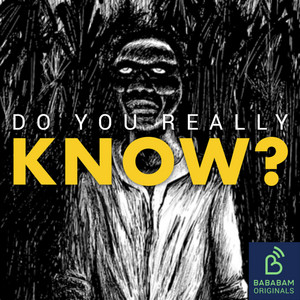
[The Dark Reality of Zombies: Exploring Haitian Voodoo and Cultural Lore]-[Who are the real-life zombies that have been seen in Haiti?]
📋 Summary
The Cultural and Spiritual Origins of the Zombie
While Western audiences primarily encounter zombies through the lens of horror fiction—ranging from The Walking Dead to Resident Evil—the concept possesses deep, historical roots that extend far beyond the realm of mere entertainment. The term "zombie" finds its linguistic origins in Central Africa, specifically from the word "anzambi," which originally referred to a "ghost, a spirit without a body." As the slave trade forced the migration of these cultural beliefs to the Caribbean, the meaning evolved within Haiti to describe a diametrically opposed state: "a body without a spirit."
This transformation is inextricably linked to Haitian Voodoo (vaudou), a complex religion that synthesizes African, indigenous, and Catholic traditions. Within this cultural framework, a zombie is not the flesh-eating, mindless monster depicted in cinema; rather, it is a human being resurrected through "magical means" by a "bokor," or a sorcerer. The bokor utilizes "spells and potions" to reanimate a deceased person, not to grant them a second life, but to subjugate them as a "mindless slave" forced to labor under the sorcerer's total control.
A Fate Worse Than Death: The Loss of Agency
In Haitian culture, the horror of the zombie is not found in gore, but in the profound loss of "freedom, agency, and identity." The belief system posits that when a person dies naturally, their soul moves on to the spirit world to find peace. A zombie, conversely, represents a "trapped soul." The body is physically resurrected, but the "consciousness remains detached," leaving the individual in a state of eternal unrest.
This spiritual enslavement is viewed as a "fate worse than death." By being forced to perform "menial tasks without any awareness," the victim is stripped of their humanity and denied the finality of the afterlife. This adds a layer of existential terror to the concept, as it represents the ultimate exploitation of the human form, cut off from both the living world and the spiritual afterlife.
The Case of Clairvius Narcisse: Evidence or Folklore?
Discussions regarding the reality of zombies often gravitate toward the case of Clairvius Narcisse, the most documented instance in history. In 1962, Narcisse was officially declared dead at a Haitian hospital after suffering from "severe respiratory problems." He was buried, yet 18 years later, a man who bore a striking resemblance to Narcisse appeared in his home village, identifying himself as the man long thought to be deceased.
Narcisse provided a chilling account of his experience, claiming he had been resurrected by a bokor. He alleged that the sorcerer had used a "powder made from pufferfish toxin" to induce a profound "death-like state," allowing the bokor to bury him and then exhume him to serve as a laborer. According to Narcisse, he was "drugged and enslaved as a zombie" on a plantation for nearly two decades, only regaining his freedom after his captor passed away. While the case remains a subject of intense "fascination and debate," it serves as a cornerstone for those who argue that the phenomenon of real-life zombies is rooted in pharmacological manipulation and cultural belief rather than purely supernatural occurrences.
Deep Learning with ListenLeap


