
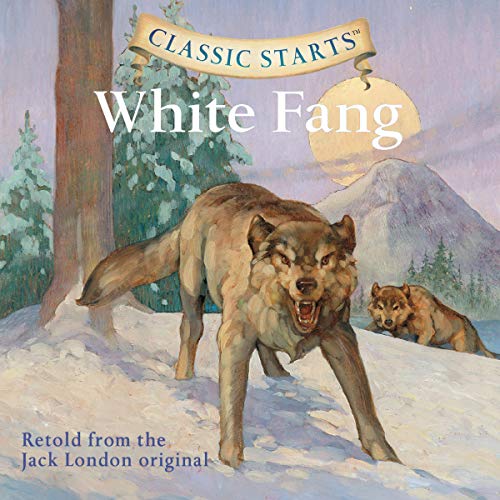
[The Evolution of Trust: White Fang’s Journey Toward Emotional Connection]-[White Fang - Part 20]
📋 Summary
Introduction: A New Paradigm of Existence
In Chapter 19 of White Fang, the narrative shifts from the harsh, survival-based existence of the wild and the brutal servitude under Gray Beaver to a life defined by stability and kindness. Living with his new master, Weedon Scott, White Fang experiences a radical departure from his past: "there were no beatings, plenty of food, and many kind words." Despite these improved conditions, the wolf’s transition is not instantaneous. His history of trauma manifests in persistent behavioral patterns, such as the tendency to "bear his fangs at other dogs" and a deep-seated "nervousness about hands coming too close." This period marks the beginning of a profound psychological recalibration for the animal.
The Discipline of Labor and Social Integration
Under the care of Matt, who manages the daily logistics of the sled team, White Fang finds a new rhythm. Unlike the grueling, high-pressure labor he performed for Gray Beaver, this work is described as "much easier" with "lighter" loads and shorter distances. Crucially, the environment is strictly regulated; Matt acts as a mediator who "would not allow" fights, physically pulling apart any animals that attempted to incite conflict. This enforced peace allows White Fang to coexist with other dogs, though he remains emotionally detached, choosing to "keep his distance" rather than fully integrating into the pack.
The Crisis of Abandonment and Emotional Awakening
The narrative tension peaks when Weedon disappears for several days. For White Fang, this absence is not merely an inconvenience; it triggers a psychological regression. He experiences a "familiar sense of mistrust," feeling suddenly "forgotten" by the one person he had allowed himself to be "devoted" to. His physical response is visceral: he "refused to eat," sat on the porch "whimpering," and clawed at the door in a desperate attempt to find his master. This reaction is a significant milestone in his character development, proving that his bond with Weedon has moved beyond simple obedience into the realm of genuine attachment.
Matt’s attempt to intervene—bringing the wolf inside and writing a letter to explain that "the wolf won't work" and "won't eat"—highlights the depth of White Fang’s despair. He lies by the stove, indifferent to food and human comfort, waiting exclusively for Weedon’s return. This state of emotional paralysis underscores how deeply the wolf has invested his sense of security in his master.
The Reunion: Learning the Language of Love
When Weedon finally returns, the transformation in White Fang is palpable. Unlike the other dogs who rush forward, White Fang initially stands "watching and waiting," a testament to his complex, guarded nature. However, the moment of physical contact triggers a breakthrough. As Weedon rubs his hands through the wolf's fur, White Fang emits a "crooning growl" and performs a series of actions that were previously foreign to him: he "wagged his tail," "thrust his head forward," and "nudged and snuggled" against his master.
Conclusion: The Final Transformation
This interaction serves as the climax of White Fang's emotional journey. The text notes that he was "learning to do things that other dogs took for granted," such as greeting his master at the door and seeking physical affection. The chapter concludes with a poignant observation: "He was learning how to love." By moving past his instincts of suspicion and isolation, White Fang completes his evolution from a wild, reactive creature into a domesticated companion capable of vulnerability and loyalty, proving that even a life forged in the furnace of the Yukon can be softened by patience and genuine affection.
Deep Learning with ListenLeap


