
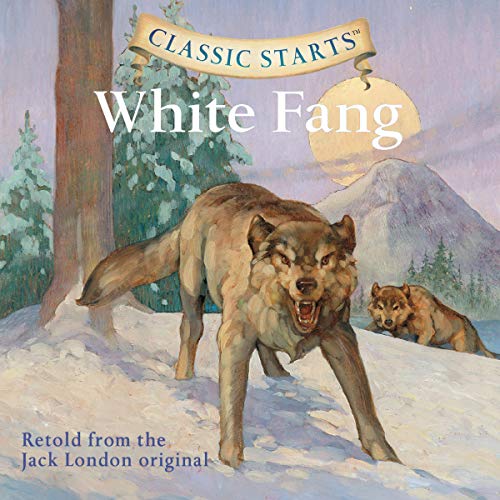
[The Brutal Arena: White Fang’s Ordeal and the Turning Point]-[White Fang - Part 17]
📋 Summary
The Life of a Fighting Wolf: Exploitation and Cruelty
In the sixteenth chapter of the narrative, White Fang finds himself thrust into a grim new existence under the ownership of Beauty Smith. Advertised as "White Fang the Fighting Wolf," the animal is transformed into a spectacle for human entertainment. The primary motivation for this arrangement is greed; men gather to "pay money" and place "bets" on fights that are "often to the death." White Fang is forced to battle various opponents, including other dogs, wolves, and even a lynx.
For White Fang, this life is a paradox. While he learns to "enjoy the fight," it is only because he prefers the violence of the ring to the "beatings from Beauty." His master, Beauty Smith, is characterized as a "coward" who lacks "mercy, protection, or justice." Much like his previous owner, Gray Beaver, Beauty finds gratification in exerting power over a strong animal, keeping White Fang "locked in the cage" and denying him any opportunity to express his natural wolf instincts.
The Encounter with the Bulldog
The central conflict of the chapter arises when White Fang is pitted against an English bulldog. Initially, the wolf underestimates his opponent, noting that the dog is "small and round" and assuming the fight will be easy. However, the bulldog proves to be a formidable adversary. Despite his seemingly friendly demeanor—his tail wagging and tongue "lolling out"—the bulldog possesses "incredibly strong" jaws and a low center of gravity that makes him "difficult to tip."
As the fight progresses, the two animals become "locked in a grip." The bulldog secures a hold on the "fur around White Fang's neck," rendering the wolf unable to free himself. As the crowd cheers and the stakes of the "wagered" money rise, the situation becomes dire for White Fang. Beauty Smith, focused solely on his own "fame and fortune," reacts with a "rage" when he realizes his prize fighter is losing, resorting to physically "kicking White Fang" in the ring.
The Intervention of the Outsiders
The narrative shifts when two strangers enter the scene. Unlike the bloodthirsty crowd, these men do not participate in the "cheering and betting." One of them, a "young, clean-shaven man," is visibly repulsed by the spectacle. When Beauty Smith attacks the trapped wolf, the young man intervenes, labeling the spectators as "cowards" and "beasts."
With a "smashing blow," the stranger knocks Beauty to the ground. Supported by his friend, Matt, the young man—identified as Weedon—takes control of the situation. Despite Beauty’s attempt to retaliate, the stranger strikes him down again. Ultimately, Beauty Smith realizes that the "snow was the safest place for him" and ceases his resistance. This intervention marks a pivotal moment for White Fang, as the cycle of abuse under Beauty Smith is forcibly interrupted by those who find the cruelty of the fighting ring morally abhorrent.
Deep Learning with ListenLeap


