
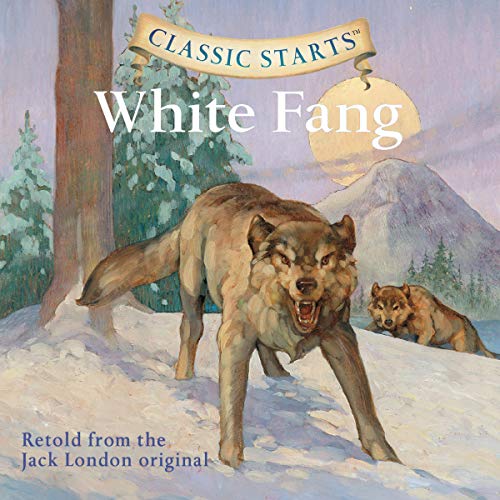
[The Arrival at Fort Yukon and the Shadow of Beauty Smith]-[White Fang - Part 15]
📋 Summary
The Transition from Wilderness to the Gold Rush
Following a long, tranquil period of travel along the McKenzie River and across the Rockies, White Fang and his master, Gray Beaver, arrived at Fort Yukon in the spring of 1898. For White Fang, the journey had offered a rare "time of calm" and a potential hope for a "new life" away from the hostility of other dogs. However, this solitude was abruptly terminated by their arrival at the Hudson's Bay Company trading fort, a bustling hub defined by the chaotic energy of the Klondike Gold Rush.
The Harsh Reality of Fort Yukon
Fort Yukon served as a transient landscape where "thousands of gold hunters" converged, driven by the desperate desire to "make their fortune." The environment was unforgiving; the narrative notes that "the North could easily break one's spirit," and only a "special breed" of individuals could withstand the brutal combination of "the weather, the loneliness, and the danger." Gray Beaver, ever the opportunist, sought to capitalize on this gold rush by trading "bales of furs" and "mittens and moccasins," settling in for a long-term commercial endeavor.
White Fang: The Unrivaled King of the Fort
While Gray Beaver focused on trade, White Fang began to dominate the social hierarchy of the fort. Having been forged by the harsh conditions of the Indian camp, White Fang was an "expert fighter." He quickly established himself as the "king of Fort Yukon," proving that the local "white man dogs were no match for a wolf." His prowess became a source of fear and fascination, leading to a reputation so formidable that shopkeepers would "rush outside to shoo him away" to protect their business, and a local reverend even denounced him as a "sign of the devil."
The Emergence of Beauty Smith
Amidst the fear surrounding the wolf, one individual saw an opportunity: Beauty Smith. Despite his ironic name, Smith was a man of "bad" reputation, characterized by a history of being "fired," "stole, lied, and gambled." Having failed to find gold and possessing nowhere else to go, Smith was a "bitter and jealous man" who had spent his life being "picked on" by others.
Upon witnessing White Fang's strength, Smith became obsessed with the animal. He identified a kinship between them, believing that he and the wolf "would have much in common." This sinister attraction marks a turning point in the narrative, as the reader is left with the ominous implication that White Fang’s life is about to shift from the indifferent ownership of Gray Beaver to the predatory and manipulative influence of a man who mirrors his own isolation.

Deep Learning with ListenLeap


