
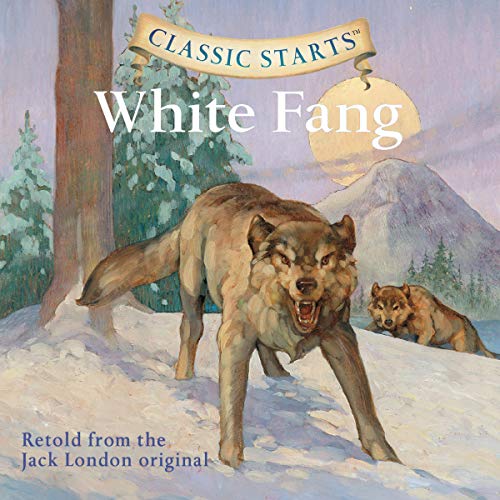
[The Survival of White Fang: Maturation and Famine]-[White Fang - Part 14]
📋 Summary
The Maturation of White Fang
As White Fang entered his second and third years, his existence was defined by a harsh, repetitive cycle. Living within the Indian camp, he remained an outcast, maintaining a strict distance from other dogs while serving as a utilitarian asset to his master, Grey Beaver. His life was characterized by a series of conflicts; he was frequently "chased from more than a few tents" and endured "more than a few beatings from Grey Beaver." Despite the hostility he faced, he became a symbol of status for his master. Grey Beaver "held court as if he were a king on a throne," with White Fang serving as his "kingdom," an object of fear that solidified Grey Beaver’s reputation among other tribes.
The Onset of Famine and Return to the Wild
The narrative takes a darker turn after White Fang’s third birthday, as the Northland is struck by a severe "famine." This environmental catastrophe rendered the traditional means of survival obsolete; there were "no rabbits in any of the traps" and insufficient fish, leading to widespread suffering. Driven by instinct and the necessity of survival, White Fang, along with many other dogs, retreated into the wild. Unlike the domestic dogs, White Fang was uniquely "better suited for this life," as he possessed the ancestral knowledge of how to navigate the wilderness. He retraced his steps to "familiar territory," visiting the cave of his youth and ancient trails, yet even there, food was scarce, leaving him to survive on the occasional "squirrel or small bird."
The Final Struggle and Reintegration
During this period of extreme desperation, White Fang encountered his long-time nemesis, Lip-Lip. Their meeting, which occurred by a high cliff, was the culmination of years of antagonism. Because Lip-Lip had "not been as successful in finding small bits of food" during the famine, he was significantly weakened. White Fang, possessing superior skills for life in the wild, emerged victorious in this final fight, securing a much-needed meal. This act of survival underscored the brutal reality of the Northland, where only the most adaptable could endure.
Following the famine, as the environment became more bountiful, White Fang recalled his mother’s early lessons: "He must only use what he needed." With his hunger sated and the wilderness becoming hospitable once more, his instincts drew him back to the familiar rhythms of the Indian camp. Upon his return, he found the atmosphere transformed—the camp was once again a "happier place" with "meat cooking on the fire." His reintegration into Grey Beaver’s service was seamless; with a simple "nod" from his master, the two returned to their "daily routine as though they had never been apart." This conclusion highlights the complex, stoic nature of White Fang, who exists as a creature caught between the ferocity of the wild and the cold, pragmatic domesticity of his human master.
Deep Learning with ListenLeap


