
[The Playful Paradigm: Why Life and Work Should Be Treated Like an Arbitrary Video Game]-[What's the Point?]
📋 Summary
The Playful Paradigm: Shifting from Frantic Efficiency to Joyful Engagement
In a world obsessed with output, it is easy to fall into the trap of constant urgency. However, a simple moment of reflection while playing God of War can offer a profound perspective shift on how we approach our professional and personal lives. By reframing our tasks as an "arbitrary video game," we can move away from the stress of productivity and toward the joy of the journey.
The Efficiency Trap: Lessons from the Couch
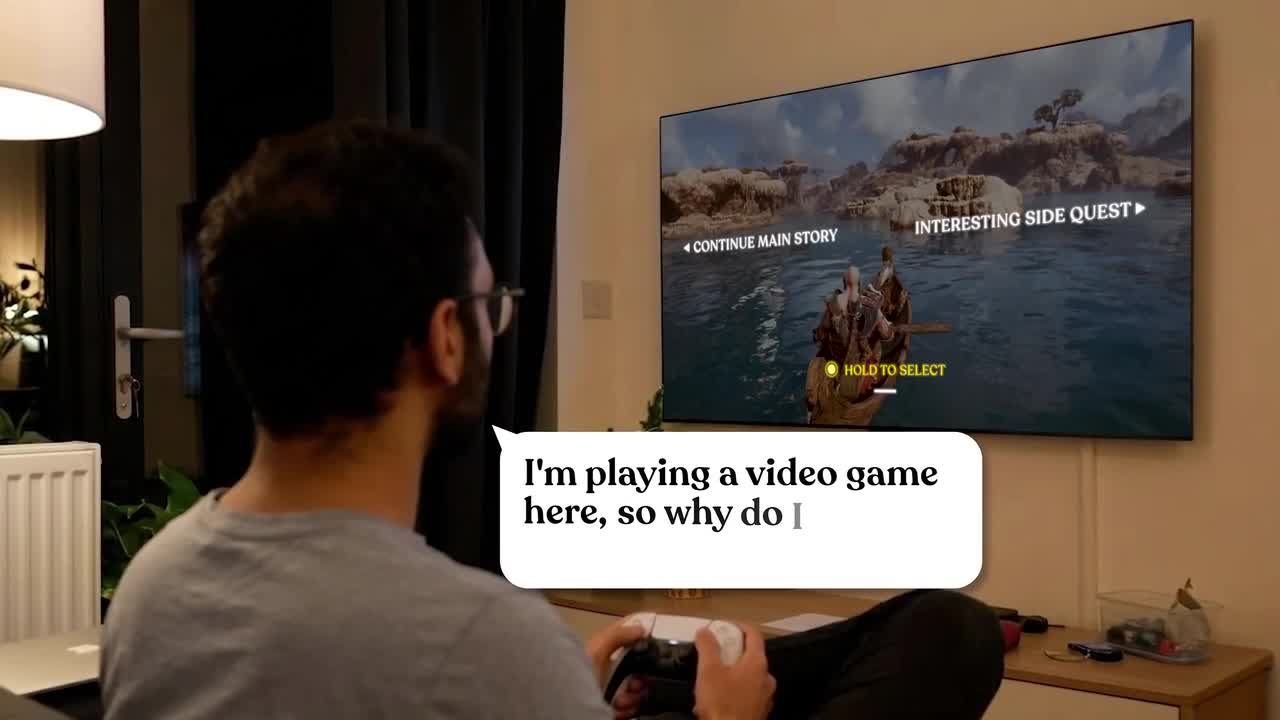
While playing God of War (2018), the author found himself at a "crossroads," faced with the choice between progressing the main storyline or exploring an interesting side quest. His default instinct was to go left, driven by the desire to play "efficiently." Upon reflection, he realized the absurdity of this compulsion: the game has "no cosmic significance," and the levels earned have "less than zero impact" on his real life. He realized he was playing at an "arbitrary difficulty level" for the sole purpose of passing time. This epiphany led him to choose the "scenic route," embracing a mindset of "leaning back, relaxing and enjoying the challenge."
Applying the Game Mindset to Professional Life
The following morning, the author struggled with feelings of "franticness" while working on a new productivity app. Burdened by a packed schedule and the pressure to make progress, he felt on edge. By applying the same logic he used for his video game, he questioned the "point" of the project. He concluded that, in the "grand scheme of things," the app—and eventually, the team itself—would be forgotten. Much like the game, the project is an "arbitrary goal" with an "arbitrary level of difficulty." By choosing to approach the work with the same "relaxed fashion" he used in his gaming session, he found he was not only less stressed but also more creative, generating "a bunch of cool new ideas."
The Thesis of 'Play'
This experience reinforces the core argument of the author's book, Feel Good Productivity, where the first chapter is titled "Play." The central thesis is that approaching work in a "spirit of play" leads to greater productivity, creativity, and energy. Despite knowing this, the author admits that "defaulting to the mode" of seriousness remains a challenge. He highlights the need for a deliberate shift: moving away from "heaviness and seriousness" toward an "attitude of lightness, ease and sincerity."
The Journey as the Destination
Ultimately, the author encourages us to zoom out and view all our goals—in health, relationships, and work—through the lens of an "arbitrary video game." When we stop viewing life as a series of obligations to be completed efficiently, we can begin to appreciate the process itself. This realization brings us to a classic, yet often overlooked, truth: "the journey is in fact the destination."
By treating our daily efforts as a game to be enjoyed rather than a burden to be conquered, we unlock a more sustainable and fulfilling way to exist, ensuring that we prioritize the experience of living over the mere pursuit of results.
Deep Learning with ListenLeap


