
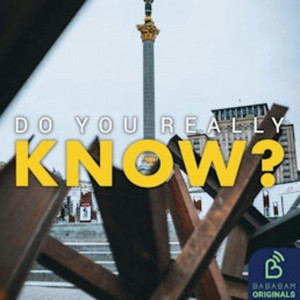
[Understanding Frozen Conflicts: From the Russia-Ukraine War to Global Geopolitics]-[What is a frozen conflict?]
📋 Summary
The Anatomy of a Frozen Conflict
A "frozen conflict" is a geopolitical situation where active military hostilities have ceased, yet no definitive resolution—such as a formal peace treaty or political agreement—has been achieved. As the podcast explains, this state of affairs creates an inherently "unstable" climate where "hostilities could resume at any moment." It often results in a "de facto situation" that fails to align with the legal positions of the involved parties, frequently leading to the emergence of "partially recognised states."
The Russia-Ukraine Context
Following Russia’s invasion of Ukraine, the conflict reached a "stalemate." While initial expectations by observers and Vladimir Putin pointed toward a "swift Russian victory," "Ukrainian resistance proved fierce," leading to a successful counter-offensive. However, as the war transitions into 2023, the possibility of it becoming a "drawn out affair" has grown. The winter months are expected to "slow down, or even completely paralyse the conflict," providing a backdrop for a potential freeze.
Such a scenario presents significant strategic challenges: it would likely hinder Ukraine’s ability to join NATO or the EU while allowing Putin to "retain some sort of control over the situation." This is not a new tactic for Russia; the podcast notes that a frozen conflict existed prior to the 2022 invasion, specifically following the 2014 annexation of Crimea and the support of "independent militia" in the Donetsk and Luhansk regions.
Russia’s Strategic Objectives
Frozen conflicts appear to be a cornerstone of Russian strategy since the collapse of the USSR. The primary aim is to "maintain its influence over neighbouring countries" by "destabilising them" and subsequently intervening to keep the peace under its own terms. By encouraging "separatist ambitions" that contradict the "will of the international community," Russia effectively "locks down post-Soviet space." Examples of this reach beyond Ukraine to include "Transnistria, South Ossetia and Abkhazia," as well as the ongoing tensions in "Nagorno-Karabakh," where Russia leverages influence to maintain its sphere of control.
Global Perspectives: The Korean Precedent
The phenomenon is not unique to the post-Soviet sphere. The most prominent global example is the Korean Peninsula. Following the division of the peninsula between the Soviet Union and the USA after the Second World War, the Korean War saw the North invade the South in 1950. Although fighting ceased in 1953, the war "technically never ended" because "no peace treaty was signed." To this day, both nations "lay claim to the entire peninsula," viewing the other as an extension of their own land.
In conclusion, frozen conflicts represent a dangerous form of geopolitical limbo. Whether in the ongoing struggle in Ukraine or the long-standing division in Korea, these conflicts demonstrate how the absence of a formal peace settlement can keep regions in a perpetual state of uncertainty, serving the strategic interests of dominant powers while preventing long-term stability and international recognition.
Deep Learning with ListenLeap


