
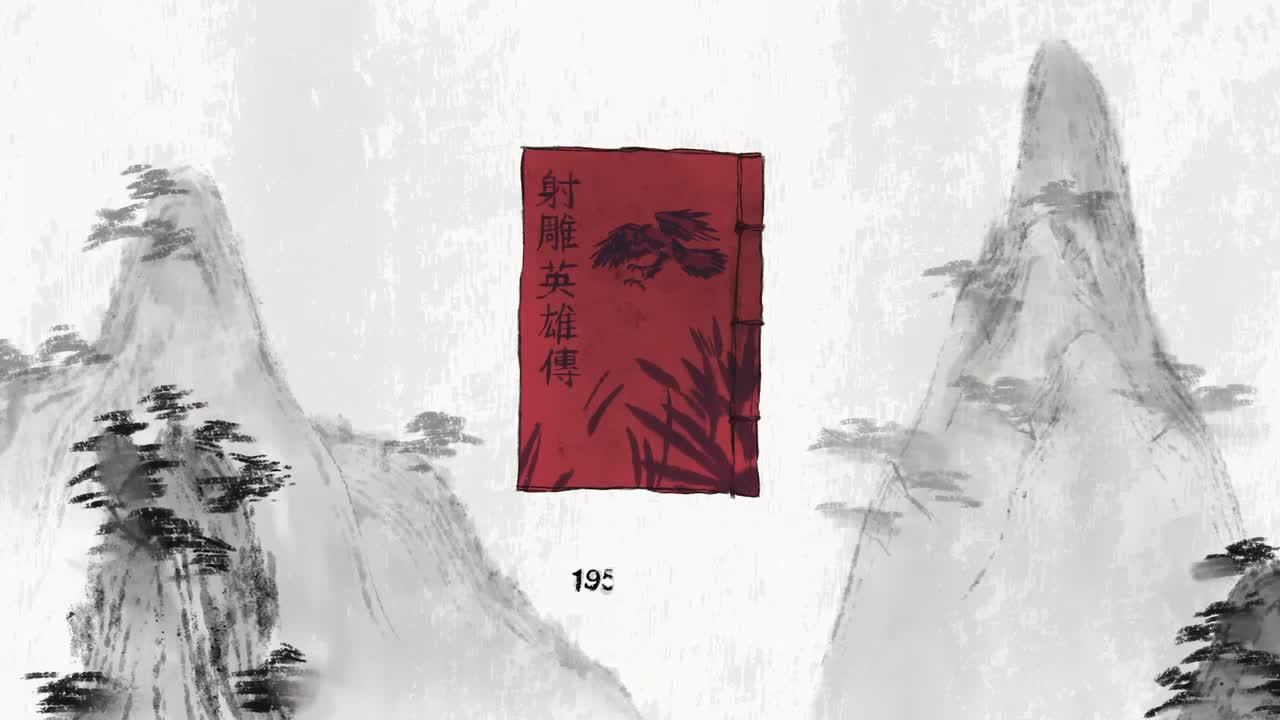
[The Wuxia Epic: Unveiling Jin Yong's Legend of the Condor Heroes]-[War, love, and betrayal: The epic tale of the “Legend of the Condor Heroes” - Gladys Mac]
📋 Summary
The Cultural Significance and Legacy of Jin Yong’s Wuxia Masterpiece
The Rise of a Literary Phenomenon
In the late 1950s, Hong Kong’s newsstands were dominated not just by daily headlines, but by the serialized chapters of Legend of the Condor Heroes. Penned by Louis Cha—better known by his pen name Jing Yong—this work emerged as the inaugural installment of his celebrated Condor trilogy. Published between 1957 and 1959, the novel quickly cemented its status as one of the most significant works of Chinese fiction, elevating the wuxia genre from what was often considered "formulaic and lowbrow" literature into a sophisticated exploration of history and identity.
Understanding the Wuxia Genre and the Jianghu
At its core, wuxia—translated as "martial hero"—is a genre deeply rooted in over 1,500 years of folklore. The narrative world of these stories is known as the Jianghu, a mythologized version of ancient China populated by "powerful leaders, roaming bandits and mystical artifacts." Within this realm, protagonists are governed by an "honorable code of chivalry," utilizing superhuman martial arts often learned from "ancient scrolls and reclusive immortal masters" to navigate the dangers of their world.
A Tapestry of History and Conflict
Legend of the Condor Heroes is uniquely compelling because it weaves high-stakes martial arts action into the complex reality of the 13th century. The story unfolds during the brutal war between the "Zhejin Jin Dynasty" and the "Han Chinese Song Dynasty." The arrival of Genghis Khan adds a volatile layer to the conflict, as the Mongols threaten to dismantle both empires.
The narrative centers on the divergent paths of two blood brothers, Guo Jing and Yang Kang. Separated by a "sudden zhirchin raid," Guo Jing is raised among the Mongols while retaining his Han heritage, whereas Yang Kang is groomed as a "scheming prince" by Jurchen royalty. This setup creates a "tragic conflict" that serves as the emotional anchor for the entire saga.
The Artistry of Martial Combat
Jin Yong’s depiction of martial arts is both physically demanding and philosophical. The novel showcases "over 80 unique styles of martial arts," ranging from grounded techniques to "almost mystical maneuvers." A prime example of the genre's "deceptively difficult tutelage" is Guo Jing’s training to perform two attacks simultaneously—a feat requiring the student to "draw a circle with one hand and a square with the other." This level of detail provides a depth that challenges both the characters and the reader.
Identity, Censorship, and Global Impact
As the founder of Mingbao Daily News, Jin Yong operated from the unique vantage point of British-colonized Hong Kong. While his works were banned in mainland China during the 1960s and 70s due to perceived "feudal associations," his writing thrived elsewhere. He used the medium to "celebrate Chinese identity" and explore history with "intimate humanity."
Despite the initial bans, bootleg copies circulated widely, and when government policies relaxed in the 1980s, the novels found an "eager audience." Today, the legacy of Jin Yong is massive, with his stories adapted into countless films, television series, and video games. While he remains somewhat of a "literary titan" who is lesser-known in the West due to the "high level of Chinese cultural knowledge" his works demand, recent English translations are finally opening the doors for a global audience to experience this sweeping saga of the "rivers and lakes."
Deep Learning with ListenLeap


