Get the unmissable news stories of the day.
This is the Beijing Hour.
Examining the events that impact and shape China and the rest of the world.
This is the Beijing Hour.
One hour of news and information brought to you every weekday.
Now here's your host.
I'm Shane Bigham with you on this Wednesday, November 27th, 2024.
You're listening to the Beijing Hour.
We're coming to you live from the Chinese capital.
On today's program, Israel and Hezbollah agreed to a 60 -day ceasefire that was brokered by the U .S.
and France. China's expressed support for the ceasefire and reiterated calls for such a deal in the Gaza Strip.
China's Taiwan Affairs Office says a majority of poll respondents on the island believe the U .S.
is harming Taiwan instead of protecting it.
In business, China's industrial sector reports mild revenue growth.
And today we bring you the fourth episode of a nine -part special report that delves into China's journey towards sustainable development.
Now the day's top stories.
A 60 -day ceasefire deal between Israel and Hezbollah has taken effect.
The United States and France brokered it.
Israel's security cabinet approved the ceasefire on Tuesday night.
Under the agreement, Israeli troops will retreat to their side of the border.
And Hezbollah is required to end its armed presence in southern Lebanon.
Thousands of Lebanese troops and UN peacekeepers will deploy to the region south of the Litany River.
Residents in Israel and Lebanon have expressed hope that the ceasefire deal can bring peace.
Both sides are tired.
There should be categorical international resolutions against Israel.
Their forces cannot just fly over our sky and sea whenever they want.
They are hitting Beirut, Dahia, and all of Lebanon.
You can't trust them.
If there will be a ceasefire deal, they will escalate.
In Israel, I never feel 100 percent safe because you never know what's going to happen.
I hope it will be a long -lasting agreement with a long, you know, long time of peace.
So for my opinion, the ceasefire agreement is necessary for the ending of this war because the benefit of the citizen is supposed to be in front of every other decision.
A displaced Palestinian in Gaza also hopes that a ceasefire will be in place in the Strip soon.
We are happy for our brothers in Lebanon that the war will stop.
They also hope the conflict can be resolved here.
As the war began together, it should stop together.
Lebanese Prime Minister has welcomed the deal and he plans to hold a ministerial meeting to discuss the situation.
Hezbollah has not responded yet.
The Israeli Prime Minister has demanded the right to act should Hezbollah violate its obligations, but Lebanese officials have rejected writing that into the proposal.
UN Secretary General Antoni Guterres has welcomed the announcement of a ceasefire between Israel and Lebanon.
A statement says the UN chief hopes that the agreement can end the destruction and suffering on both sides.
He calls on all parties to respect and implement all their commitments under the deal.
The UN special coordinator for Lebanon says the agreement marks a starting point of a critical process to restore the safety and security the civilians on both sides of the Blue Line deserve.
UN General Assembly President Philharmon Young also welcomed the deal, and he's urged all sides to maintain dialogue and promote a solution for reaching sustained peace and security in the Middle East.
China has welcomed the ceasefire between Israel and Hezbollah.
Foreign Ministry spokesperson Mao Neng says China supports all efforts to ease tensions and achieve peace.
She calls for an immediate lasting ceasefire in Gaza, saying the failure to achieve a ceasefire in the Strip is the root cause of the ongoing turmoil in the Middle East.
Brands in the United States helped broker the ceasefire between Israel and Hezbollah and have welcomed the agreement.
French President Emmanuel Macron said it marked a new page for Lebanon.
He also said more efforts are necessary for long -lasting peace.
It is important that this ceasefire be respected, that it lasts in order to restore the security of the Lebanese, the security of the Israelis, allow for the return that be displaced from both countries to their homes, and allow for the restoration of the sovereignty of Lebanon.
Macron also said Lebanese leaders should elect a president without delay.
In Washington, U .S.
President Joe Biden has called the ceasefire good news and expressed hope that the pause in fighting will lead to a cessation of the war in Gaza.
He said his administration will make another push to bring Israel and Hamas on the same page.
He also outlined a plan with Saudi Arabia that will support Palestinian statehood.
Biden said his vision for the future of the Middle East includes peaceful coexistence between Israel and Palestine, where they enjoy equal rights.
G7 foreign ministers are voicing support for the ceasefire between Israel and Hezbollah.
They are also calling on Israel to comply with its obligations under international law.
As the diplomats from the group of seven countries concluded their meeting in Italy, they also expressed concern about the humanitarian situation in Gaza.
They called on the Israeli government to ease obstacles on aid to civilians.
Meanwhile, pro -Palestinian protesters have gathered to condemn the G7 for being accomplices of Israel's bombing of Gaza.
The G7 is an organization of Western countries.
It has been undermining the legitimacy of the United Nations.
We are protesting against this here.
The G7 meeting brings together countries such as the United States.
These countries support Israel and Netanyahu in committing genocide now in the Gaza Strip.
We don't want to see the killings and the sufferings of children.
We don't want to hear lies anymore.
We hope they will take action and save lives immediately.
Conflicts killed over 44 ,000 Palestinians since October the 7th of last year.
And for more on the ceasefire, Li Dongning spoke to Wang Jin, director of the Center for Israel Studies at Northwest University in Xi 'an.
The ceasefire has taken effect and in 60 days, Israel must withdraw from Lebanon.
Hezbollah retreats from its positions in southern Lebanon only in 60 days.
What will happen after this period?
We expect that the peace will come back also after the 6 days of the withdrawal, after the 60 days of the deals.
But there were still problems, given that on the one hand, there's a very trust between Israel and Hezbollah, between the trust between Israel and the Lebanese government forces will be very carefully maintained, should be carefully maintained, given that the trust between the different sides are still
very fragile. And also, on the other hand, the monetary system, particularly we know that the given the deal has already announced that the United States and other Western countries will try to monitor the ceasefire and try to monitor the future of the peace between different sides.
So how to successfully monitor and how to guarantee the future will be another obstacle, given that the relations between the different sides are still very, very complicated.
So that is why we say that we hope and we expect that peace would last along.
But I have to say there were still many difficulties and uncertainties in the future.
That was Wang Jie, director of the Center for Israel Studies at Northwest University in Xi 'an, sharing his insights on the ceasefire between Israel and Hezbollah.
UN Secretary General António Guterres has called for an immediate ceasefire in Gaza, as the world body convenes a special meeting, marking the International Day of Solidarity with the Palestinian people.
The U .N. also described the worsening humanitarian crisis as appalling and inexcusable.
Chinese President Xi Jinping has sent a message to the meeting, stressing that the pressing task of the Palestinian question is to implement the U .N.
Security Council resolutions concerning ending the war and easing regional tension.
Jodie Jacobs has more from New York.
It's been 13 months since the latest conflict began in Gaza, and the fighting has left thousands killed and millions displaced.
At a special session on Tuesday to commemorate the International Day of Solidarity with the Palestinian people, speakers called for an end to the fighting, urging the Security Council to take swift action.
The time for action is now.
Justice for the Palestinian people can no longer wait.
The world is watching, and history will judge us, not by our words but by our actions.
Let us act with urgency, courage and determination.
But the U .N. Security Council remains deadlocked, despite being entrusted with upholding international peace and security.
Last week the Council failed to pass a resolution, calling for an immediate ceasefire and the release of all hostages after the United States vetoed it.
And while diplomats are at a stalemate, the United Nations has reiterated its call for a ceasefire, warning that more people will die if humanitarian aid does not reach Gaza soon.
This year's commemoration is especially painful, as those fundamental goals are as distant as they have ever been.
Nothing justifies the 7th October terror attacks by Hamas and the taking of hostages.
And nothing justifies the collective punishment of the Palestinian people.
Yet more than a year later, Gaza is in ruins.
More than 44 ,000 Palestinians, mostly women and children, have been reportedly killed and the humanitarian crisis is getting worse by the day.
This is appalling and it is inexcusable.
Meanwhile, U .N. humanitarians addressed the U .N.
Security Council on Tuesday, pleading for the protection of humanitarian workers.
The Council convened a special session on how best to prevent and respond to attacks against humanitarian and U .N.
personnel supported by 115 countries.
Gaza has become the most dangerous place on earth ever for aid workers, with over 330 humanitarian staff killed since October 7th this year, last year.
To those who asked me who can be done to protect humanitarian workers and what can be done, my first answer is we urgently need a ceasefire in Gaza and we need parties in this conflict to genuinely protect civilians and respect international humanitarian law.
Israel is denied impeding the delivery of aid into Gaza.
It maintains that aid trucks are often hijacked and looted by Hamas militants.
That was Jodi Jacobs reporting.
Israeli forces have continued airstrikes in Gaza.
The Strip Civil Defense Agency says the strikes killed 22 people, including 11 in a school -turned -shelter for displaced civilians.
Rami Al -Maghari has more from Gaza.
Gaza City and actually there was also some sort of an Israeli action in the northern Jabbaliah refugee camp and the Nazla Jabbalia town.
Actually two people were killed during a strike on the Jabbalia.
There was chilling of homes and some reports about detonation of homes in the Jabbalia refugee camp.
The situation in Central Gaza Strip is not that different.
More Israeli artillery fire were reported on the Nusayra refugee camp and also on the near -by -alborage refugee camp.
This is the continued Israeli army fire on different parts of the Gaza Strip.
In terms of the shelter tents in the southern parts of the Gaza Strip, mainly on the Mawasi area, coastal area of Mawasi, Jair Balakhanyounis, reports suggest that there have been 10 ,000 tents that were flooded because of the sea waves and the storm that is ripping through the Gaza Strip for the time
being. Storm with the heavy rains that fill on those tents that are already depleted and already torn apart after one year of an Israeli war and displacement of those people.
That was Rami Al -Maghari reporting.
Coming up, a poll from Taiwan shows concerns over the US presence on the island.
Dive into news like never before with Deep Dive, the podcast from CGTN radio.
Join our global reporters for captivating stories and thought -provoking conversations.
Search Deep Dive on your favorite podcast platforms and get ready to dive in.
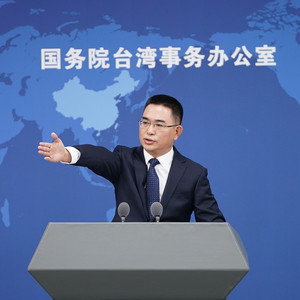
At 13 past the hour, Chinese mainland spokesperson says an increasing number of people in Taiwan have realized that the United States is harming the island instead of protecting it.
Chen Binhwa is a spokesperson for the Taiwan Affairs Office of the State Council.
He made the remarks amid a public opinion poll in Taiwan concerning the US demand for Taiwan to pay so -called protection fees.
The survey showed 51 % of the people in Taiwan polled disagreed with the demand and 57 % of the respondents do not believe that the US will send troops to defend the island.
Chen says more people in Taiwan have broken through the information cocoon manufactured by the Democratic Progressive Party authorities.
He adds that the DPP's reliance on the US will push Taiwan to the brink of disaster.
A group of students from universities on the Chinese mainland started a trip to Taiwan.
The visit comes at the invitation of the Ma Yingjia Foundation.
The students include Olympic table tennis champion Ma Long.
I look forward to having a good exchange with young friends and students in Taiwan so that we can better understand and trust each other.
And as for me, this time, I'm not only an athlete but also a college student.
I think this will bring us closer.
Some other students say they look forward to the trip.
I hope I can make more new friends in Taiwan and then discuss culture, sports, music and so on with them.
Then I hope I can taste the local food and see the beautiful scenery there.
I mostly want to go to Yuyetan pool.
This is because in my hometown Putin, there is Dongjun reservoir which resembles the pool in Taiwan.
I want to go there to see it.
I am interested in scientific research and academic exchanges.
I want to see if we have the same hot spots in the area and I want to have talks with them about artificial intelligence.
The trip lasts for nine days with the students set to conduct exchanges with six universities in Taiwan.
The second, China international supply chain expo is underway in Beijing.
The expo highlights six industrial chains in sectors including advanced manufacturing, clean energy, smart vehicles, digital technology and green agriculture.
B -Ren has more on how the expo highlights the industrial chain in the smart vehicle sector.
In the smart vehicle chain and expo, Bosch expo, Raletino and China, Bao Wustil Corporation has set up a joint booth together to showcase upstream and downstream collaborations across the automotive manufacturing industry spending real materials, component supply and the entire car making.
And Chinese local companies and foreign companies have worked closely with each other to form a very resilient and mutually beneficial car industrial chain.
Within this industrial chain, Bosch suppliers parts to expand while Bao Wustil and Raletino together act as material suppliers, highlighting their collaborative efforts in different stages of the industry chain.
This collaboration has led to the creation of a complete and a very effective automotive industry.
This kind of ecosystem of collaboration and partnership has become a very strong barrier against the uncertainties from the external environment and the complex geopolitical tensions currently.
As China boasts the world's largest and most comprehensive automotive manufacturing industry chains currently, this kind of ecosystem are able to achieve a very highly integrated component supply and localized suppliers clustering with shared designs, joint research and development and of course synchronized
production. Now, as B.
Ram reporting from the second China International Supply Chain Expo.
The expo aims to help companies work together to strengthen global supply chain resilience.
For more on the event's significance, Xu Xinchen spoke to John Maclean, chair of the China UK Business Development Center.
This is the second time that you're attending this expo, the China International Supply Chain Expo.
What can global manufacturers take away from this year's expo?
I came here last year and the key thing to me that's actually changed is the advancement in China because one thing you never have enough of is being up to date with what China is doing.
So to come to an event like this, it brings it into real life and as soon as you've actually taken the Chinese phrase of seeing as believing, you now know what the capabilities are, the advancements which have been made and therefore the opportunities and indeed the options and alternatives available
to companies. So one thing that really came strongly out of the discussions is that by having people all come together, the issue of supply chain becomes critical, not in its purity, but in terms of how I work with you.
When I've got problems, how we sort them out, how we innovate, how we kind of grow together, because being a supplier or being part of the chain is all about partnership and collaboration.
Now as John Maclean, chair of the China UK Business Development Center, sharing his insights on the significance of the China International Supply Chain Expo.
Coming up, a UN report illustrates how human rights are critical in the fight against HIV AIDS.
Discover the realities and responses to our changing climate with Climate Watch.
Uncover critical issues, such as the Mausai Morris disrupted rotor beast migration and the drop in the Panama Canal's water levels.
Delve into solutions for a sustainable future.
Tune in to Climate Watch on your favorite podcast platform.
Become more eco -conscious and take action to protect our planet.
19 minutes past the hour, a UN report shows that upholding human rights is vital to meeting the goal of ending AIDS as a public health threat by 2030.
The joint United Nations program on HIV AIDS noted in this year's report that AIDS deaths have plummeted by 70 % since their peak, but the number of people acquiring the virus and the disease is three times higher than the 2025 global targets.
A UN AIDS deputy executive director Angelia Atrecarp underscored the disproportionate impact on vulnerable populations.
Adolescent girls and young women, key populations, children for example, these are the populations that are hardest to reach and hardest to find.
The UN official called for a continued focus on rights based approaches to tackle HIV AIDS.
December 1st is World AIDS Day.
The world marks the annual occasion to renew its commitment to ending the epidemic.
UN spokesperson Farhan Halk has vowed to continue humanitarian operations in Haiti despite escalating violence.
In light of the significantly deteriorating security situation in Port -au -Prince, including in neighborhoods where our offices are located, the United Nations is adapting its operations to ensure the continued delivery of critical humanitarian programs.
Well, you said essential UN personnel will remain in Port -au -Prince.
Coordinated gang attacks have crippled the country's capital and forced the prime minister to resign.
In the second week of this month alone, at least 150 people have died in the capital with 20 ,000 displaced.
The UN reports over 4 ,500 deaths in Haiti this year.
Mexican President Claudia Scheinbaum suggested that her country could retaliate against American tariffs on Mexican goods.
US President -elect Donald Trump threatened tariffs of 25 percent unless Mexico stops the flow of drugs and migrants across the border.
Scheinbaum said she is willing to engage in talks on the issues, but said drugs were a US problem.
We've always expressed Mexico's willingness to prevent the ongoing fentanyl epidemic in the United States, which is a problem of public health and consumption in your country's society.
Scheinbaum also criticized US spending on weapons, saying that it should be used to address the problem of migration.
The Sudanese health ministry says a deadly cholera outbreak has killed over 1100 people since July.
The disease has spread to 81 districts across 11 states.
It's prompted authorities to implement measures such as cleaning and disinfection and to establish isolation centers, but there's still urgent need for additional support amid significant shortages of medicines and medical personnel.
Epidemic diseases are spreading in Sudan, including cholera and dengue fever, due to the dire humanitarian situation.
Once upon a time in a land not so very far away.
Stories were told of the brave and the bold.
The whole court fell silent to hear what the great warrior Mulan might ask for.
Of mighty deities and powerful immortals.
Immediately the shimmering skin started to grow before his eyes.
Of fated love and love sanctified.
In dawn's golden light, Mulan said, marry me.
Of great journeys across fantastical landscapes.
So the cat and the mouse climbed on the dog's back and the dog swam across the floor.
In the company of friends and enemies and unimagined beasts.
Good to see you. Of ordinary folk with tantalizing stories to tell.
Heroes and heroines all.
It's incredible. How did you do that?
Tales of sad sacrifice and victories snatched from the jaws of defeat.
Stories of the wise, the accomplished and the quick of mind.
5 ,000 years of amazing Chinese folk tales.
You'll find Chinese folk tales season three, wherever you discover your favorite podcasts.
Mat 24 past the hour.
French farmers have been protesting outside the European parliament against a trade agreement with South American countries.
The Mercosur deal in 2019 aims to create one of the world's biggest free trade zones but it's yet to be adopted.
Some European farmers say it'll create unfair competition.
Ross Cullen has more on the reactions.
French of the European market.
The French market with cheap exports coming from South American countries.
Members of the Mercosur block, Argentina, Brazil, Paraguay, Uruguay and Bolivia.
They are worried there would be beef and poultry exported perhaps subject to fewer regulations than their current product in the French market.
They have been blocking certain roads.
They have been outside town halls, city halls in Strasbourg as well.
They are showing their anger and frustration with this situation at the EU level but also here at the French level.
However, their protests have not fallen on deaf ears because there is a lot of agreement from public and politicians about the fact that France is in disagreement with the accord between the EU and Mercosur.
The French government hears and understands the anger.
He hears and understands the tensions on the streets and in the fields of France.
It is one of those rare times when we have agreement, the Prime Minister, the President, the government, the opposition, they are all in favour of voting down this agreement.
They are all going to vote against the Mercosur deal but that is only at Parisian level, at French level, at national level.
Their vote will not have an impact on us and their drive to get this deal over the line.
They fear the negative impacts would be outweighed by the positive impacts for companies like the big French giants who will have another luxury market for their goods.
The car industry as well, good news for French brands like Renault, Peugeot, German brands, Volkswagen and Audi as well.
They are arguing at EU level that there is a lot of positive impacts to outweigh it.
However, here in France, they have been saying that this is the store that broke the camel's back.
There is so much pressure on French farmers already going through the environmental transition, impacts from exports from other areas of the world, tariffs potentially coming in.
They are already being subsidised to a huge amount by the EU.
They are saying that they are really struggling and so there is a lot of anger but we are seeing a lot of agreement.
French MPs on their side and they are very likely to be voting down this deal.
However, it is very likely still to pass at EU level.
That was Ross Collin reporting from Paris.
Embark on a century -long journey with CGTN Radio's latest offering.
Echoes of Kouliap, a gripping audio -drama series inspired by real -life tales.
From unexpected encounters to heartfelt reunions, immerse yourself in a narrative of love, peace and enduring friendship.
Listen to Echoes of Kouliap on Radio .cgtn .com and all major podcast platforms.
Twenty -eight minutes past the hour, checking the forecast ahead of the break.
And Beijing is down to minus four Wednesday evening.
Sunny conditions in seven degrees on Thursday.
Nansheng is down to six and then sunny in eighteen.
Elsewhere in Asia, Islamabad is down to seven overnight.
Sunny skies in 22 on Thursday.
Vientiane is down to 20, then sunny in 29.
Phnom Penh is at 26 overnight.
Sunny in 32 tomorrow.
In Africa, Nairobi will see sunny skies in 25 degrees on Thursday.
Compel is down to 18.
Then overcast conditions in 23.
Finally to Oceania, Port Vila 25 overnight.
Then overcast in 30 on Thursday.
A pea will see a light rainfall and a high of 26 degrees Celsius tomorrow.
It's time for a short break.
So far this hour, Israel and his beloved greed to a 60 -day cease fire that was brokered by the US and France.
China's expressed support for the deal and reiterated calls for a similar deal in the Gaza Strip.
China's Taiwan affairs office says a majority of pole respondents on the island believe the US is harming Taiwan instead of protecting it.
Shane Bingham with you.
Stay with us here on the Beijing Island.
The best military commander is not he who fights a hundred battles and wins every one of them.
The best military strategy does not lead to the desiccation of the enemy's capital city.
Decoding the art of war will help you understand why there's no art in war and how soon as it stayed undefeatable using the science of war with fun stories and insightful breakdown of famous battles.
Find decoding the art of war wherever you listen.
What do they truly mean?
Embark on a century -long journey with CGTN radio's latest offering.
Echoes of Koolian, a gripping audio drama series inspired by real -life tales.
From unexpected encounters to heartfelt reunions, immerse yourself in a narrative of love, peace, and enduring friendship.
Listen to Echoes of Koolian on radio .cgtn .com and all major podcast platforms.
Examining the events that impact and shape China and the rest of the world.
This is the Beijing Hour.
One hour of news and information brought to you every weekday.
Now here's your host Shane Beggum with you on this Wednesday.
Still to come in business, China's industrial sector reports mild revenue growth and today we bring you the fourth episode of a nine -part special report that delves into China's journey towards sustainable development.
To contact us you can email radio at cgtn .com or follow our X -Account at cgtnradio.
Now checking the day's headline news, here's Tian Lu.
Thank you Shane. Chinese President Xi Jinping says the pressing task of the Palestinian question is to implement the UN Security Council resolutions concerning ending the war and easing regional tension.
He made the remarks in a congratulatory message to a UN meeting marking the International Day of Solidarity with the Palestinian people.
President Xi says the fundamental way out is to implement the two -state solution, promote the political settlement of the question and ensure the Palestinian people's right to statehood.
He also says China will continue to work with the international community to end the war and support humanitarian assistance to the people.
The president adds that China has always supported the just cause of the Palestinian people to restore the legitimate national rights.
He says China also supports all Palestinian factions to strengthen unity and achieve internal reconciliation and that it supports Palestine in becoming a full UN member.
China has welcomed the ceasefire deal between Israel and Hezbollah.
Foreign Ministry spokesperson Mao Ning says China supports all efforts to ease tensions and achieve peace.
She also calls for an immediate lasting ceasefire in Gaza, saying the failure to achieve a ceasefire in the Strip is the root cause of the ongoing turmoil in the Middle East.
A Chinese envoy to the United Nations has underscored the urgency to protect the frontline humanitarian and UN workers around the world.
Deputy Permanent Representative Geng Shrong told the Security Council that these people have faced injustice during their work.
It is worrisome that despite the repeated appeals of the international community and the resolutions adopted by the Security Council, violations and attacks against humanitarian and UN personnel are still widespread.
As the lifeline of over two million people, the United Nations Relief and Works Agency for Palestine Refugees has been systematically discredited and suppressed.
So far, 247 of its staff members have died in conflict.
In Sudan, South Sudan, the Democratic Republic of the Congo, Yemen and other places, humanitarian and UN personnel have continued to face violence, kidnapping, injury, harassment and detention, which has a serious impact on humanitarian operations.
The Chinese envoy proposed promoting a ceasefire, fulfilling obligations to protect the workers, providing safety and security support and rejecting double standards to address the issue.
He called on all parties to adhere to the international humanitarian law and UN treaties and resolutions.
Palestinian children in the West Bank have received a batch of winter supplies from China.
Two refugee camps in Tukam held ceremonies to mark their donation.
The head of the Office of China to the State of Palestine says China has been doing its best to provide the Palestinian people with humanitarian aid and development assistance and supporting their just cause of restoring their legitimate national rights.
Palestinian representatives say the donation fully reflects China's support for the Palestinian people and that the Palestinian side is proud of the friendship between the people from both sides.
China says it opposes the recent U .S.
move to blacklist 29 Chinese companies under the so -called Uyghur Forced Labor Prevention Act.
The Chinese Communist Ministry says the country has lodged solemn representations with the United States.
The ministry says the U .S.
move has no factual basis and it is the typical act of economic coercion.
China and Mexico have refuted U .S.
President -elect Donald Trump's tariff threats, saying that cooperation and mutual understanding could address the American fentanyl concerns.
Trump's plan includes a 25 percent tariff on Mexican and Canadian imports and an additional 10 percent on Chinese goods citing illegal migrants and drugs crossing the border into the U .S.
Chinese embassy spokesperson Liu Peng -u said China has taken steps to combat drug trafficking.
Liu also said the U .S.
should cherish the goodwill of China.
Mexican President Claudia Xingbong warned that should Trump go ahead with the tariffs, Mexico would retaliate by imposing its own taxes on U .S.
imports. Organizers for the 2026 Winter Olympic Games have announced that the torch relay will start in Rome on December 6 next year.
The torch will travel across Italy over a two -month period.
Ceremonies director Maria Eiskorn says the idea is to bring everyone together.
We plan to do 60 stage celebrations involving 60 cities.
It will be an extraordinary journey that will land in every single region and island included.
It will go through all provinces and will visit hundreds of municipalities.
This is because the torch journey unites the lands and the populations trying to connect every single one.
The Olympic flame will be lit in Olympia, Greece, about two weeks ahead of the relay.
The opening ceremony for the Milan Cortina Games is set for February 6 at the San Siro Stadium.
Thank you very much.
That was Tian Lu with Headline News.
This is Shane biggeman, the Chinese capital.
Coming up in business, China's industrial sector reports mild revenue growth.
Ever wondered what's actually going on in Africa through the perspective of an African?
How are things really going between China and Africa?
What's the narrative of this relationship?
Well, get a perspective with China Africa Talk.
Hear from African diplomats, entrepreneurs, academics, Chinese natives and more.
Get on our wavelength every week to find out what's real with China Africa Talk.
Find us on your favorite podcast.
We'll see you there.
37 past the hour. Turning to business now.
Stocks on the Chinese mainland close higher on Wednesday.
The Shanghai composite index was up over 1 .5%.
The Shenzhen component index added 2 .2%.
Gaming and kitchen appliance shares led the gainers.
Shares related to the petroleum processing trade and fertilizer sectors were broadly lower.
The Hong Kong stock market also ended higher.
The Heng Seng index gained 2 .3%.
In Japan, Tokyo stocks extended declines on Wednesday.
The Nikkei dropped to 0 .8%.
U .S. stocks ended higher on Tuesday as investors balanced optimism in the tech sector with concerns about President -elect Donald Trump's promises to impose tariffs on key trade partners and uncertainty from the latest Fed reserve minutes.
The Dow Jones rose around 0 .3 % hitting a new record high.
The S &P 500 and the Nasdaq added around 0 .6%.
Short -term interest rate futures gained following the release of the Fed's November meeting minutes, which highlighted divisions among officials on the need for further interest rate cuts.
The minutes also revealed a consensus to avoid providing firm guidance on the direction of U .S.
monetary policy in the near term, leaving investors to interpret mixed signals.
China's industrial sector experienced mild revenue growth in the first 10 months of the year.
Official figures show the country's industrial revenues increased by nearly 2 % compared to the previous year.
Profits were down over 4 % during the same period.
In October alone, industrial revenues decreased by 0 .2 % from a year earlier, an improvement from the 0 .9 % decline that was observed in September.
Meantime, profits dropped by 10%, although this represents a significant improvement from a more severe slump recorded in the previous month.
For more, Lili Lu spoke with Liu Jurqin, a senior research fellow at the Chengyang Institute for Financial Studies, Raman University of China.
First of all, what key factors have driven the trends in industrial output growth in China during the first 10 months of the year?
I think they have some several factors that influence this figure.
The first factor is that the central government has already issued serious also positive and supportive policies to stimulate and to boost industrial output.
This is the main factor that really comes into force to make good consequences.
And secondly, also the market confidence has already come back, especially in October.
We see the consumption and also increase a lot.
That has promoted this supply chain, especially for the industrial production line in full swing in production.
And third, we see that all the companies involved in this good profitability that they have tried their best to reduce their costs.
Ms. Liu, we are already standing at the year end now, but looking forward, let's say, looking to the first and second quarter of next year, what challenges are anticipated for industrial enterprises in China and what strategies can be adopted to address those problems?
I think the major challenge, of course, is that the tariff that some major countries, especially the United States, has already announced to have a high tariff on China's products that will make negative influence on China's output of industry.
And the very important effect that some other countries could also follow the move of the United States that to impose high tariffs on China's, for instance, green technology, EV, and other products and the normal goods, that could have very negative consequences on China's export business.
But actually, China has done its best to promote all these close relations and collaboration to show our confidence to build up a new norm of doing business, no matter how tariffs are going on in the global market.
But China will do its best to open up its market to show that the sincerity to welcome all investors abroad in order to get the mutual benefits, that is, the win -win consequences for all over the world.
That was Liu Zuchen, a senior research fellow from Remen University of China, analyzing China's latest industrial growth data.
The ongoing China International Supply Chain Expo has released a report on global supply chains, offering an in -depth analysis of the latest trends, challenges, and development in the sector.
The report provides global supply chain maps for 11 key industries, including humanoid robots, smart cars, integrated circuits, and wind power.
These maps illustrate the distribution of supply chains across the upstream, midstream, and downstream sectors, as well as the dominant economies and enterprises at each stage.
The Expo also introduced two new indexes, which aim to provide deeper insights into global supply chain development trends and risks, helping governments and businesses better understand the evolving global supply chain landscape.
Global investment banks are expecting gold to extend its record -breaking price rally into next year and China's stock markets to edge up over the next year.
Goldman Sachs expects the central banks of emerging and developed economies to continue their accommodating monetary policies.
The investment bank anticipates an average interest rate reduction of 116 basis points in developed economies and 114 points in emerging markets over the next year.
In terms of commodities, Goldman Sachs is optimistic about gold prices forecasting that they could reach $3 ,000 per ounce sometime next year.
You're listening to the Beijing Hour.
Coming up next, our special report, Greener China, a journey to 2060.
Dive into news like never before with Deep Dive, the podcast from CGTN radio.
Join our global reporters for captivating stories and thought -provoking conversations.
Search Deep Dive on your favorite podcast platforms and get ready to dive in.
43 past the hour and it's time for a special report, Greener China, a journey to 2060.
It's a nine -part program dedicated to exploring China's efforts in carbon reduction.
In this episode, part four, Wang Zihang ventures deep inside Gally Gong Mountain in southwest China to explore how this arc of wildlife has transformed through decades of conservation.
Gally Gong Mountain is like my mom.
Her milk is the water that I drink every day.
It also nourishes the crops in the fields.
I believe biodiversity is our magic money tree.
Nature offers a source of infinite wealth.
Biodiversity has helped sustain humanity till this day.
If we harm nature, it's like tearing apart our home that would only lead to our own extinction.
In May 2024, the southwestern Chinese province of Yunnan committed itself to playing what it calls an exemplary role in global biodiversity conservation in the years to come.
The pledge coincides with the national target of restoring at least 30 % of degraded ecosystems and expanding the size of nature reserves to cover 18 % of China's landmass by 2030.
At the same time, Beijing is also juggling its ambitious geocarbon goals.
These goals among the nation achieve peak carbon emissions by 2030 and full carbon neutrality no later than 2060.
I'm on a mission to find out how China plans to keep these promises and investigate the intricate dynamics between biodiversity and carbon reduction.
I'm now waiting for my three -hour flight that will take me to Kunming, the provincial capital of Yunnan.
You may be wondering why I have picked Yunnan and how important this Chinese border region is when it comes to biodiversity conservation.
Accounting for just 4 % of China's total land area, Yunnan has the most diverse biological and ecological system anywhere in the country.
A little larger than Germany, it's home to over half of China's plant species.
It also harbors more than 3 ,000 endemic species and about 60 % of all endangered species inside China.
The city of Kunming is a sprawling oasis with verdant rolling hills on the outskirts and Dienchu, a gigantic freshwater lake just south of the city centre.
I started my tour talking to the locals and tourists who flocked the highland city to avoid the scorching heat elsewhere.
While Yunnan and China as a whole are pressing for a better environment, I'm curious how much the general public knows about the relationship between humanity and nature.
If our planet continues to heat up, some animals and plants may die of drought.
There could be a mass extinction.
Biodiversity can help with reducing carbon.
For example, algae can store lots of carbon dioxide.
We should protect all kinds of plants.
Climate change is killing biodiversity, but China is working hard to protect endangered species.
We can use more public transport or bicycles for better environment.
Plant trees, I guess.
Such air conditioner several degrees higher.
More recycling. My conversations with these people of varying ages and backgrounds revealed a general acknowledgement of how human activity could exert an adverse impact on our planet.
They also seem to have a grasp on what they personally can do to help mitigate the impacts.
I wondered what front -line environmentalists might have to say about this.
Could their more intimate knowledge of Mother Nature yield a different set of answers?
The next leg of my journey brought me to Gao Ligong Mountain which straddles along the China -Mien Ma border in western Yunnan.
As one of the dozens of global biodiversity hotspots, this area which meanders 600km north to south encompasses over 5 ,000 kinds of seed plants and over 35 % of bird species plus all types of non -human primates found in China.
Apart from around 400 kinds of flora and native only to Gao Ligong, new species have kept popping up from the nooks and crannies of its forested hills.
Over the past 40 -odd years, Gao Ligong Mountain has yielded more than 600 new categories of plants and animals, previously unknown to humanity.
The mountain's forest coverage has also surged from 82 % to about 94 % in a few decades.
But like elsewhere, even this arc of life has suffered its share of degradation as economic profits were prioritized decades ago.
Yin Shuijian, Chief of the Gao Ligong Mountain Management Bureau, recalled a time when nature was primarily treated as a source for raw materials.
In the past, people relied heavily on resources in the mountain.
They came here to collect firewood and graze their livestock.
But after the mountain was designated as a nature reserve, we would no longer allow that.
No doubt there were initially some hard feelings.
Hunter -gatherer -turned -forest ranger Mao Qinxiang is from the local Li Su ethnic community.
Before the transition in his career choice, Mao mainly left off the woos, just his ancestors had for thousands of years.
Hunting is a fundamental life skill for us Li Su people.
It's passed down from generation to generation.
In the 60s and 70s, a Li Su boy was bound to have trouble finding a wife if he didn't know how to hunt an animal.
We also used to practice slash and burn farming.
We'd cut down the trees and torch the whole place in a fire before sowing the seeds.
Every year, we'd find a new spot in the woodland and repeat it all again.
Excessive poaching and agrarian activity led to a mass exodus of wildlife and land erosion.
It dawned on Mao Qinxiang that he and his people could not afford caring out living their lives the old way.
Gao Ligong Mountain officially became a national nature reserve in 1986.
For Mao Qinxiang and his fellow Li Su tribesmen, they felt uneasy about uprooting their traditions.
But the initial doubts dissipated over time as they began to sea change materialize in front of their eyes.
I still remember vividly, we are told that protecting the mountain equals protecting our mother river and other sources of drinking water.
When I was little, mudslides and floods were common.
But now, even if it rains, the water coming down from the mountain will still be clear.
Gao Ligong Mountain is like my mom.
Her milk is the water that I drink every day.
It also nourishes the crops in the fields.
Mao's sentiment was echoed by bed and breakfast host Hao Ti Guo, and by Hualing Ridge, one of the few spots inside the reserve open to tourists.
He made a name for himself as a self -appointed guardian of the local avian population.
Ironically, the 55 -year -old had been the feared enemy of the birds when he was young as he killed them both for fun and food.
It was not until the 1980s that Hual finally changed his mind after meeting a middle -aged couple.
It turned out that a duel had come birdwatching in the nearby hills not far from Hual's farmhouse.
As they spoke, the two visitors mentioned briefly the aesthetic and potential economic value of these feathery friends that abounded in the mountain.
They encouraged me to protect these birds and promised to write about this place and let more people know about it.
It was the first time Hao Ti Guo had heard someone talking about birds like that.
It made him think twice about his relationship with the familiar surroundings where he had spent all his life.
Following this chance encounter, Hao decided to put away the slingshot that he had used to kill the birds.
He also went out of his way convincing his friends to do the same.
While there were only dozens of kinds of birds around Hao's neighbourhood in his youth, there are now easily around 600 varieties any time of the year.
With the growing number of birds also comes the influx of tourists from all around the world.
Hao Ti Guo and his fellow villagers had been quick to pick up on this trend.
They began hiring themselves out as birdguides and the more entrepreneurial ones were setting up lodging facilities to accommodate the bird -loving crowds.
Hao Ti Guo's newly renovated BNB houses over a dozen guest rooms which are typically sold out during the high season.
In fact, Handler's incoming calls kept interrupting our interview as clients made inquiries for their upcoming holiday plans.
When I asked Hao what he made of the growing biodiversity in his community, he did not beat around the bush.
It's our magic money tree.
Nature offers a source of infinite wealth.
We live in the mountain and we live off the mountain.
Clear waters and green mountains are as good as mountains of gold and silver.
The place is the living proof of it.
Back in Kuen Ming, I arranged to meet Dr Wu Fei, a zoologist with the Chinese Academy of Sciences.
I'd been chewing over Mao Xingcheng and Hao Ti Guo's words about the meaning of biodiversity for them.
I wondered what experts had to say.
Wu Fei and his team have been studying the unique Gao Yigong ecosystem for years.
He told me that the various animals and plants play a delicate and irreplaceable role in balancing the well -being of any given natural environment.
If even one species is taken out of the equation, there is a real chance of the entire natural water falling apart.
Biodiversity has helped sustain humanity up till now.
After all, the myriad footsteps we eat all come from our Mother Nature.
If we harm nature, it's like tearing apart our own home.
That could only lead to extinction.
Our existence owns everything to the environment.
We are never to Wu's comment.
His faculty of Biodiversity Science is the leading pioneer in this field in China.
While highlighting the multi -paroles flora and fauna play in safeguarding the ecosystem, Geng also stressed the interaction between biodiversity and carting the carbon footprint.
He told me the process of photosynthesis enables vegetation to capture and store massive quantities of carbon dioxide and thus rain scene the speed at which our planet warms up.
The professor explained that there also exists a lesser -known piece of the jigsaw that's equally important to nature.
As CO2 levels diminish in the atmosphere, the likelihood of extreme weather events around the globe reduces with it, which contributes to greater biodiversity in a natural environment.
Plus, a livelier ecosystem is also thought to be much more resistant to irregular weather patterns.
Hence, biodiversity and carbon reduction complement each other.
Geng admitted that the Chinese public is showing much more care about the environment now than at any point in recent history, but he cautioned that the still remains a long way before every member of society willingly chips in to make a real difference.
It's on that note that the first leg of my trip came to an end.
In the next episode, I'll examine some of the measures China has implemented to tackle biodiversity loss, and hopefully that will offer inspiration for individuals keen on making the world a better place.
I've also found the footprints and the thesis of wildlife.
There's no sign of illegal hunting.
We have now installed surveillance cameras to monitor the protection of the birds and wildlife.
We encourage the local residents on Gao Ligong mountain to relocate.
This will turn down the impact of human activity under nature reserve.
Until next time, goodbye.
That was Wang Zihang reporting.
We'll continue our special report, Greener China, A Journey to 2060, on Thursday.
Don't forget to subscribe to our podcast, Climate Watch, for this series, and more insights into climate change.
58 past the hour and quickly checking the forecast.
Beijing's down to minus 4 on Wednesday evening.
Sunny skies and I have 7 on Thursday.
Nan Cheng's down to 6 and then sunny in 18.
Elsa and Asia is long about 7 overnight, then sunny skies in 22 on Thursday.
Bien Tian's down to 20 and then sunny in 29.
Phnom Penh's at 26 overnight, then sunny in 32.
In Africa, Nairobi will see sunny conditions in 25 degrees on Thursday.
Compatible down to 18, then overcast in 23.
Finally to Oceania, Port Vila is 25 overnight, then overcast in 30 degrees Celsius.
That's it for this edition of the Beijing Hour.
Making news today, Israel and his beloved agreed to a 60 -day ceasefire that was brokered by the U .S.
and France. China has expressed support for the ceasefire and reiterated calls for a deal in the Gaza Strip.
On behalf of the staff, this is Shane Bigham in the Chinese Capitol.
Hoping you'll join us for the next edition of the Beijing Hour and open a window to the world together.
Take away Chinese. Where you can take some Chinese away and experience progress day by day.
Take away Chinese. We will promise you a difference.
Hello, everybody. Welcome to Roundtable.
Coming to you live from Beijing.
From Beijing. Roundtable.
Roundtable. Roundtable.
Connecting China and the world.
We bring you fun and timely discussions about what's affecting our lives everywhere, every day.
Tune in to Roundtable, where the East meets the West and understanding is the goal.
From North to South, East to West.
People in China are chasing their dreams and leaving their mark.
Want to know how they beat the odds and made a difference?
Footprints brings you the true life stories of their journeys.