
[The Unseen Heroes of Climate Action: Elevating the Role of Waste Pickers]-[The unsung heroes putting climate solutions into practice | Aline Sousa]
📋 Summary
The Unseen Heroes of Climate Action: Elevating the Role of Waste Pickers
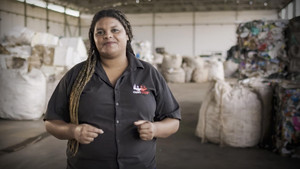
In a compelling TED Talk, Aline Soza, a third-generation waste picker and president of SENT COOP, sheds light on the critical yet marginalized role that waste pickers play in the global environmental landscape. Her testimony serves as a powerful call to action, urging society to rethink the value of waste management and recognize the essential contributions of those on the front lines of the climate crisis.
The Essential Role of Waste Pickers
Soza emphasizes that waste pickers are the backbone of recycling systems, particularly in the Global South. Despite attempts by society to "marginalize" these workers, the data proves their indispensability. In Brazil, while only 30% of cities have formal selective collection, waste pickers are responsible for 35% of the total mass collected. Furthermore, 40% of cities rely exclusively on the labor of these individuals to manage waste. Globally, this workforce is responsible for recycling 58% of plastic, demonstrating that without them, the existing waste management system would "collapse."
Leading the Fight Against Methane
One of the most urgent issues addressed is the "improper handling of waste," which serves as the "third largest source of methane in the world." Soza highlights that waste pickers are "leading the effort to reduce methane emissions" by filling the gap where formal, efficient services are absent. She points specifically to organic waste, which accounts for half of all waste in Brazilian cities. Currently, only 0.5% is composted, while the rest ends up in landfills, releasing roughly 2 megatons of methane. Soza argues that treating organic waste as a resource rather than a "contaminant" is vital to meeting the "global methane pledge" to reduce emissions by 30% by 2030.
The Case for Fair Compensation and Professionalization
Soza argues that "solely relying on selling recyclables is not sustainable" for cooperatives. She posits that waste pickers should be "paid for the services we provide to society" rather than just being viewed as individuals selling scrap. The efficiency of this sector is undeniable: cooperative-led selective collection boasts an "efficiency index of over 80 percent," significantly outperforming private companies, which manage less than 40 percent. By integrating waste pickers into environmental education and formal waste management strategies, cities can achieve higher quality results while fostering a "truly fair transition."
A Socio-Economic Engine for Change
Beyond environmental benefits, empowering waste pickers creates significant socio-economic opportunities. Soza notes that composting generates "three times more jobs" compared to landfills, and when managed by pickers, this impact can reach "11 times more." By channeling "climatic funds" toward these cooperatives, society can combat "environmental racism" and support a demographic that is 72% black and 56% women—many of whom already hold leadership and decision-making positions.
Conclusion: From Beneficiaries to Protagonists
Soza’s message is clear: waste pickers are not merely beneficiaries of social programs; they are "key players" and "protagonists" in the fight against climate change. To accelerate the transition to a sustainable future, cities and financial systems must move beyond the status quo. By recognizing the expertise of workers like those at SENT COOP—who are already piloting organic composting systems at farmers' markets—the world can leverage a proven, scalable solution to the climate emergency. As Soza powerfully concludes, "We are part of the solution," and it is time for the global community to treat them as the essential partners they have been for decades.

Deep Learning with ListenLeap


