
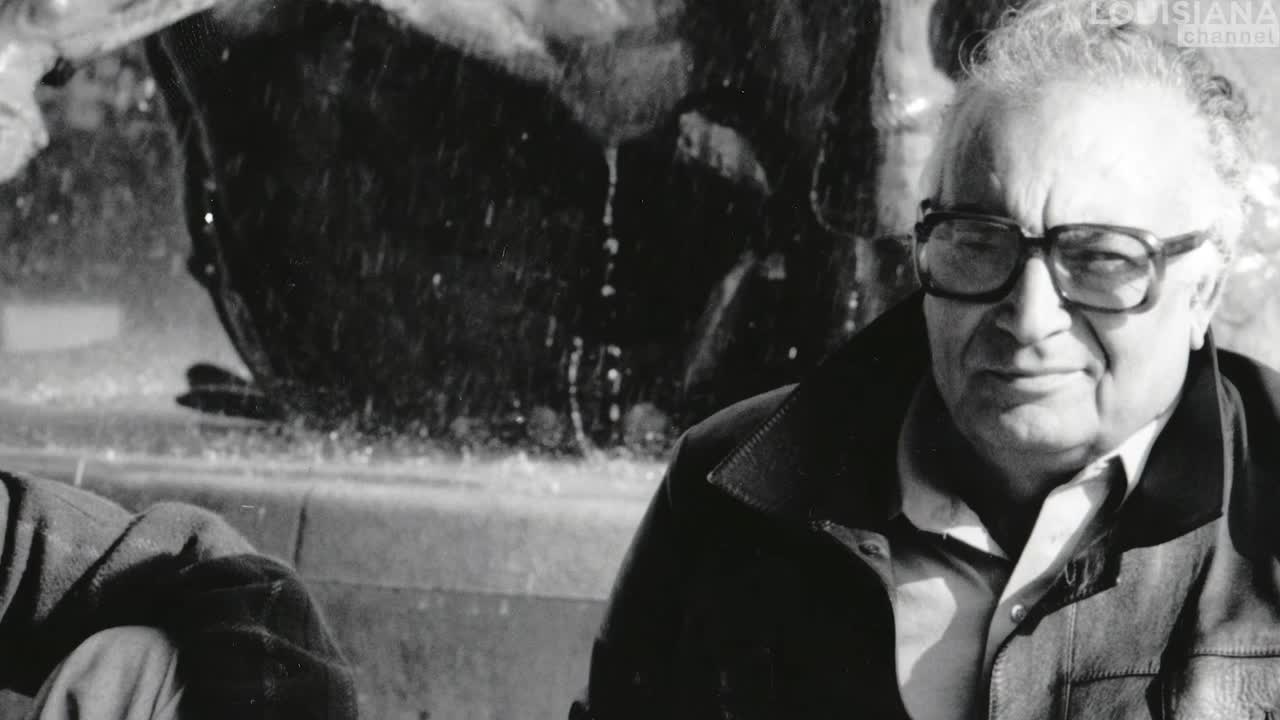
[Yaşar Kemal: The Homeric Voice of Anatolia and the Titans of Literature]-[Turkish writer Zülfü Livaneli on poet Yaşar Kemal: "He was my best friend for 44 years."]
📋 Summary
The Literary Legacy of Yaşar Kemal: An Anatolian Titan
Yaşar Kemal, a Kurdish-origin author and the undisputed "greatest figure in Turkish literature," stands as a monumental bridge between ancient oral traditions and the modern novel. As a close friend and contemporary, the speaker characterizes Kemal not merely as an author, but as a cultural force comparable to the likes of Tolstoy or Gogol. His life, spanning decades of friendship and exile, offers a profound look at what it means to be a writer of global significance while remaining deeply rooted in the soil of one's homeland.
The Homeric Tradition and the Aesthetics of Catharsis
Central to Kemal’s artistry is his connection to the "Homeric tradition." Unlike modern writers who rely on melodrama to elicit sympathy, Kemal utilized the "epos form." The speaker highlights a critical distinction: true literature does not demand tears or pity; it seeks to guide the reader toward a state of "catharsis."
Drawing parallels to the Iliad, the speaker explains that when King Priam begs Achilles for his son's body, Homer does not rely on sentimental descriptions of childhood feet or past memories. He simply presents the raw, dignified action. This is the hallmark of "big literature"—a trait shared by William Faulkner—where deep sorrow is conveyed through restraint rather than sentimentality. Kemal mastered this by utilizing a unique linguistic landscape, drawing from "Anatolian language" rich in the names of birds, flowers, and nature—a vocabulary that remained largely unknown to the urban intellectuals of Istanbul.
The Climate of Chukurova and the Modern Novel
Kemal’s global fame, solidified by bestsellers like Mehmet My Hawk, was rooted in his ability to transform the ancient cultural landscape of "Chukurova" (the ancient Cilicia) into modern fiction. By inheriting folk stories and the historical weight of a region once governed by Cicero, Kemal created a "climate" entirely his own. His work served as a "school for Turkish writers," even as he remained a perennial candidate for the Nobel Prize for three decades. Despite his international reach, the speaker poignantly notes that a writer’s "real value can be understood in your own language," acknowledging that while fame may be fleeting in foreign markets, Kemal’s status as the "father of Turkish literature" remains unshakable.
The Burden of the Writer: Prisons and Politics
Beyond his stylistic brilliance, Kemal was a witness to the hardships of his people. He famously described the Turkish prison system as a "school of Turkish writers," referencing a long, tragic lineage of poets and intellectuals who were executed or imprisoned due to government policies dating back centuries.
This reality led to a memorable encounter in New York with Kurt Vonnegut. After Kemal delivered a speech detailing the suffering and state persecution of Turkish writers, Vonnegut offered a dark, humorous congratulation: "You are a very serious people to be hanged, to be imprisoned." This anecdote underscores the profound gravity of Kemal’s work; he wrote not from a place of comfort, but from a place of political peril, where his voice was so powerful that it became a target of the state.
Global Recognition and Human Connection
Kemal’s reach extended far beyond literary circles, touching the lives of ordinary people. The speaker recounts two telling anecdotes: one in Cannes, where a street clochard recognized the power of his stories, and another in Stockholm, where locals sought his autograph. Whether in the eyes of a drunkard on the street or the heavy silence of an international conference hall, Yaşar Kemal commanded a presence that transcended language barriers. He remains, in the eyes of his peers, a giant who transformed the tragedies of Anatolia into a timeless, enduring art form.

Deep Learning with ListenLeap


