
[The Enduring Legacy and Developmental Value of Traditional Children's Games]-[Traditional Children's Games]
📋 Summary
The Enduring Legacy and Developmental Value of Traditional Children's Games
Introduction: The Universal Language of Play
Across every corner of the globe, the sounds of children laughing and shouting while engaged in playground games serve as a universal human experience. Whether it is a game of "chase or tag" or the rhythmic skipping of a rope, these activities are more than simple pastimes. As noted in the program, "many generations of children have enjoyed playing these traditional games," suggesting that these activities hold a deep, historical, and functional significance in human development.
The Developmental Importance of Play
Experts, including Nicola Butler from the organization Play England, emphasize that play is not merely a distraction but a critical component of a child's "mental and physical development." Engaging in these games provides a structured environment where children learn essential life skills. According to Butler, these games are "necessary for children's health, well-being and development."
Through play, children navigate the complexities of social interaction. They learn to manage "arguing, making up, negotiating and resolving disputes," and perhaps most importantly, they learn how to ensure a game remains "fun and fair." These interactions serve as a foundational training ground for emotional intelligence and social cohesion.
Global Variations of Ancient Games
One of the most fascinating aspects of traditional games is their global reach, often disguised by different names.
- Leapfrog: Known as "leapfrog" in the United Kingdom since the 16th century, this game involves a child bending down while others leap over them. The variation in names—"saut monton" (leap sheet) in France and "Ar Godi Ki Par Godi" (leap horse) in India—demonstrates how cultural context adapts the same physical action into local traditions.
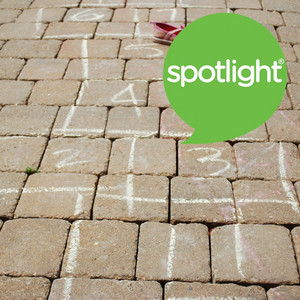
- Hopscotch: This game, known as "Vara" in Albania and "Hinkspiel" in Germany, highlights the universal nature of the "One Leg Jump." As Johannes Lee from Indonesia explains, the name "One Leg Jump" perfectly describes the mechanics of the game, where children must hop from square to square without touching any lines. Its roots are surprisingly deep; experts suggest that "Roman soldiers used something similar as an exercise" nearly 2,000 years ago to improve their agility, proving that play has long been linked to physical training.
Marbles: A Lesson in Competition and Leadership
Marbles, described as "very small, hard balls" typically made of "brightly colored glass," represent another ancient tradition depicted in Roman wall paintings. While the game can take many forms, such as the "ring game" or the triangle-based version played by Hakan Tuncer in Turkey, the core objective often involves competition.
Tuncer’s reflection on his childhood in Turkey provides a profound psychological insight: "I think the most important thing was to have as many marbles as we could... the person who won the most marbles was the leader of the group." This highlights how traditional games serve as a child's "first experience with power and leadership," teaching them how to compete, manage status, and operate within a social hierarchy.
Conclusion: More Than Just Fun
Reflecting on games like "Rayuela" (hopscotch), Maria Lopez from Colombia notes that these memories offer a sense of comfort, showing that she had a "happy time as a child, surrounded by special people who always loved me."
Ultimately, traditional playground games are about far more than just passing the time. They are conduits for culture, physical health, social negotiation, and early leadership development. As the program concludes, these games are a vital part of the human experience, and it is essential that children continue to "learn these games and their valuable lessons for hundreds more years."

Deep Learning with ListenLeap


