
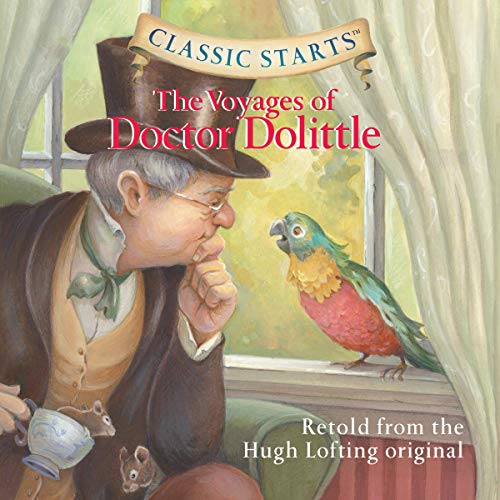
[The Legend of the Pushmi-Pullyu: Dr. Doolittle's Rare Companion]-[The Voyages of Doctor Dolittle - Part 11]
📋 Summary
The Discovery of the Rarest Animal
The narrative centers on the fabled "Pushmi-Pullyu," a creature described as the "rarest animal of all" the African jungles. According to the text, these animals are now "extinct," but during Dr. Doolittle's time, they were elusive, possessing "no tail, but a head at each end" and "sharp horns." Their biological quirk—that their "heads slept at different times"—made them notoriously difficult to track or capture, as they were "shy and terribly hard to catch."
The Monkeys' Mission and the Negotiation
Recognizing the financial hardships facing Dr. Doolittle, the monkeys of the jungle organized a search to capture a Pushmi-Pullyu as a gift. Upon tracking the creature through "fresh tracks" near the riverbank, the monkeys successfully surrounded it in a "giant circle." The initial request for the creature to accompany the doctor to Puddleby was met with a firm refusal, as the animal expressed great concern about his shyness: "I would hate to be stared at." However, after the monkeys emphasized that he would live with the doctor rather than in a zoo, the creature agreed to a meeting, sensing that Dr. Doolittle was "a man to be trusted."
The Doctor’s Dilemma and Financial Reality
When Chi-Chi introduced the creature to Dr. Doolittle, the doctor was stunned, exclaiming, "What on earth is that?" While the doctor's animal companions—specifically Dab-Dab the duck and Jip—argued that the creature would solve their "money troubles" because "people will pay any money to see him," the doctor remained ethically conflicted. He felt it would not be a "nice move" to take the creature from his "lovely place" simply for display. The debate highlights the tension between the doctor's altruistic nature and the practical, often harsh, financial realities of maintaining his household and repaying debts, such as the "fisherman's boat" that had been ruined.
A Unique Arrangement and Departure
Before agreeing to leave, the Pushmi-Pullyu negotiated a condition: if he found life in the doctor's land unpleasant, he must be sent back. The interaction also revealed a charming detail about the creature's anatomy; when asked by the doctor if he could talk with both mouths, the Pushmi-Pullyu explained, "I just like to save the other one for eating," allowing him to "talk while I eat and not appear rude."
A Heartfelt Farewell
The story concludes with a touching farewell party. The animals celebrated with "pineapples and mangoes and honey," serving as a final tribute to the doctor. Dr. Doolittle delivered a poignant speech, expressing sadness at leaving the "beautiful land" while acknowledging his "responsibilities" back home. In a lasting gesture of gratitude, the Grand Gorilla placed a large rock to "mark the spot where Dr. Doolittle once lived." This monument remains a testament to the bond between the doctor and the jungle inhabitants, marking the end of a journey defined by compassion, mutual respect, and the inclusion of the rarest creature in the world into the doctor's unconventional family.
Deep Learning with ListenLeap


