
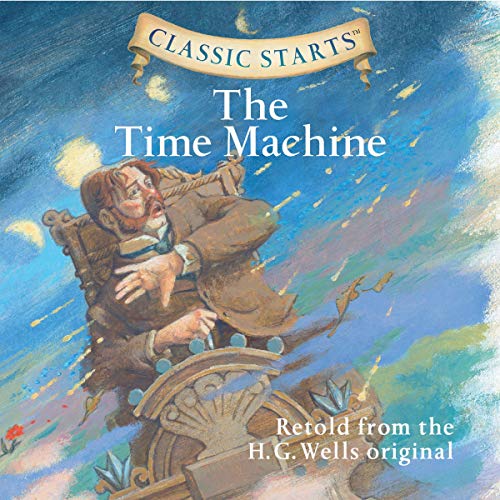
[The Return of the Time Traveler: A Journey Through Temporal Shifts]-[The Time Machine - Part 17]
📋 Summary
The Return of the Time Traveler: A Journey Through Temporal Shifts
The Reverse Chronology of Return
After venturing into the distant future, the protagonist initiates his return, describing the process as watching the "blinking of days and nights" return to their familiar rhythm. As he reverses his trajectory, the celestial and environmental markers of time begin to revert; the "sun shone a brilliant white again," the sky regained its "familiar blue," and the vast oceans faded, giving way to the resurgence of "trees and grass" that transformed the landscape back into the green countryside he recognized. The mechanical precision of the time machine is highlighted as the dials—specifically those tracking millions and thousands of days—slowly "stopped at zero," signaling his proximity to his own era.
Re-entering the Workshop
The transition back to the present is marked by the physical manifestation of his "workshop." As he decelerates, he observes the world in reverse, noting that his housekeeper moved "in the blink of an eye" but in a backward motion. Upon halting the machine, the traveler is greeted by the sensory familiarity of his surroundings: his "tools, workbenches, and drawings." The auditory experience of the "sound of traffic coming from outside" and the distinct "smell the air that I knew so well" serve as grounding elements, confirming that he has successfully navigated back to his point of departure.
The Reality of the Adventure
Despite the comfort of his environment, the traveler experiences physical symptoms of his journey, noting that he was "shaking" and his "legs were weak." A moment of existential doubt arises: "I almost wondered if I'd simply fallen asleep," suggesting that the surreal nature of the future might be perceived as a "dream." However, this doubt is quickly dispelled by physical evidence. When he departed, the time machine was positioned in one corner; upon his return, it sits on the "other side of the room." This displacement is a crucial piece of evidence, as the "Morlocks had dragged it from the lawn into the base of the statue" in the future, proving that the machine’s physical history remained intact despite the temporal paradox.
Reintegrating into the Present
Seeking further validation, the traveler moves to the hallway, where a "newspaper on the table" confirms the current date. He observes the clock, noting it is "almost eight o'clock in the evening," and hears the "clatter of dishes" emanating from the living room—the sounds of a normal, domestic life that contrasts sharply with the desolation of the future he witnessed. Although he initially felt "weak and sick" enough to retreat upstairs, the smell of the meal acts as a tether to his humanity. By choosing to join his guests, wash, and eat, the traveler transitions from a witness of the distant future back into a participant of his own present, finally sharing the harrowing account of his expedition.
Deep Learning with ListenLeap


