
[The Perils of Greed: Lessons from 'The Mouse and the Cake']-[The Mouse and the Cake]
📋 Summary
The Perils of Greed: A Moral Analysis of 'The Mouse and the Cake'
Eliza Cook’s poem, The Mouse and the Cake, serves as a timeless cautionary tale regarding the destructive nature of selfishness and the physical and emotional consequences of gluttony. Through the simple narrative of a mouse who discovers a decadent treat, Cook illustrates how the pursuit of individual pleasure, when divorced from generosity, leads to inevitable suffering.
The Discovery of the 'Treasure'
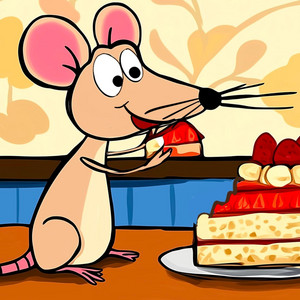
The narrative begins with the mouse finding a "beautiful piece of plum cake," described as the "richest and sweetest that mortal could make." The author emphasizes the sensory appeal of the object, noting it was "heavy with citron and fragrant with spice," and "covered with sugar all sparkling as ice." This initial encounter establishes the cake not merely as food, but as a "treasure." The mouse’s reaction—crying out, "My stars!" with eyes "beamed with glee"—highlights an immediate transition from discovery to a possessive desire to consume the entire prize alone.
The Choice of Secrecy and Selfishness
Upon hearing his brothers at play, the mouse makes a deliberate, moral choice to conceal his find. He exclaims, "I'll hide with the cake, lest they wander this way," followed by the exclusionary declaration: "Not a bit shall they have." By resolving that he can "eat every morsel" himself, the mouse prioritizes his own gratification over communal bonds. He watches his "hungry young brothers" go "scampering past" while he clutches the cake fast, effectively choosing isolation to secure his gluttonous objective.
The Consequence: From Pleasure to Pain
The act of consumption is depicted as a frantic, unsustainable process. The mouse "nibbled and nibbled and panted," eventually "gulping it down" with such intensity that he renders himself ill. The poem poignantly notes that he "swallowed it all," but the immediate result is not satisfaction; rather, he becomes "so unwell" that he "groaned with distress." This physical collapse serves as a metaphor for the hollowness of selfish acquisition. When his family discovers his plight, the doctor’s intervention forces the mouse to "rehearse" his actions, highlighting the shame associated with his refusal to share even a "crumb" with his "playmates and relatives."
The Moral Imperative
Cook concludes the poem by addressing both "little people" and "large ones," framing the mouse’s experience as a universal lesson. The core message is a warning "not to be over-selfish with what we may gain." The poem argues that when we hoard the "best of our pleasures," we risk transforming those very joys into "pain." By failing to share, the mouse lost not only the benefit of the cake but also his health and dignity. Ultimately, The Mouse and the Cake teaches that true satisfaction is found in moderation and communal sharing, rather than the isolated consumption of material wealth.
Deep Learning with ListenLeap


