
[The Holy Grail of the Canopy: Encountering the Harpy Eagle in Guyana]-[The Most Powerful Eagle in the World | BBC Earth]
📋 Summary
A Rare Encounter in the Guyanese Wilderness
In a remarkable turn of events during their expedition, the team stumbles upon one of Guyana's most elusive and rarely seen creatures: the harpy eagle. Positioned high in the trees near their camp, the bird represents a pinnacle moment for the explorers, who describe the experience as "unreal" and "the Holy Grail." For the team, encountering this apex predator is a singular event, as they emphasize that "there is more chance of a jaguar doing the fandango through our camp than finding a harpy eagle."
The Anatomy of an Apex Predator
The harpy eagle is described as "the most powerful eagle in the world," standing an impressive "meter tall." The footage captured by the team provides a visceral look at its hunting prowess. The bird is spotted with the "remains of a monkey," illustrating the species' role as a formidable predator. The host notes that these birds are "such huge birds of prey" that they actively hunt large primates, using "enormous" and "powerful" talons to secure their catch. The specific technique involves grabbing the prey by the body with one claw and the head with the other, a display of strength that reinforces why they are the masters of the canopy.
The Challenge of "Smash and Grab" Filming
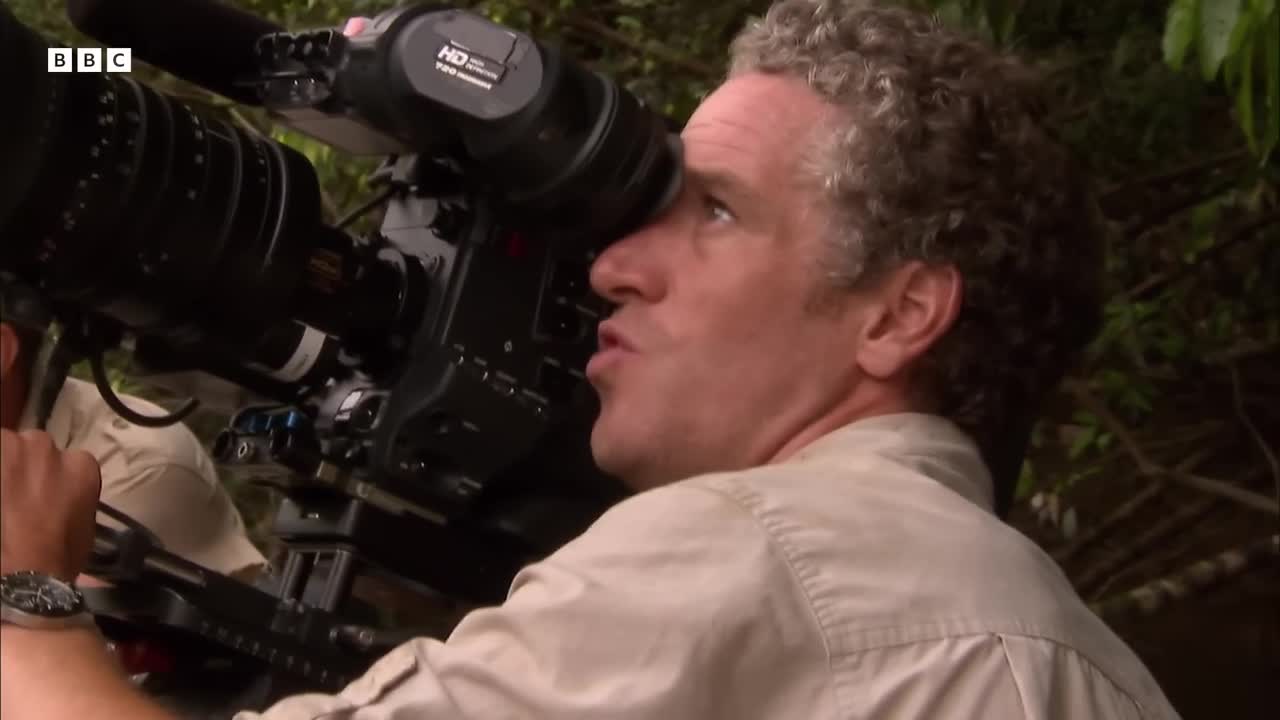
Capturing such a fleeting moment required immediate action, which the team describes as "smash and grab filming." Because the bird is notoriously difficult to track—labeled as "definitely the most difficult bird to see"—the team had to act with urgency to set up their equipment. The host explains the pressure of the situation: "You've got to try and find a position and just get what you can, because this bird is going to fly and we're never going to see it again." This high-stakes photography allows them to document the bird at close range before it inevitably departs, marking the final, triumphant discovery of their journey.
Ecological Significance and Conservation Concerns
The presence of the harpy eagle serves as a vital biological indicator for the region. As the host notes, "the further we get away from people, the more animals" they encounter. The eagle’s existence in this specific habitat is a clear sign of a "very healthy habitat," as the bird's survival is dependent on a high density of monkeys. Finding such a creature is likened to "finding diamonds at the head of this river."
However, this discovery is coupled with a sobering realization regarding the fragility of the ecosystem. The team expresses deep concern that the area remains "completely unprotected." The host warns that human interference "could really mess this up in a very short space of time," highlighting a "terrifying" reality for one of the last remaining untouched wild spaces. As the team prepares to head home, the encounter with the harpy eagle serves as both a celebration of biodiversity and a stark reminder of the urgent need for conservation in the Guyanese wilderness.

Deep Learning with ListenLeap


