
[The Divine Imagination of William Blake]-[The Divine Imaginatione of William Blake]
📋 Summary
The Visionary Art and Faith of William Blake
William Blake (1757–1827) stands as one of history's most unique artistic figures, a man whose life was defined by a profound, albeit unconventional, intersection of faith and creativity. Often misunderstood by his contemporaries, Blake’s legacy is now celebrated for its raw, visionary power.
The Ancient of Days: A Vision of Creation
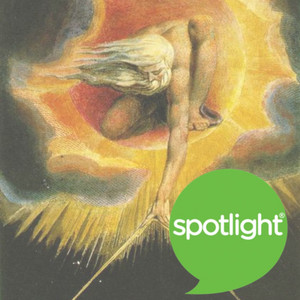
One of Blake’s most iconic works is the painting Ancient of Days. The image depicts a figure, resembling the Christian God, crouching on the edge of the sun and using a golden compass to design the universe from "emptiness." This painting serves as a window into Blake’s mind—a place where theology and artistic expression were inseparable. Unlike the traditional religious art of his time, Blake’s work was deeply personal, born from his own spiritual experiences.
Early Visions and the Conflict of Imagination
Born in London to a family of modest means, Blake displayed a talent for art early on, eventually becoming an apprentice to a "master engraver." However, it was his inner life that truly set him apart. As a child, he claimed to see "angels flying in the branches" of a tree. While his father dismissed these experiences as "lying," Blake’s mother listened as he described these visions as "looking like thoughts." These "vivid" experiences became the bedrock of his worldview. Throughout his life, Blake asserted that he could "see angels" and that the "dead spoke to him," beliefs that shaped his work and fueled his unconventional version of Christian faith.
Artistic Independence and Poverty
Blake’s refusal to compromise his vision often led to financial struggle. He resisted the demands of patrons who sought to control his output, prioritizing his creative autonomy over commercial success. A notable conflict arose with Dr. John Trusler, who criticized Blake’s images for not being "realistic." Blake’s response was a manifesto for his artistic life: "I will not follow the path of another, however wonderful that path may be." Because he chose this path of independence, Blake and his family "often lived in poverty," yet he continued to innovate, developing his own unique methods of "engraving on copper" and self-publishing his poetry.
The Power of Poetry: The Tiger
Blake’s literary genius is best exemplified in his poem "The Tiger," found in Songs of Innocence and Experience. In this work, Blake uses the imagery of "forging"—a process requiring immense "heat and strength"—to contemplate the creation of a powerful, dangerous creature. He asks, "What immortal hand or eye / Could frame thy fearful symmetry?" By questioning whether the same creator who made the gentle "Lamb" also created the fierce "Tiger," Blake explores the complex, often frightening nature of existence and divine creation.
A Lasting Legacy of Faith and Creativity
When Blake died in 1827, he was largely unknown. However, time has vindicated his dedication to his craft. Today, his paintings are recognized as "powerful markers of faith and creativity," and his poetry has influenced generations of writers. Blake did not care for "popularity"; instead, he lived with the conviction that "creativity built his faith" and "faith guided his creativity." His life remains a testament to the idea that true art is not just a reflection of reality, but a profound expression of one’s inner truth.
Deep Learning with ListenLeap


