
[The Aerial Odyssey: Preparing for the 8,000-Kilometer Migration of Swallow-Tailed Kites]-[The Secrets Behind the Swallow‑Tailed Kite's Perfect Flight | BBC Earth]
📋 Summary
The Life of the Aerial Specialist
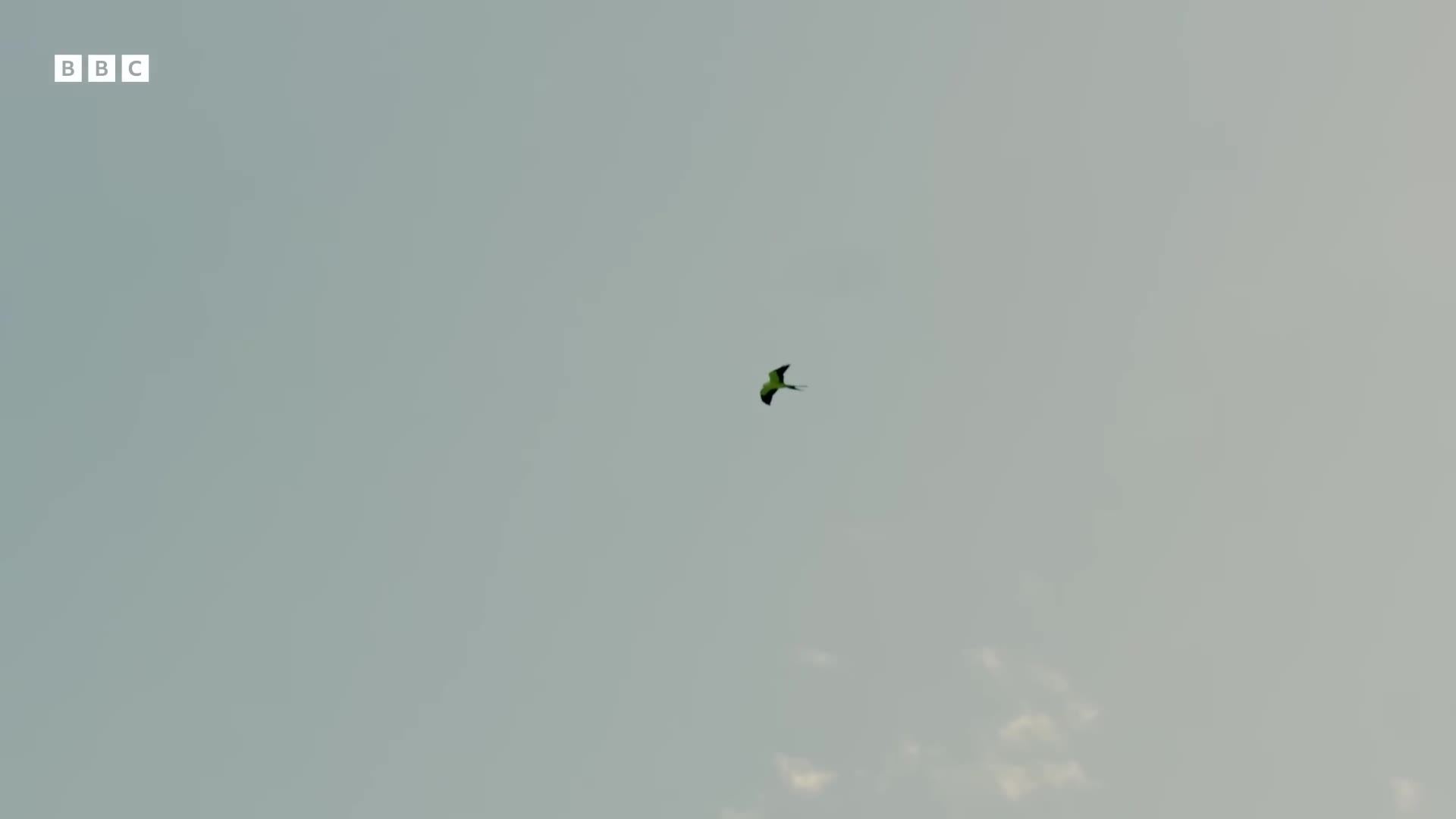
Swallow-tailed kites are truly extraordinary birds, spending the vast majority of their lives in the air. Since their arrival in March, these raptors have demonstrated a lifestyle where their "feet... almost never touch the ground." They are highly adapted to an aerial existence, performing essential tasks such as "courting, feeding, drinking, and even bathing on the wing." As two-thirds of the North American population congregates in Florida for breeding, they prepare for one of nature’s most grueling migrations: an 8,000-kilometer journey to their winter feeding grounds in South America.
Strategic Preparation and Roosting Behavior
Before embarking on their massive southward trek, the kites undergo a period of intense preparation. They gather "en masse" to store up energy, a process that is highly sensitive to human interference. To ensure they remain undisturbed, the birds select "remote roosts, far from people." During these final days in North America, they focus on maintenance; after a "morning bath," they carefully "preen their feathers" to ensure their plumage is in peak condition for the long-distance flight ahead. Interestingly, these birds appear to possess an innate ability to "sense atmospheric changes." While one might expect them to avoid severe weather, researchers suggest that the kites actually "capitalize on their headwinds" when hurricanes approach, using the storms to aid their navigation.
Fueling for the Long Haul
As the time for departure arrives, thousands of these birds soar above their roosts, signaling the commencement of a journey that can take up to four months. Before fully committing to the flight, the kites pause for "one last feed." They target "agricultural pasture," a landscape ironically "created by us," which proves to be an ideal hunting ground because it is "alive with insects."
Biological Mastery in Flight
Their hunting technique is a marvel of evolutionary engineering. The birds utilize their namesake "forked tail" as a "rudder" to navigate the complex flight paths required to capture prey on the wing. Their diet is specific, as they "discard the wings" of their prey to focus on the "protein-rich bodies," ensuring they have the necessary caloric density to sustain them across continents. Once they have "had their fill" and their energy reserves are optimized, the kites finally depart, beginning their epic migration toward South America, leaving behind the Florida pastures to master the skies once more.

Deep Learning with ListenLeap


