
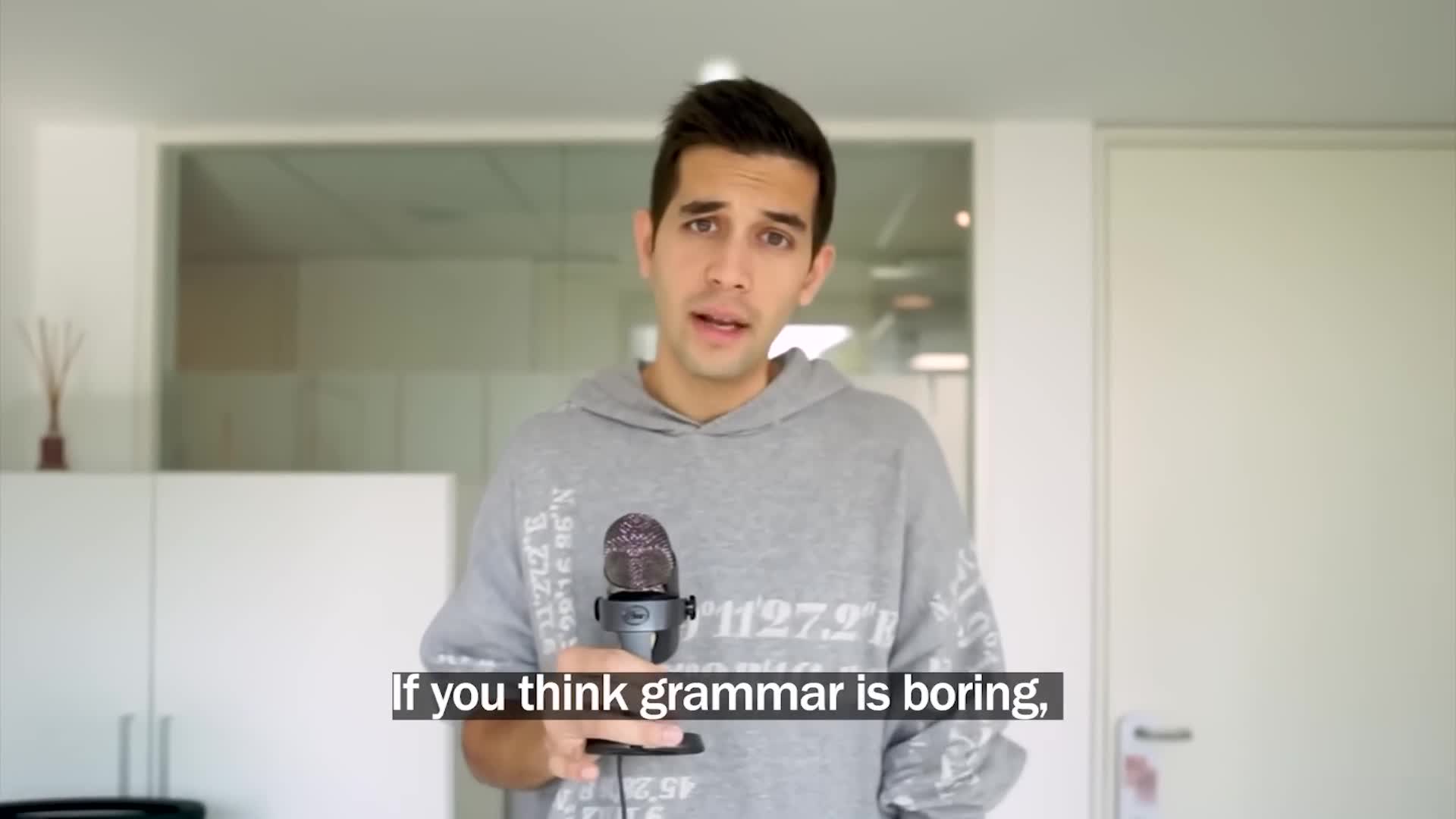
[Mastering English: Correcting Five Common Grammar Mistakes]-[Stop Making These 5 Grammar Mistakes in English!]
📋 Summary
Mastering English: Correcting Five Common Grammar Mistakes
Many learners often underestimate the importance of grammar, viewing it as a tedious hurdle in the journey to fluency. However, as emphasized in this podcast, grammar serves as the essential "foundation" of the English language. Without this structural base, building effective communication becomes impossible. By analyzing five persistent errors made by students ranging from beginner to advanced levels, we can refine our usage and achieve greater accuracy.
1. The Misuse of 'Discuss About'
One of the most frequent errors is saying, "We need to discuss about the problem." The word "discuss" is a transitive verb that requires a direct object; it does not take a preposition. The speaker notes that students likely confuse this with the verbs "talk" or "speak," which naturally require the preposition "about." To correct this, simply drop the preposition: "We need to discuss the problem."
2. Redundant Verbs with 'Agree'
Students often say, "I am agree with you." This is grammatically incorrect because "agree" is already a verb. Adding the verb "to be" (am/is/are) is redundant. The correct phrasing is simply, "I agree with you." The podcast further clarifies the nuances of this verb:
- Use "agree with" when referring to a person.
- Use "agree about" when referring to a topic.
- Use "agree to" when committing to an action.
3. The 'More Better' Fallacy
Comparing things often leads to the mistake of saying something is "more better." Since "better" is already the comparative form of "good," adding "more" is an unnecessary double comparative. If you wish to emphasize that something is significantly superior, use the adverb "much" instead. Thus, "This is much better" is the correct way to convey intensity without violating grammatical rules.
4. The Complexities of 'Suggest'
"I suggest you to study more" sounds natural to many learners, but it is fundamentally incorrect. The verb "suggest" cannot be followed by an infinitive (to + verb). Instead, the speaker highlights two correct structures:
- Use a "that" clause: "I suggest (that) you study more."
- Use a gerund: "I suggest studying more." Remembering that "suggest" never takes an infinitive is key to avoiding this common pitfall.
5. Preferring 'To' over 'Than'
Finally, when comparing preferences, students often say, "I prefer tea than coffee." This is incorrect. The verb "prefer" requires the preposition "to" when establishing a relationship between two choices. The correct structure is "I prefer X to Y," such as "I prefer tea to coffee" or "I prefer reading to watching TV."
Conclusion
Grammar is not merely a set of abstract rules; it is the framework that allows your voice to be heard clearly and professionally. By eliminating these five common mistakes—avoiding unnecessary prepositions with 'discuss', removing the 'to be' verb from 'agree', correcting double comparatives, using the correct structures after 'suggest', and using 'to' instead of 'than' with 'prefer'—you can significantly strengthen your English foundation.
Deep Learning with ListenLeap


