
[The Cosmic Hierarchy: Unveiling the Symbolism and Craftsmanship of Qing Dynasty Rank Badges]-[Status Embroidered in Late Imperial China]
📋 Summary
The Cosmic Hierarchy: Unveiling the Symbolism and Craftsmanship of Qing Dynasty Rank Badges
In the storerooms of the National Museum of Asian Art, the study of Qing Dynasty rank badges offers a profound window into the sociopolitical and cosmological framework of imperial China. These embroidered insignia were far more than mere decorative patches; they were visual manifestations of a rigid hierarchy, personal achievement, and a complex worldview that positioned the wearer at the center of a cosmic order.
The Language of Status: Civil and Military Ranks
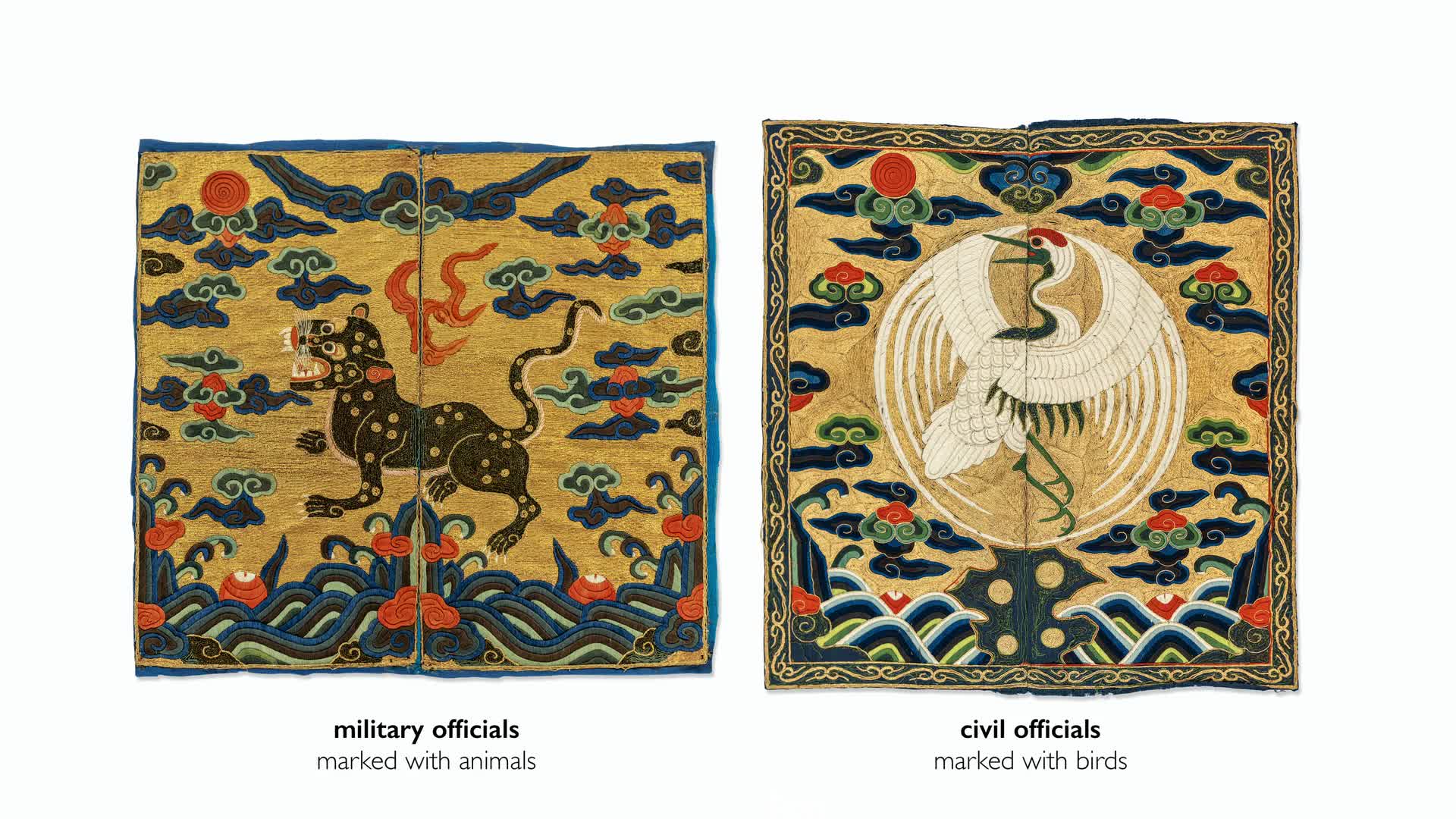
During the Qing Dynasty, society was structured through a rigorous system of civil and military officials, each categorized into nine distinct ranks. These badges served as immediate communication of status, essential for daily court life and commemorative ancestral portraits. Officials were deeply proud of these distinctions, as they were the culmination of "successive exams" and intense academic competition.
Civil officials were identified by birds, while military officials were represented by animals. The crane, representing the highest rank, sits atop this hierarchy. Interestingly, despite the prestige associated with these titles, the officials were required to "pay for their own rank badge," underscoring the immense personal investment required to maintain their public persona.
Material Brilliance and Secret Threads
The craftsmanship behind these badges is nothing short of breathtaking. They were designed to create a "dazzling" effect, particularly when viewed in groups at the imperial court. The badges utilized "gold thread," created by wrapping thin gold foil around a silk core, which was then meticulously "couched" onto the background.
Perhaps the most fascinating material choice involves what the experts call "secret threads." Many areas of the badges, such as the crane’s neck or the perforated scholar's rock, were originally filled with "peacock feather filament threads." Artisans would pull iridescent filaments from peacock feathers, hand-wrap them around silk, and couch them into the design. Over time, these delicate feathers have worn away, leaving behind only the stray threads that hint at the original, shimmering iridescence that once caught the light in the imperial court.
The Microcosm of the Qing Empire
Each badge functions as a microcosm of the Chinese universe. Central to every design is the "red circle," representing the sun—a symbol of the emperor. The bird or animal insignia is always positioned to be "paying respect to the emperor," reflecting the physical and political deference required of officials during court assemblies.
Beyond the political, the badges are rich with cosmological significance. The landscape elements—mountains, water, and the "perforated scholar's rock"—represent the terrestrial world. The clouds, which often mirror the spume on the water, are shaped to resemble the "fungus of immortality," a traditional symbol used to wish for longevity.
Furthermore, the geometry of the badges carries deep philosophical weight. The rectangular shape of the badge represents "earth," while the circular posture of the crane represents "heaven." The wearer, positioned between these symbols, completes the triad of heaven, earth, and man. This reinforces the idea that the official was a vital participant in the cosmic order, mirroring the "cosmic dimension" found in the scholar's rocks that adorned traditional gardens.
Artistic Nuance and Individual Expression
While many badges were mass-produced in workshops or created by family members using woodblock print templates, no two are identical. This is due to the "latitude" allowed in the embroidery process. A close inspection of the stitching reveals the high level of technical mastery involved. The "satin stitch" is packed so densely that it creates a "sculptural feeling" on the bird's feathers, while the "knotting technique" on the crane’s head adds texture and detail, even down to the minute rendering of the tongue and beak.
By weaving together gold thread, iridescent peacock feathers, and profound cosmological iconography, these rank badges transformed the official’s robe into a wearable map of the empire. They were, in essence, a "Qing Empire in microcosm," binding the individual official to the sun, the emperor, and the vast, eternal universe.
Deep Learning with ListenLeap


