
[Mastering Natural English: Essential Idioms and Phrases for Everyday Conversation]-[Speak English Naturally like a Native Speaker with these Phrases]
📋 Summary
Mastering Natural English: Essential Idioms and Phrases for Everyday Conversation
To speak English like a native speaker, one must move beyond literal translations and embrace the idiomatic expressions that color daily communication. This guide categorizes the essential phrases discussed in the podcast, providing context and usage tips to help you sound more natural.
Expressing Uncertainty and Directness
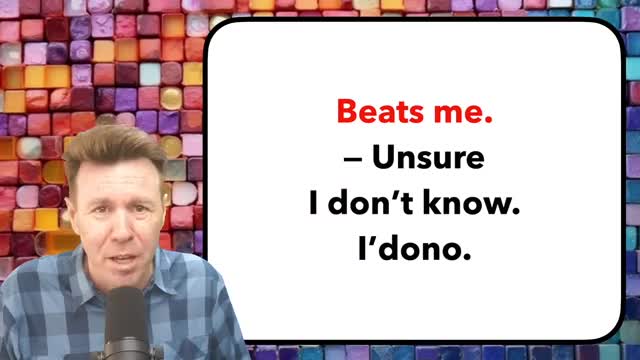
Sometimes, the simplest way to say "I don't know" is to use an idiom. "Beats me" is a perfect, informal alternative when you are unsure about something, such as when you don't know where a meeting is taking place.
Conversely, when you need to be direct, "Cut to the chase" is the phrase to use. It encourages the listener to stop wasting time and focus on what is important. If you are worried about being too blunt, you can use "Speak your mind" to invite someone to be honest without holding back, or use "I'm all ears" to signal that you are ready and eager to listen.
Managing Conversations and Softening Opinions
English speakers often use specific phrases to manage the tone of a conversation.
- "I'm just saying": This is a vital tool for softening a critical or controversial opinion. By adding this at the end of a statement—such as "The new project plan seems overly complicated. I'm just saying"—you frame your critique as a simple observation rather than a harsh judgment.
- "It's not the end of the world": This is used to comfort someone, reminding them that a problem is not as catastrophic as they perceive it to be.
- "You had me worried": A common expression used when someone arrives late or disappears unexpectedly, indicating that their absence caused you genuine concern.
Discussing Events and Good Fortune
Navigating social situations often requires talking about unexpected news or luck.
- "Out of the blue": Used when something happens completely unexpectedly, like a friend calling you "out of the blue."
- "Don't jinx it": A cautionary phrase used when things are going well (e.g., during a "winning streak"). It warns against saying something that might bring bad luck or ruin a good situation.
- "Cross your fingers": A classic way to express that you are hoping for good luck, such as waiting for exam results.
- "You made my day": This is used to express deep appreciation when someone does something kind or gives you a gift, turning a regular day into something special.
Managing Tasks and Social Departures
Finally, some phrases help manage the flow of tasks and social interactions:
- "Let's get this over with": Used when facing a difficult or unpleasant task that you want to finish quickly so you can "go home."
- "No pain, no gain": A motivational mantra used to encourage someone to keep working hard toward a goal.
- "Let's keep in touch" and "Let's bounce": The former is a standard, friendly way to end a conversation with the intention of staying in contact, while the latter is a casual, slang-heavy way to say "let's go" or "let's leave."
- "Better late than never": An apology-adjacent phrase used to acknowledge that while you are late, it is still better to show up than not to show up at all.
Sharing Information and Disbelief
When you are surprised by news, "You've got to be kidding" conveys disbelief. When sharing new information, "It turns out" is the standard way to introduce a fact you recently discovered. Finally, if you are sharing rumors or information you heard indirectly, "I heard it through the grapevine" is the perfect idiomatic way to describe how you obtained that information.
Deep Learning with ListenLeap


