Hello and welcome to Women in Retail Talks, the podcast where C-suite executive women in the retail space share their stories of professional growth leadership development, personal journeys and more.
I'm Marie Albages, Managing Editor of Women in Retail, a membership-based community of executive women at leading retailers and brands.
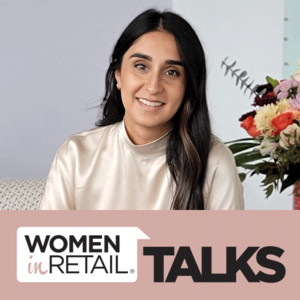
Today, I am joined by Somya Fareed Silber, the CEO of Edible Brands, which is the parent company of what we all know as Edible Arrangements.
So I get to speak to Somya just after the announcement of her promotion to CEO from President, replacing her father, Tariq Fareed, in the position.
She's the first new CEO in over two decades at the company and, I believe, the first female CEO of the company.
She has a robust career in the e-commerce and retail space, so I am very excited to speak with her.
Let me bring her in.
Somya, welcome to the podcast.
Thanks for having me, Marie.
Excited to be here.
Yeah, I feel like we have a lot to talk about.
So I want to get right into it.
First of all, congratulations on your incredible promotion.
I know that you've been at Edible Brands for what eight and a half years at this point, and obviously had various positions throughout your career there.
And most recently, like I said, you were the president.
So now this promotion to CEO.
I would love for you to kind of walk us through how you got here, from the very beginning.
The beginnings, probably when I was six years old, when Edible was founded.
So I have known Edible.
You know, since I was a kid I've referred to the company as my seventh sibling.
I'm the oldest of six and Edibles the 7th, just because I've grown with the brand.
I started working in the stores after school when I was in middle school.
I used to hang out there every day.
And I feel like I absorbed a lot when it comes to customer service and just providing the best quality and experience at a very early age, which I think helps me become.
It's helped me become the leader that I am today.
But I joined the company full-time in 2016 as a product owner working on our tech team.
Fun fact, most of our technology is proprietary.
So our e-commerce platform or point of sale system that's in all of our stores.
And since tech is so foundational to the business, it was a great area for me to start.
I worked my way into operations, did a stint managing our Canadian market and then jumped into e-commerce before the president role.
And VP of e-commerce was probably, I'd say it was one of my most rewarding roles.
We really had the opportunity to grow our e-commerce offering and footprint.
We launched a lot of new product categories, a lot of new price points.
We started to introduce the brand to the next generation of consumers.
So that was really fun and rewarding.
Yeah.
And assumed the CEO position effective last week.
Okay.
You said a lot there and I wrote a bunch of stuff down.
So I want to kind of go back a little bit and walk me through a little bit more of first of all.
Did you always know that you would eventually work at this company or even become CEO?
No.
I think it was always in the back of my mind.
It was one of those things where, since I was so immersed in the business from an early age, it was always top of mind for me.
So even you know through high school and through college, especially when we would do case studies and talk about different programs, I would always think about how they would apply to Edible.
So that was an indication for me that this is something I want to do long term.
So yeah, I'd say yes, it's always been there.
I did have the opportunity to work outside of Edible.
After I graduated college, I worked for an ad agency doing media planning, which was a really great experience and gave me view into how a larger organization works.
But yeah, it's sort of always been there.
And it's been something that I feel like I've been training for for a very long time.
What drew you to kind of tech and specifically tech in retail to begin with?
I think for me, I love all of the opportunity that's available to create personalized experiences.
And this is something we're putting a lot of focus on at Edible right now is how do we interact with customers and users, how they want to be interacted with right?
How do we get to their level and show them Things that are important to them and that are impactful for them?
And I think we've all we all have.
We sit on so much data.
We sit on an incredible amount of data.
And for us, we're continuously trying to figure out how do we leverage that to create more personalized experiences.
And show an offering that makes the most sense to that customer everything from whether it's a product category or a price point or a promotion.
Or even a fulfillment method, right?
So just that idea of being able to create the personalization has been something that's really neat and i've wanted to continue exploring.
I also think with tech and tech and retail, it just moves really fast, right?
I think we have the opportunity to test and learn.
If something doesn't work, it's easy to roll back and try something else.
So just this idea of continuously testing and improving the platform and doing it in a very nimble way is really fun.
We work in two-week sprints.
We always add a little bit of innovation to every single sprint.
So we're always testing something new and seeing how it goes and then building on it.
Say that again.
You work in two-week sprints.
What does that look like?
For our so our tech team.
They typically are working within a two week frame to develop QA, UAT and push things into the live environment.
So working in that model allows us to be nimble and it allows us to have an opportunity not just to address critical needs of the business, but also work on new innovation.
Continue to test and learn what's working, what's not working, and improve from there.
Yeah, that's really cool.
I love what you were saying about personalized experiences, because I feel like, to an extent, edible has always had a little bit of personalization involved.
Maybe you can kind of walk us through the legacy of the brand.
You know, I have this idea of what edible arrangements was and I'm sure has changed so much.
You kind of walk us through the origin and how the company, with the help of you and your e-commerce transformations, have brought upon the personalization that we see today from your company.
That's a great question.
So we started out as true retail and franchising.
So all of our retail locations are franchised.
We have small business owners spread out across the whole country, which is something that's super fun and important for me and my family.
We love the franchising model.
The franchise retail model we have also allows us to touch 75 of households in the US within an hour, which is really fantastic.
We started out with just the edible arrangement that everyone knows really well.
And even what you were mentioning.
There's always been this personalization aspect.
Even From day one, we've had this idea of you pick the arrangement, you dip it, you add chocolate-dipped strawberries and then you personalize it for an occasion.
And we're almost going back to that and having a little bit of a full circle moment of making the personalization that simple.
But we've gone from being known for our fruit arrangements and our chocolate-dipped fruit to now offering
Flowers, which is one of our fastest growing categories, trending up 15 year over year, which is really fantastic.
We've got a whole bake shop line with cookies and cheesecakes, brownies and cupcakes.
That's been a really great way for us to introduce the brand to a younger consumer, specifically Gen Z, and also introduce a lower price point item.
And then we've got other shelf-stable products like chocolates and popcorns that are more add-ons.
We do a significant amount of volume in balloons.
Balloons are a preferred add-on for the edible products.
So over time I'd say over the last five years or so we've really expanded the product offering because with the arrangements you don't need an arrangement all the time.
But if it's a baked good or even a treat box, there's more reasons to buy and more reasons to interact there.
So this introduction of new categories isn't just to bring in a new consumer, but also to help increase the frequency that customers are shopping with us.
So I'm hearing new product categories, new price points, a lot of it to appeal to that younger generation.
What are you seeing as kind of the trends in?
I guess you would call it just the gifting space in general.
Do you have a more kind of niche industry that you kind of label yourself as?
Or what are you seeing as kind of the trends in the space that you guys are really occupying?
Yeah, I'd say it's the gifting industry.
I'd say two things.
One.
Going back to the personalization piece, people want to make sure that what they're gifting and what they're sending is a true representation of them, right?
And they have choice in what the offering is.
So continuing to see a lot of opportunity there.
The second area too is self-gifting.
So a lot of people... have that self-care mindset.
I feel like that's really big with us millennials, especially.
So seeing a lot of traction there as well.
And that's another area where the lower price points have definitely helped out.
Also seeing for us in a post-pandemic environment, a big shift into gatherings and hosting and edible being used for those occasions as well.
So, whether it's our fruit platters, we've also introduced large format dessert boards.
We have a tablescape.
It's like a grazing board, a dessert board going live later this year.
Really excited about that.
So seeing a lot of traction there as well.
Did you guys lean into like the charcuterie board trend of what was it last year?
Sort of, we did, but it's like, it's all desserts and it's all fruit, which is really cool.
We actually had the team, we set one up in the office recently.
And it was really fun because there's something for everyone, right?
You have the fresh fruit, the dip fruit, the cookies, the cheesecakes, the cupcakes.
Everyone gets to enjoy it.
And I'm really excited to see how they perform once we launch them in Q4.
I want to talk a little bit about kind of the push towards trying to appeal to the younger generation.
I mean, the brand is what, 25 years old?
And so, you know, it's been around obviously my whole life.
But I wonder what you're doing besides the you know different product categories and different price points to really appeal to that Gen Z audience.
You know, how is social shopping, influencers, all of that fitting into this?
Really happy with our social media and influencer marketing recently.
So definitely kick that up last year in an effort to create content that resonates with millennials and Gen Zs.
And the other thing that we've done is the content is tailored to each channel, right?
So the content you see on Facebook is different from what you see on Instagram and it's different from what you see on TikTok.
Each one of those platforms has its own content strategy.
And we're all about ease and convenience, right?
In the end, that's really what our core is.
We're an easy and convenient gifting solution.
Easy and convenient while also continuing to uphold really great quality.
So I think what's been really important for us is injecting a little bit of humor and fun into the brand and getting on social media and TikTok trends as we see them happening.
I've got a really fantastic social team in house.
They're always, you know, running around the office filming content.
And it's really fun.
It's really fun to see that.
And it's also really great because our franchisees get to engage with it as well.
They get to reshare that on their channels.
And then A lot of our franchisees employ Gen Z in their stores, who help us create content too.
So that piece has been really fun.
And then, of course, the influencer marketing, that's been really fantastic for us, too.
And it's helped us significantly with our reach.
That's really interesting.
You mentioned the franchisee involvement in marketing, social media, that sort of thing.
How would you describe the relationship between the franchisees and kind of all of the work you're doing on a company brand level to kind of get more customers on the e-commerce space?
What we've set up is we work in quarters and we launch a seasonal playbook to our franchisees every quarter.
And it pretty much gives them the lay of the land of what is the messaging point?
What are our selling opportunities?
What are the products that we're going to be featuring?
What are some local store marketing tactics that they can do within their market?
So with the franchisees, it's more of a waterfall effect, I guess.
So we have our overall brand campaign that sits at the national level and franchisees take those assets and content and also promote it locally to their customer base in their market.
And it works really well for us because it allows not only are we able to have the broad reach from a national perspective, they're able to create very tailored and curated content that is specific to people in their community.
So a lot of our franchisees will participate in different events that are happening in town.
They do a lot of local B2B.
We help create all of those assets and we help them get whatever they need to go generate those orders locally.
And it's a really great business model because they get orders from the e-commerce platform.
Most of their orders come through the e-commerce platform, but then they have the opportunity to generate orders locally as well.
So it's a win-win situation for them.
Now, of course, for us, from a corporate perspective, the priority is to make sure that both channels are growing.
So we've got two different business units within our team here.
We have the ediblecom business unit.
That's focused on revenue transactions and conversion of the e-commerce channel.
And then we have a franchise retail business unit that is focused on in-store sales growth and giving our franchisees the tools that they need to succeed.
Mm-hmm.
So much of the franchisee business model is all about relationships.
And you mentioned at the beginning that the franchisee was always so important to your family.
And I'm curious, now transitioning a little bit of our conversation into you as a leader how do you view those relationships, especially now as CEO?
What is changing for you in terms of the leadership styles that you're presenting, the relationships that you're having with both the franchisees and kind of your corporate employees?
Yeah, I'll tell you my dad.
He has always been so amazing with our franchisees and just from a leadership perspective.
So I do have big shoes to fill.
I think for me the most important thing is making sure that there's open lines of communication with both the franchisees and our internal team here in Atlanta and We do regular check-ins as a team.
I'm very fond of doing stand-ups, whether it's daily or weekly, just to check in and see how things are going, and always communicating what's going on right.
So it's really all about making sure that everyone's aligned on the mission and the vision and the goals that we have.
And we're always bringing our franchisees into that as well.
So, You know, I think for us, for me really, it's about continuing to be transparent about the goals that I've got and the goals that I'm setting forth for the team.
And then, of course, being flexible, right?
As business changes, as the market changes, the team's always willing to pivot as needed to make sure that we're addressing the needs of both the customers and the franchisees.
Yeah, you know, I'm talking to you now, when you're, I think, less than 30 days into your new role as CEO.
So my question to you is you know how are you kind of spending your first 90 days in this new position?
How are you making it your own role and differentiating yourself from previous leadership?
I'd say the biggest change for me is getting more involved in the long term strategy and spending more of my time there and really thinking about the three to five year outlook for the company.
And in the end, my goal is to drive enterprise value.
So a lot of my time and attention will be going there.
And that's possible because I've got the right leaders in place for the rest of our business units and departments.
So Really happy to share that.
I've got an amazing leadership team that is all aligned on the mission and vision that we've set forth and is focused on the goals ahead and gives me the opportunity to focus on where we're headed and starting to write that story.
And I'd say, you know, when it comes to differentiating myself from my dad right, we're similar in many ways.
We've always complemented each other very well.
I'm incredibly data-driven.
I've been very data-driven since day one.
I've had to learn to bring in a little more heart and gut feeling into my decision making over the last few years.
And that's something that I continue to, that I'm continuing to work on, because it's not always black and white.
I think there's always a little bit of heart that's needed in big decisions.
So going to continue working on that.
Really important that we continue to have a very performance and data driven mindset with whatever decisions we do make.
Yeah, you mentioned your leadership team.
I know that that's kind of been one of your key achievements.
I'm curious what qualities you kind of prioritize when you're building a team like that.
The first and foremost is probably entrepreneurial leadership, right?
Having a team that is both adaptable and flexible to the needs of the business.
And the needs of the department right.
Every department is a little different.
It's important to make sure that we have leaders in place who are very intuitive and know how to get the work done.
And each one does it in a unique way.
For me, it's really important that the leadership team has the ability to drive those decisions that are best for their department.
I'm not, you know, my style is not one of micromanaging.
I meet with my executives typically on a bi-weekly or monthly basis one-on-one to see how things are going, because And for me, the priority is always helping them work through any challenges and obstacles that they have not necessarily do that day-to-day work for them.
And I think that's really helped us excel as a team, because it gives everyone ownership of their specific area and it allows them to have ownership in the decisions that they're making too.
I love that.
The one-on-one conversations that you're having with your leadership team they see that from the top.
And hopefully then they start to do that with their direct reports.
How do you kind of get them, your leadership team and beyond to stay at the company?
What is the company culture like that enables the employees to be happy and stay long term?
Yeah, we've worked very hard on our retention rate over the last few years and it's probably the best that it's ever been.
A lot of it's just like I was mentioning earlier, that open communication and transparency on how the business is doing and where we're headed and making sure everyone's bought into that mission is really important.
And it's an environment where people are comfortable bringing their best ideas forward, at the same time comfortable knowing that we might fail, but it's an opportunity to learn.
I always tell everyone you know when we're in meetings no idea is a bad idea and no question is a silly question.
Bring the ideas, ask the questions, because that's how we're all going to grow.
It's also really important that we bring in different perspectives on the team.
So we've got a lot of balance in terms of tenure and experience, industry experience as well.
We've got people who've been in franchising for 20, 30 years.
We've got people who come from e-commerce and tech backgrounds and having that balance is really helpful.
It allows the team to work really well together and, just you know, understand what each other's strengths and opportunities are and be very forward about it too.
So it's just, you know, we all do a really good job of holding each other accountable as a team.
And I think that's what what makes it a very special and fun environment to work in, since we're all super aligned on where we're going.
That's awesome.
So I'm curious about you personally.
I know, you know you've obviously got this brand new role, but you've been in the company and in the business for so long.
You're also, I believe, a mother.
So you know, I love to ask this question of women number one, because we only ever have women on this podcast.
But two.
You know it's one of those questions and you know where I'm going with this where you know men aren't asked this question, but I want to ask it to just elevate the fact that you are working two full time jobs, two very, very important full time jobs.
So what are your kind of non negotiables when it comes to, you know, being both a full time parent and a CEO of a company?
I have a two year old at home.
My daughter just turned two a few weeks ago.
It's crazy.
Time flies.
I'd say my biggest non-negotiable from a day to day standpoint.
I like to be home by five o'clock.
Um, that's like one rule I have and it's what's really helped me is having a support system both in the office and at home.
So here at work I've got an executive assistant, I have a chief of staff.
They work really hard to make sure that my schedule is tight every day and that I'm out the door.
But before five.
For me, you know, from five to eight pm, like most moms, that's you know time.
For my daughter it's dinner.
We go for a walk around the neighborhood, you know bath time, bedtime.
So that time is really important to me.
And the nice thing is I've got a team that recognizes that as well.
So if I get, If I get a ping or if I get a call, they know that hey, we've got to wait until 730 or 8 before we get a response on this one.
So for me, that's probably the most important non-negotiable that I've built right now.
But of course, that flexibility is important, right?
We as executives and senior leadership roles do have to be on all the time.
But at the same time it's important to recognize when we do need to take that break for both our kids and our partners.
And for me, it's that time in the evenings. where I can give them my undivided attention.
How do you like to work?
Do you kind of budget your time, you know, deep thinking time, meeting time?
Like how do you, what's your kind of typical day of like?
Yeah, my mornings, I like to have quiet time in the mornings.
So usually just to get the day set up, and go through my email inbox and Uh, make sure there's nothing left over from the day before, the week before.
So I usually spend some time, usually 30 minutes to an hour in the morning.
Uh, more for myself, just getting ready for the day.
And then my day is very meeting heavy from 10 to four.
Um, I'm usually back to back during that time.
And a lot of that's because I do like to get out by five.
Um, and then I always like to spend a little bit of time at the end of the day just writing on a sticky note.
What was something that I didn't get to that I'm going to have to get to later.
And this is a ritual that I started doing recently.
That's been super helpful and it's a good way to sort of shift gears from being at work and in the office to heading home.
And it also allows me to think about what can wait till tomorrow.
Right, I started doing this very early on in my career and I learned it from a mentor.
If I got an email,
Late in the evening I would look at it and say does this absolutely need a response right now or can it wait until the morning?
And most of the time, the answer is it can wait until the morning.
And that's something I've carried forward with me.
So I use that time at the end of the day just to go through and make sure there isn't anything critical and everything on that list can wait until the next day and then just pick it up from there.
Yeah, that's a great little tidbit.
Any any other kind of advice that you would give to someone who is looking to eventually rise up in the company the way that you did.
Any advice for, like the next generation of female leaders, that seat at the table is always there, right?
It's just.
It's one of those where I'll tell you, when it comes to imposter syndrome, I've had it so bad for a very long time.
I think most of us have.
It's just something that we as women deal with.
But I've realized um, it's just, it's me right, it's in my head and i've had to get over it and i've had to just get very comfortable participating and speaking up um, and so i'd say, whenever you have that idea, or if you have a question or a thought um, instead of wishing you said it, just go ahead and say it.
Like i said earlier, no idea is a bad idea, no question is a silly question.
Saying that to myself has helped me become more comfortable speaking in boardrooms and speaking in front of a large audience, an audience that might also be more experienced than me, right?
And I think that's the sooner that we start to do that, the easier it all becomes and falls into place.
Agreed.
So Samia, before I let you go, I would love to just hear a little bit about, kind of your goals for the company for the next 25 years of the brand.
Yeah, I'd say for me one, like I mentioned earlier, continuing to grow both our e-commerce business unit and our franchise retail business unit.
That's a really big priority.
It's not one or the other.
It's making sure that both are growing and bringing more awareness to the brand with the next generation of customers, with the variety and offering that we have, and then also just continuing to hold on to this heritage that Edible Arrangements has had for many years, while innovating and entering new categories and bringing new brands to life, which you'll start to see more of later in Q4 and early Q1, which we're really excited about.
So there's a lot of opportunity for us when it comes to telling the audience and the market what Edible is all about and reintroducing the brand in a big way.
And I'm really excited to do that, while holding on to what's made us so special for the last 25 years.
That's awesome.
Well, congratulations again on the role of CEO.
We'll have to have you back on a year from now when you've had a year under your belt.
But I really enjoyed our conversation.
Thank you so much for joining me.
Thank you.
Thanks for having me.
Thanks for listening.
For more information on this podcast, please go to womeninretail.com slash podcasts for show notes.
Women in Retail Talks is available on Apple Podcasts, Google Podcasts, Stitcher, and Spotify.
Make sure to subscribe on our podcast channel page as well.
If you've enjoyed this episode, please take a few moments to rate and review our show.
Lastly, if you're a female retail leader interested in joining our community at Women in Retail Leadership Circle, visit womeninretailcom.
Slash apply.
Thanks and until next time, this has been Women in Retail Talks.