Discussion keeps the world turning.
This is Round Table. You're listening to Round Table with myself, how young I'm joined by Yushan and Steve Hatherley.
Coming up, Shanghai's got a new recipe for reducing food waste and its equal parts, delicious, affordable and unpredictable, well to a certain extent, inter-left over food blind box.
It's a tasty way to be kind to your wallet and the planet at the same time.
Who's up for it? Or is anyone still on the fence?
And we share with you what's brought us sheer delight this week.
Join us for a dose of positivity, laughter and all things that make our hearts saying.
Round Table's happy place.
Your voice matters and we would love to hear it and our heart to heart segment got a question, something you're itching to share.
Share up that voice memo and hit us up at eZFM Round Table at FoxMail.com.
Our podcast listeners can find us at Round Table China on Apple Podcasts.
Now here's the deal for China's blind box craze.
You pay for a surprise not knowing exactly what you'll get.
It kicked off with collectible toys and folks went wild trying to snag the whole set.
In recent years, this marketing ploy has spread everywhere, now even to your dinner plate.
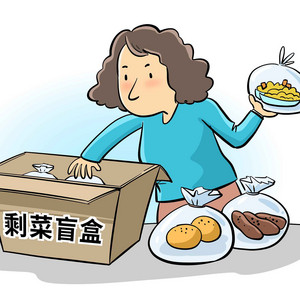
Shanghai's community cafeterias have cooked up a brilliant idea of leftover food blind box.
These boxes are filled with just cooked, unsolved dishes from the day while reducing food waste and providing affordable meals to residents.
While most people are enthusiastic about this innovative initiative, some voices have raised concerns about potential disrespect.
Let's explore why this initiative might ruffle a few feathers despite its good intentions.
So how has this practice launched by HuaFu Community canteen in Shu Hui District, Shanghai has been received?
Well, so far, the news that I've heard is that this one community canteen is directly translated from the Chinese name called Shu Tzu Shutan.
But actually, it could also be referred to as a community cafeteria, which is like a small hub that's usually governmental, subsidized, a dining place that aims to bring affordable food to the people living nearby, especially targeting the aged population in the neighborhood.
But it's also for the public as well.
So there is one that you mentioned earlier called HuaFu Community canteen in Shanghai's Shu Hui District that got viral online these days.
That kind of surprised me because the district Shu Hui is actually the core urban district in Shanghai that's gathered by shopping malls and fancy higher-end residences.
But just in a place like that, we spot this little HuaFu Community canteen that's introducing their cold-unquote leftover food blind boxes that's priced at 10 yuan or slightly above one dollar per serve that you can just get at their less-bisire hours every day at one o'clock or in the evening at 7 pm.
So it's like a new food choice introduced to people around that's interested in getting just whatever as a serve of packed lunchroom dinner.
So these are restaurants, essentially.
Community restaurants where people can go for an affordable meal.
So these blind, what are they called again?
It's a bit of a mouthful, upon intended.
Left over food blind boxes.
This is the food that wasn't sold during their busy lunch or dinner time that people can come after that busy lunch or dinner time and buy that same food at a reduced price.
That's right. So basically they run it in a way that the Kentine staff will pack prepared unsolved dishes into these quote unquote blind boxes, ensuring each contains a balanced selection of three dishes including like vegetable, meat and stable food.
But we call it quote unquote leftover but it's not really leftover as we say it in Chinese like sheng, sheng fun.
In a way as a version it's the leftover of someone.
Yeah, leftovers has kind of a negative connotation to the word, right?
By your description, yeah, this isn't necessarily leftovers in the traditional sense.
This is just the food that was not purchased during the busy times.
Exactly. Okay, so I'm struggling to find what the controversy here is because to me so far it sounds like a pretty great deal.
If people are looking to save a little bit of money then they can go after the busy time.
It may or may not be the freshest food available but it's still something that you can eat I assume without any difficulties.
So what's the problem here?
It's to be honest, as far as researching about this, it's actually fresh food.
Some of it has just been served or displayed there for about 15 minutes or so.
It's just because the Kentine needs to regularly refresh their choices of service.
So every 15 minutes to maybe 20 minutes they will serve new food so that the older dishes will be replaced and fill in these, let's say, blind boxes.
So it's not really leftover leftover but rather just an eye catching way of attracting people to this matter.
And to be honest, the news that I saw is that originally the Kentine name it, Tai Pien Manghura which is could be translated into dishes.
Blind box dishes. Blind box dishes.
It's not really leftover dishes but yes, just how it's getting popular these days as known by that particular name.
I don't think we have these types of community centers in Canada.
I was trying to think of some examples and I just don't think it's a thing in Canada not sure about the United States but there are other countries that have these types of community centers.
Japan does they call them Shokujiya for example.
It's a community dining center in Korea.
In South Korea they have them as well.
They're referred to as Bap Sang One or community restaurants and it's the same thing.
These are centers that offer affordable meals.
It's great for the vulnerable population because they can get meals at a reduced price and it's part of the government's efforts there to address social isolation.
Get people out of the house.
You know, you meet your friends there for a cheap meal.
So it sounds like in China this is a great thing but maybe it's the marketing here.
Maybe it's how it's presented here that people are having an issue with.
I think that could be part of it and also what you shouldn't explain to us earlier on about the introduction of leftover the term into the story is mainly done by media outlets as opposed media outlets want to attract clicks and they want to sensationalize or make it a little bit more controversial than it really is.
But I suppose with a lot of Chinese people there could be a certain type of cultural attitude towards leftovers or perhaps food safety concerns as well.
Oh yes definitely food safety for one thing but in China offering leftovers might be seen as impolite or disrespectful for some people especially in more formal settings.
Or let's say the unsaid thing here is that maybe you're looking at creating a benefit for let's say low income earning individuals and then in the news report I did see that some sanitary workers or delivery guys delivery guys as such they would go in and grab a meal which I think is absolutely great.
You know having this budget friendly option in the heart of a metropolis like Shanghai.
This has to be one of the more expensive parts of Shanghai.
It is. It is. So I think this is a great idea.
We should not sort of discriminate or maybe this is too harsh a word but look at this differently just because maybe folks who don't earn a fat wage or paycheck are enjoying the service.
Yeah I mean I don't think it's wrong for the community members to voice concerns about food safety or something like that.
I think that's a perfectly natural thing to do and I think everyone should do that.
But if it's simply based on oh well I don't want to eat that because it's not the freshest thing it's not what everybody else got why are you selling this to me at a reduced price well that I don't agree with but I just don't agree with that on a personal level.
It's not to say that everyone should feel like that and I guess not everyone does feel like that.
Yes there's definitely maybe to a certain extent stigma towards budget friendly options in general.
This could be a perception that purchasing discount discounted leftover food is seen as it's only for those who can't afford it.
Which I don't think I don't agree with that at all.
Yeah there's frugal people out there as well right.
Oh my goodness one of my favorite things to do and I was living in Korea at 10 p.m.
The grocery stores put the meat on discount.
Oh yeah. Oh 10 p.m. was a busy busy time at the Korean grocery stores because you could get your chicken breast minus 20% you could get a steak like a nice big fat steak minus 20 or 30%.
And everybody knew ding at 10 o'clock 10 p.m.
That's when the prices that's when those stickers went on and I always went there at that time not necessarily because I couldn't afford it but why not save a little bit of money.
If you're going to eat the food immediately then why not try to take advantage of that.
And I'm sure there's a certain percentage of the population in Shanghai that are doing just that as well.
It's not because they need to save the money if they do that's completely cool too but even if they don't why not save a few bucks when you're getting exactly the same food as you would have paid 30 minutes before or an hour before a higher price for.
I think this is well personally I see it as it's because it's like relatively new to adopt this blind box thing onto food service industry because we've seen the trend being witnessed in desserts or bakery or pastry industry like long ago like it's been years that we've seen like bakeries doing like a little blind box or like a gift set that sold in very cheap price some even give as free gifts after one purchase or sometimes I've got those before.
Now that we see similar trend being implemented in food chains or like food serving industries is raising some concerns while maybe some people that's criticizing this quote unquote leftover blind box trend as offensive might be like we've discussed earlier like maybe they just think it's a loss of phase that they're it's not nice or that it's not good food served in the first place but really at the end of the day it's just providing more choices for a bigger population out there.
And also maybe the blind box concept used here is kind of also just to attract some eyeballs as well because essentially this is just food that nobody has touched on sold cooked maybe an hour ago 30 minutes ago and then being presented at a cheaper price for people who would like to buy them to enjoy them.
And we have to think about food waste here as well we haven't even touched on that yet.
If that food doesn't get sold at a reduced price what's going to happen to it maybe it gets thrown away and it's something that we need to be aware of on how to reduce food waste not only here in China or Korea or Canada but absolutely everywhere in the world and there are countries who have already taken steps France for example in 2016 they brought in an innovative law that was a step towards fighting against food waste.
Supermarkets are forbidden to destroy unsolved food and they were told that they had to donate it instead and if they don't follow the law they face a fine of up to 3,750 euros per infraction so every time they get caught not doing that Italy also passed a food waste law in 2016 that law aimed to reduce food waste in every step of the food supply chain.
Like the French law it focuses on the donation and distribution of food waste but unlike the French law it's not focused on punishment there's no infraction or fine but the Italian law they encourage their businesses to donate or distribute wasted food through tax rebates so they give them a bit of a tax relief for their donations.
In Korea this is my last example the government banned burying organic waste in landfills in 2005 so food dumping that is so terrible for the environment because that liquid that comes out of the food waste and seeps its way into the oceans that's so bad for the environment anyway they banned that in 2005 here's the statistic in in 1996 Korea recycled just 2.6% of its food waste now today according to the Guardian in 2022 anyway Korea recycles close to 100% of its food in the country.
That's an astonishing figure.
I that's a achievement.
I've lived with it it's really strict in Korea so you cannot throw away your food waste with your regular garbage if you get caught I don't know what the penalty is but you get in a lot of trouble so what you have to do is you have to separate your food waste and then somebody comes and they pick it up once a week and recycling laws in general are really strict in Korea but food waste especially yeah you have to take care of it.
And in Beijing and Shanghai they we have rules for that too although you could argue maybe sometimes the garbage sorting system isn't as strict as it should be but I think nowadays it's pretty basic for people to separate at least the food waste as opposed to other stuff yeah and at least put it in different buckets.
It different bins for sure.
Yeah I mean when food goes to waste and it goes to landfills it gives off this is the science behind it it gives off methane and methane is a stronger greenhouse gas and the US environmental protection agency for example they published a report in 2021 and this is what they said if we cut all foods a food wasted by 50% it would reduce as much CO2 as shutting down 23 coal fired power plants.
Food waste the methane that comes from it that comes off of it is absolutely terrible for the environment.
I think if the general population here in China, in Canada, in America, in Japan, wherever if we were educated to a degree where we knew this type of information I don't think here in Shanghai with this reduced cost, you know I don't think things like this would be as controversial if people knew that how much they were helping out the environment by not throwing that food away.
That's so true because I was also reading from the comments from the news of this Shanghai canteen left over food blind box news that some people were just saying that those who criticized this action simply have never been starved before.
You've never seen starvation, you've never seen the outcome of food waste and you've never experienced this or to at least have the idea of what the whole scenario, the whole scope of this whole incident then why do you think you are qualified for criticizing the food waste?
You know that we barely eat the food that we produce.
This is according to the World Resource Institute from 2023.
One third of all the food produced in the world by weight is lost or wasted between farm and our kitchen.
That's more than one billion tons of food that goes to waste every single year.
It gets produced and we don't even eat it.
Yes indeed and food loss as well as food waste it's such a huge problem in well this is also connected to the agricultural business as well which is a highly polluting sector to start with and with all that in mind how can we improve this practice of left over food blind box or just this general practice of trying to make better use of the left over foods by these eatingist outbushments?
I think first of all I am deeply agreeing with this one statement given by this professor Ren Chao of School of Economic Law from East China University of Political Science and Law who mentioned that first of all it's important that the food information is disclosed and that it's transparent to consumers that at least when we choose to buy say the food blind box we know exactly what we're paying for like the source of ingredients the production day the shelf life how long spin out there and all that crucial information at least we need to know.
I think what this Shanghai continues doing well is that it's now popular and a lot of news are reporting about it and meanwhile it's trying to promote this style to more people saying that you know this this has just been out displaying for 15 minutes and that's how we do it and that's all the choices we're putting in here offering to more customers in public.
So I think this is like a good example let's say and that more or other businesses should also follow it as well at least keep the information transparent so that people feel safe buying these lunch boxes.
Yeah and the way it's I agree with what you said and I think the way it's marketed as well you know I'm not sure about the Chinese word and the connotations with it but I know that that English word we talked about it leftovers well it doesn't sell does it it doesn't sell very well it's not sexy food wise you know so maybe yeah transparency in the information letting people know that it's perfectly safe to consume but also promoting it in a way where people don't feel awkward or weird or uncomfortable food safety wise or just on an emotional level about eating or spending their money on this type of food.
Right that's a really good point and it got me thinking so instead of what we have right now let's say if you call it a care package but would that also be of danger in maybe making it sound like charity when folks don't want charity they just want affordable food.
I mean they have they have people who it's their job to answer that type of question right they have they have focus groups and they have things you know board meetings about this type of thing but maybe that's not for us to decide what is for us to decide is what makes us feel comfortable right as consumers as you know when we open up our wallet or or when we open up our we chat or however we pay for things do we want to spend our money there or not it's their job to convince us this is a safe or cool or whatever way to show us yeah we want to eat this too.
But I also think we should just I want to just give it to these cafeterias they don't have to do this but they're making good use of the food the product that's not being sold and will go bad otherwise.
So I think it's a it's a really good endeavor although maybe they don't have the money to employ a focus groups and come up with fantastic names but let's see it for what it is and I think it's a good thing.
Yeah we need to remember too these are community centers right these aren't three star Michelin restaurants these are community centers so let's not I guess you're right let's not put too much pressure on them to to make it cool for us.
And I'll just like to send you off with a couple more figures here according to the UN in 2022 over 800 million people go to bed hungry every night and global hunger isn't about a lack of food anymore right now the world produces enough food to nourish every man, women and child on the planet but nearly one third of all food produced each year is squandered or spoiled before it can be consumed and not all food gets to the people and countries that need them so well that's a lot to think about.
Coming up welcome to the happiest corner on the airwaves round tables happy place.
Delivery delivery delivery what is it?
Happiness from round table.
You Shen what do you have for us?
Well my happy place actually come from a very accidental experience of me spotting an article that describes something that I thought is niche and personal but is actually resonated with a lot of people out there which is the appreciation for original movie soundtracks.
So if you guys see me listening to something on my desk or over my desk that I am just sitting there and work pretending to work not really pretending to work but you know just listen to it.
You already said it. Yeah that's most likely when I'm listening to some like movie soundtrack or soundtrack from TV series that I like because it's just like a really peaceful and tranquil music background noise the way I consider it and it doesn't really get into what you're doing it doesn't affect your focus on whatever you're doing but in the meantime it provides you some juice for the ups and downs there are like symphony and beats and sometimes just fiddling and yeah it's like peaceful music that has a narrative of its own but doesn't really get into your focus that's what I've been practicing for a very long time listening to movie soundtracks while I'm trying to focus and then on well earlier this week I saw an article a blog to be honest posted by anonymous writer I think from the US that's describing how movie soundtracks hosts films together but in the meantime it gives you this emotional weight for you know that nostalgic feeling of enjoying or savoring your favorite movies and sometimes you don't really realize the reason why you like a movie so much is actually because of the music.
Yeah right I agree with you yeah music in film is something that if it's good you don't always notice it but if it's not good you notice it immediately and sometimes it's so good it's almost better than the film itself I'm talking about guardians of the galaxy if you've seen that film the soundtracks from those movies are legendary right and they incorporate it so well into the film yeah I agree with you there are some wonderful film soundtracks out there are you talking about like scores from films yes scores and then non-lureg just pure music or sounds sometimes then every time when I listen to like say the the headway theme of Harry Potter or the main theme of Lord of the Rings or all the movies that I grow up watching on loving I just naturally have goosebumps and I just naturally hum with them is that's the impact of it and lately one recommend personal recommendation from me is that I'm not I'm not sure if you guys have watched this or ever heard of it but there's like a 2022 very kind of famous Netflix original series called The Witcher it's yeah yeah yeah it's Henry Kavill's in that oh yeah he's amazing but he's not the main reason why I was I was watching it I understandable it's okay it's not actually play the game before the show came came out in 2020 but in the game the the music sounds different so when I watched the series I felt the power of the music even like more or like even stronger than how I felt in the game so that's why I really enjoyed this original soundtrack from the TV series The Witcher that came out in 2020 and it has like a combination of Irish fiddling or I don't know Polish fiddling yeah yeah the original novel is like it's from Poland and in the meantime there's a lot of fighting scenes so you hear a warcraft sounds were like metal clashing sound that's when I feel like I focused the most because I'm like fighting finishing a paper or whatever and if you ever see Ushan's head just pop up in front of your cubicle it means she's been listening to the jaws score yeah yeah that's my happy place lovely and this reminds me well this could be my happy place which is the music score for succession every time the opening score starts playing I just feel I've got a million bucks rolling into my bank account right like you could run through a wall right yeah and Steve what's your happy place we've recently moved into a new apartment and I love home interior decoration yeah I love it stores that offer things like towels and kitchenware and living room accessories and all that type of stuff I could spend hours in those types of stores so yeah getting into a new space and then kind of making a decision about how you want to design that space and then getting online and searching for stuff and then going to the store and walking around and touching everything and measuring things to see if it'll fit in the right space all of it I love all of it and because we've just moved in that's exactly what I'm doing these days oh wonderful and it's a brand new start and that must be so exciting refreshing when I was young I moved so many times my mom's hobby was this is what we would do as a family so we would live in one house and then my mom would buy another house like a kind not run down but kind of a fixer upper we call it and then she would have we'd move into that house she'd fix it up and then sell it for a little bit more flip the house then she'd repeat the process when I was young I must have moved I don't know 10 times I wondered if my mom was on the run from the police or something how many times we move but you know what it caught on to me when I lived in Korea I moved maybe 20 times I just love a change of scenery it's really exciting to be in a new neighborhood and a new space that's fantastic so what I'm doing these days is I'm trying to find shops that are nearby and also searching online as well because I've been told by almost everyone I talk to so far that buying things online is cheaper oh yeah a lot cheaper than than buying them in the store so I'm just kind of doing product research and getting out the measuring tape and yeah trying to decide how to incorporate what type of furniture into the style of apartment that it is and that's what I'm doing now so that's my happy place this week and that's great and you have the online and offline options to explore I know what you're gonna be busy doing on the weekend yeah you don't even have to ask me what I've been doing on the weekends just assume I was in some home shopping store yes and that brings us to the end of today's round table thank you so much you Shan and Steve have a way for joining the discussion I'm her young we'll see you next time