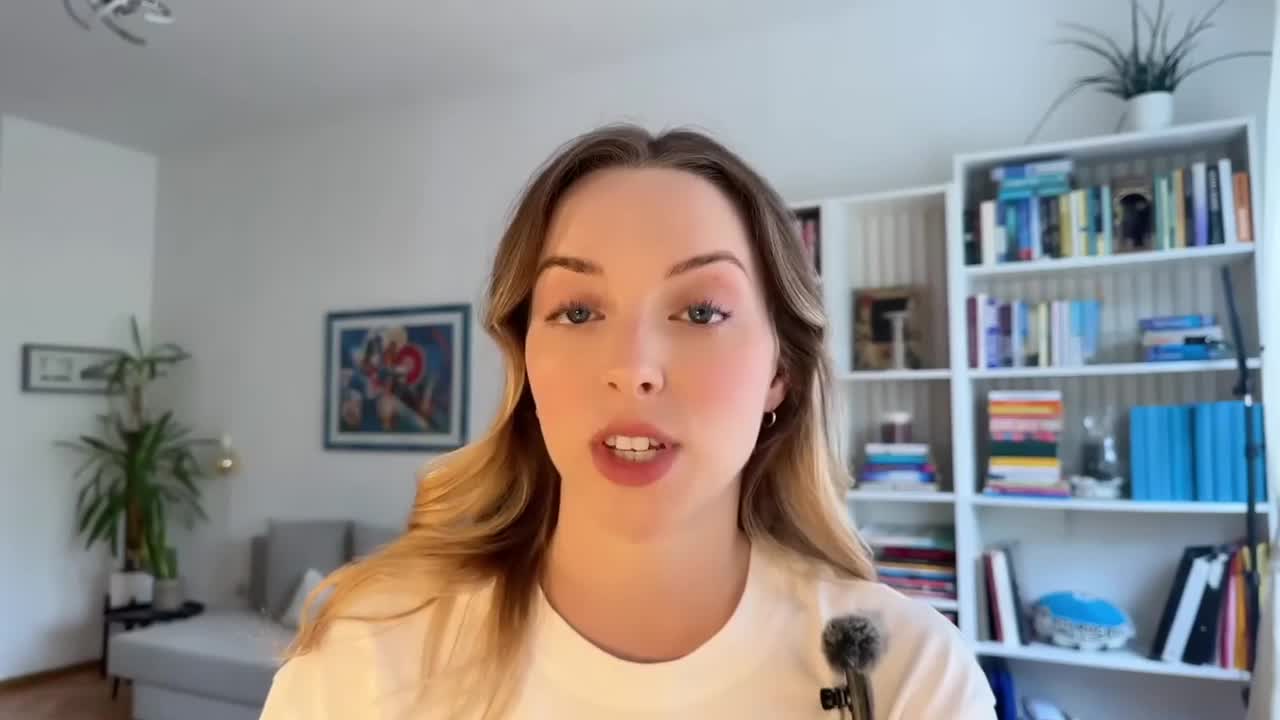
Hello everyone.
I thought it was about time for another shadowing practice video, since so many of you have been requesting more in the comments, so i'll add this one to the playlist as well.
Specifically, you've been asking about when to drop the t's and d's at the ends of words and when to link them to the word that comes after.
So I'm going to specifically point those moments out to you in today's shadowing practice.
So let's jump right in and don't forget to like this video and subscribe to my channel so you don't miss any of my future videos.
So first, I'm going to read through this story slowly, and you can repeat after me.
And I will, of course, point out some pronunciation tips along the way.
And then I'll read through the story a little faster without stopping, and you can shadow me.
So say it with me.
Ready?
Lately, I've been trying to eat healthy.
Lately, I've been trying to eat healthy.
You'll notice that I pronounced trying to as tryna.
Tryna.
I've been trying to eat healthy.
It's like try-na, right?
So we don't always have to pronounce the ING endings of words.
And of course we also could drop the T at the beginning of to and pronounce to with a schwa sound which hopefully you have come across before.
Tuh, tuh. to eat healthy instead of to eat healthy.
So yeah, here we can put trying to link it all together and say, trying to, trying to.
Lately, I've been trying to eat healthy.
So I decided to make a green smoothie with kale, chia seeds, yogurt, and lots of fruit.
So, I decided to make a green smoothie with kale, chia seeds, yogurt, and lots of fruit.
Decided to becomes decided to.
Decided to.
Okay.
So the D ending could be described as linked with the word to, or you could think of it as dropping the d sound here.
Decided to, decided to.
Decided to make a green smoothie.
So i decided to make a green smoothie with kale, chia seeds, yogurt and lots of fruit here, lots of fruit.
You'll notice that we have the v ending of of and then the f beginning of fruit.
Well, what ends up happening is we drop the f in of, so the v sound, the voiced v sound, gets completely dropped.
Lots of fruit, Lots of fruit.
And also fruit, the T at the end, you could drop that as well.
A lot of U.S. native speakers will completely drop that T ending.
Lots of fruit.
Lots of fruit.
I shouldn't have added garlic.
I shouldn't have added garlic.
Okay, here we have shouldn't have, and it becomes, in very rapid speech, shouldna.
I shouldna added garlic.
I don't know why I did it.
I don't know why I did it.
I don't know becomes I dunno.
I dunno.
I dunno why I did it.
I think I read somewhere it boosts immunity.
I think I read somewhere it boosts immunity.
Here we have the word boosts, which a lot of you might find tricky to pronounce, because we have an ST sound followed by the S Boosts.
But in rapid, natural speech we don't actually always pronounce T-S-S followed by an S.
Instead it ends up sounding like Boosts immunity.
I think I read somewhere it boosts immunity.
Anyway, I blended it.
Took one sip.
Anyway, I blended it.
Took one sip.
Blended it.
Link the D sound at the end of blended to the beginning of the word it.
You can drop the T at the end of it.
It becomes it and not it.
You can safely drop the T's at the ends of words.
I blended it.
I blended it.
Right?
The dit, dit, dit.
The D aligns with the word it.
I blended it.
I blended it.
Took one sip.
And immediately regretted it.
Regretted it.
And immediately regretted it.
This one's similar to blended it.
The double T in the middle of these two vowels in the word regretted sound like Ds, just like in the word blended.
But blended actually has a D.
Here you see double T.
But when we have a T or double T in between two vowels it sounds like a D sound.
Regretted it, regretted it.
And then you can put the end D of regretted over onto the word it.
Regretted it, regretted it.
I tried to drink some more, but I just couldn't.
I tried to drink some more, but I just couldn't.
Tried to becomes try to.
In very rapid speech, if we have this ED ending like tried, often that gets dropped completely.
The D gets dropped.
So here's another case where you would drop the D ending.
I tried to.
I tried to.
I tried to.
I tried to drink some more.
The M at the end of some and the M at the beginning of more get squished together, so you can just say some more, some more, some more.
But I just couldn't.
But I just couldn't.
So the T at the end of just gets dropped and becomes just.
The N apostrophe T sound at the ends of words, if you ever see this at the end of a word, it's pronounced .
A very nasal sound.
Couldn't.
Couldn't.
But I just couldn't.
I ended up throwing the whole thing away.
I ended up throwing the whole thing away.
Again, we can link the last D of ended to the word up.
Ended up.
I ended up throwing the whole thing away.
I don't often throw food away. but I can't force myself to eat something I don't like.
Okay, here we have the word often, which can be pronounced both With the T and without.
In very rapid speech the T does get dropped because it's a T in the middle of a word, but both ways to pronounce the word are correct.
You could either say, I don't often throw food away, or I don't often throw food away.
Often, often.
But I can't, force myself, but I can't, can't.
Now, this one's tricky because a lot of non-native speakers can't tell the difference between can and can't.
Because in very rapid speech, the T ends up getting dropped.
It's the same, I already mentioned, N apostrophe T ending.
It's very short and abrupt.
Can't.
Can't.
Can't. as opposed to the word can, which sounds like can, can, can in rapid speech.
So we have can, can't, can, can't.
And I'm doing the thumbs down to signal that I'm saying the word can't right, not that it's wrong, so it's similar to that abrupt ending of couldn't, can't.
I can't force myself to eat something i don't like.
And now we have the word don't, we also have the n apostrophe, t ending don't don't don't like don't, like.
Next time I'll just have my usual peanut butter on toast.
Next time, I'll just have my usual peanut butter on toast.
And last thing I'll point out here is next time.
So we don't pronounce both T's.
Next time. in rapid speech.
We don't need them both.
So, we can link these words next time.
Next time.
Next time, I'll just have my usual peanut butter on toast.
Okay, now I'm going to read through the whole story without stopping, and this time you are going to shadow me.
So you're going to say it with me.
Ready?
Lately, I've been trying to eat healthy.
So I decided to make a green smoothie with kale, chia seeds, yogurt, and lots of fruit.
I shouldn't have added garlic.
I don't know why I did it.
I think I read somewhere it boosts immunity.
Anyway, I blended it, took one sip, and immediately regretted it.
I tried to drink some more, but I just couldn't.
I ended up throwing the whole thing away.
I don't often throw food away.
I can't force myself to eat something i don't like.
Next time i'll just have my usual peanut butter on toast.
All right guys, i hope that video was helpful.
Let me know in the comments what you think or maybe what you would like me to specifically cover in next video's shadowing practice.
Don't forget to like the video subscribe, share it with a friend who might find it useful, and I'll see you next time.
Bye for now.