
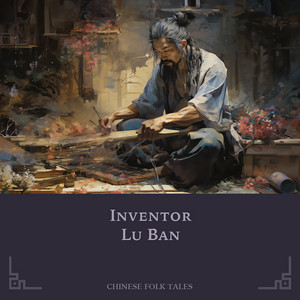
[Lu Ban: The Legendary Master Craftsman and Inventor of Ancient China]-[S3E13: Inventor Lu Ban]
📋 Summary
The Legacy of Lu Ban: China's God of Carpentry
In the landscape of historical polymaths, Lu Ban stands as a figure whose contributions rival those of Archimedes, Leonardo da Vinci, and Nikola Tesla. Despite the passage of approximately 2,000 years, his influence persists, particularly within the construction industry in China, where he is revered as the "god of their trade." The Chinese proverb, "you shouldn't brandish your axe at Lu Ban's door," serves as a cultural reminder that one should not "show off in front of those who have already set the bar high," lest they "make a fool of yourself."
Early Life and Non-Traditional Education
Born in the Shandong province during the waning days of the Zhou dynasty, Lu Ban—a name meaning "Ban from the state of Lu"—was a practical learner from the start. Unlike his peers, he "categorically hated school" and found reading and writing to be "boring." His teachers warned him that he would "never become anything in life" if he did not study, but Lu Ban remained undeterred, preoccupied instead with the constant "ideas of things he was going to create." His upbringing in a family of carpenters provided the foundation for his lifelong dedication to craftsmanship.
Engineering for War and Peace
Living during the turbulent Spring and Autumn period, Lu Ban was frequently tasked with military engineering. He revolutionized ancient warfare by inventing tools like the "cloud ladder," which allowed archers to be "raised up" for better positioning, as well as grappling hooks and a naval ram. He even proposed the standardization of ammunition to "make it easier to supply the armies." However, his true legacy lies in his inventions for the common good. His workshop was a hub of innovation, producing essential tools such as the "chisel" for "fine precision cuts," a "shovel" for clearing debris, a "bow drill" for fire-making, and specialized planes to make wood "nice and smooth."
The Serendipitous Invention of the Saw
Perhaps the most famous anecdote regarding Lu Ban’s ingenuity occurred under the pressure of King Moo of Joe, who demanded a new palace within a month, threatening the workers with execution if they failed. While struggling with the deadline, Lu Ban was inspired by nature: he cut his hand on the "serrated edge of a single blade of grass." Recognizing the potential of this design, he created the "carpenter's saw," which allowed his team to complete the palace in a "fraction of the time it usually took."
Contributions of the Lu Ban Family
Innovation was a family affair. Observing her husband laboring in harsh weather, Lu Ban’s wife invented a "portable shade" to protect him from the elements—the precursor to the modern "parasol or umbrella." While the invention was intended to provide comfort, it ultimately enabled Lu Ban to "work even harder." Outside of utility, Lu Ban also explored recreation, creating a "bamboo bird" (an early kite) that could remain airborne for three days, and a self-moving cart to assist in transporting his "frail old mother."
A Lasting Philosophical and Practical Heritage
Despite his childhood aversion to academics, the adult Lu Ban recognized the necessity of preserving knowledge. He documented his expertise in building pagodas, wheelbarrows, and granaries, while also incorporating cultural beliefs regarding "how to ward off evil spirits" and identifying the "most auspicious days to cut down trees." His philosophy emphasized "being in harmony with the natural world." Today, his legacy survives through the "Lu Ban locks," complex wooden puzzles that symbolize the ingenuity of a man who spent his life turning simple materials into the foundations of Chinese civilization.

Deep Learning with ListenLeap


