You're listening to Roundtable with myself, He Young.
I'm joined by Steve Hatherly and Yushan in the studio.
Coming up, first, it was the Xi session during the pandemic.
Now it's possibly a Xi exit in the U.S. as return to office mandates collide with a child care crunch.
But China's story is no victory lap either.
Women's workforce numbers dropped in COVID's wake and have stayed down.
Are we looking at two sets of challenges or the same set of barriers in different packaging?
And need a boost to crush the week? Our special segment Motivational Monday is your ultimate adrenaline shot to kick things off strong.
Our podcast listeners can find us at Roundtable China on Apple Podcast.
Got a question that's keeping you curious from social issues to tech and everything in between?
Let us take a stab at it. Email us at roundtablepodcast at qq.com.
Emails are fine, but voice memos are always better because we're a radio show slash podcast after all, and we love sharing your voice with the world.
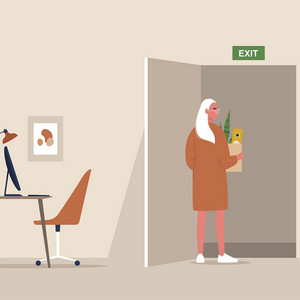
Now let's switch gears and discuss a different topic. something significant is happening in the american workforce and it's not getting the attention it deserves when covet first hit we saw that economists called a she session women leaving the workforce in droves often to care for children when schools and child care shut down and surprise surprise moms were still the primary caregivers in the years that followed it seemed western workplaces have been evolving Embracing flexible and remote work while in China and some other countries, people went back to the office as soon as quarantine lifted.
U.S. workers were able to work from home, earn a wage and enjoy a bit more autonomy.
But now the latest U.S. job data tells a different story.
Women are once again leaving the workforce in large numbers.
What's driving this reversal? And... Is it just about the loss of flexibility or are there deeper forces at play?
Let's start with the bigger picture. What was the initial impact of the pandemic on women in the workforce and how has that trend evolved up till this year in the U.S.?
Yeah, this is a big story that's worth a lot of attention, that's for sure.
At the height of the pandemic, Women were leaving the workforce at four times the rate of men.
It was a phenomenon that was often attributed to increased caregiving burdens.
There was one point where 800,000 women over the age of 20 exited the workforce in one month alone.
That happened in 2020. And again, this was a direct result of school and childcare closures, and it placed a lot of unpaid labor on women, an overwhelming amount, you could say.
That happened first. Then after the initial shock, then women's labor force participation, it started to recover, particularly among mothers.
And that was aided by the rise in flexible and remote work opportunities that you were talking about before, right?
Going to the office one day a week, two days a week, the rest of the time you could work at home.
It was a lot more flexible then. and that allowed for the participation with uh of women with young children the numbers in that particular group soared in 2022 in 2023 and 2024 because the workplace policies were were quite flexible and it was quite common for for companies to have those types of policies the the labor force participation rate for for prime age women that's a term that means um the age group 25 to 54.
That saw a record high of 77.8% in the post-pandemic years.
And that's important to note because that percentage is higher than the pre-pandemic peak.
Wow. the momentum stalled. So it was like bad news, then good news, and then here comes the bad news again, because the trend seems to be reversing now.
There was a report from the U.S. Labor Department that was released early in 2025, and it talked about the labor force participation for women with children under five, that group that we talked about before, and it's dropped significantly.
It also coincides with this Policy change for a lot of companies where they had flexible policies before those flexible work policies are now disappearing.
And as a result, over 200,000 women have left the workforce thus far in 2025.
And that is a sharp contrast to all those fantastic gains that were seen in the previous years.
It's really complicated, isn't it? Because, well, when we see this issue is not really only taking place in the US or North America in general, but also many of its divisions in China as well.
I've had friends working for, say, American companies that's based having their divisions based here in Beijing and having the same policy as it is in the US back in 2023, I think around that time period where they can, well, I was like, I go to work five days a week.
In the meantime, she was just maybe going to one day on top to be physically in the office to be there while the other four days It's just like working from home while just arranging other stuff for her and her family as well.
So that was really a prime time for my friend.
But nowadays, the shifts are happening. Several major corporations apparently have been instituted strict return to office mandates.
For example, there are. companies that's known to the world like amazon dell and jp morgan chase they have all required corporate employees to return to the office full time at least work in person for four to five days a week and also these um corporates they shift their shifts have been mirrored in the public sector as well, where both the federal government and the state governments, like in California, have issued executive orders requiring most employees to follow that role.
So this is very interesting. I can tell why women just feel like bad about it and don't want to go back to office.
Well, it Let's phrase it a different way, because when you have children to take care of and all these family responsibility that unfortunately today still mostly falls on the shoulder of women and often moms, then it's not like she doesn't want to go back to the office in the sense like it's not like she doesn't want to be more present for work is because of these very. real practical things she needs to do for the family that prevents her in doing so.
And also, I read there are many interesting sort of analysis regarding this latest jobs report from the US.
And it's a particularly weak and sour jobs report.
And a lot of industry observers are worried about the well, the economy, basically.
And I wonder, in light of everything you just mentioned, maybe this is reflecting that there's maybe something going on, sort of like a shift in the economy as well, that during COVID, remember we talked about, well, Steve didn't join the team just yet, and I don't think Yushan was here either.
Anyway, we talked about quiet quitting and all these other really interesting workplace phenomena.
And here in China, we were just like, what? is that about all in all it boiled down to that the workers felt like they had far more bargaining power at the time and they could negotiate with the employers because the employers depended on these workers to come back to well not necessarily to the office but to work and therefore these worker demands were loud and they were being listened to and for example that includes remote work and And for a few years, here us in China, workers, we looked with envious eyes. remote work.
Yeah, never happened here. And then now, like with the I don't know if we can attribute it just to AI, but maybe part of it is and then also the general economic climate.
And then maybe workers are feeling that their bargaining power has been taken away.
And now the power struggle has shifted towards the employers, the employers feel well, I see a lot of workers are looking for a new job or they're not actively looking for a new job because there aren't that many jobs available and they're just staying quiet on their old jobs.
And therefore, the employers feel, I have the upper hand.
And while it seems like for all capitalists around the world, they have one united agreement, that is, we want workers back in the office.
And that's easier for organization. That's easier for you to be under my watch and do the job.
And that's what they want. Yeah, but there is an ongoing push for flexible work and stronger protections in a lot of different countries around the world.
There was a survey done in the UK, for example, that found that the majority of workers, particularly women, don't want a full-time return to the office mandate.
A lot of countries like those in Nordic regions, for example, they continue to balance their strong protections for For moms and dads, too, there's strong parental leave.
There's affordable child care with adaptable work rules.
Sweden and Iceland are excellent examples.
They have some of the highest female labor force participation rates in the world.
And that's in part due to policies like paid paternal leave that can be shared between parents.
That's a great idea. Definitely. And then a strong system, too, of subsidized, really high quality services. child care and these are important things to have in place so that you can maintain a strong participation rate in the workforce that's a very crucial point here and also i think for some of our chinese listeners we don't we tend to sort of lump all these countries together as oh the west but actually you can see that there's a stark difference between let's say in the u.s where child care is very expensive it's not being subsidized the way that nordic countries are And therefore, you see a vast difference in women's labor participation rate as well.
And we can go into more analysis in a second.
But let's turn our attention back to China.
How have things been going on here? Can we sort of see a kind of comparison here?
Yeah, in terms of China, the situation is a little bit different than that is in the US.
So there is one 2024 article from the National School of Development at Peking University that's showing data just proving on how things are shifting in China in the past few years after COVID-19 hits in 2020.
So this study was launched by Zhang Dandan, who is an economics professor at Peking University's National School of Development.
And it's her researching, say, interest on labor economics and health economics in China in the past decade.
So she launched that study in early 2020, and that study covered nearly 10,000 respondents with a rather balanced ratio for both men and women.
And after all the data or the majority of the data was collected by the end of 2020, it painted a rather clear picture here.
So comparing with men, women faced higher unemployment, slower returns to work, and were more likely to work from home.
So by the late 2020, their job loss or labor market exit rate was 6.1 percentage point higher than men, and weekly working hours fell by 3.7% on average, and monthly wages dropped by 462 yuan.
I think that's... 70 US dollars roughly.
So the gap in unemployment duration was kind of stark if you view it this way.
Almost 30% of unemployed women had been out of work for over six months versus only 16.4% for that of men.
And also women dominated remote work, especially in the first half of 2020 when their share was 25 to 35 percentage point higher than that of men.
So within these groups and all the comparisons that we just mentioned, married women with underage children saw the biggest hit to their standing in the labor market.
As Zhang Dandan points out, the burden of family caregiving has been such a major factor behind these career setbacks for women.
So yeah, we see kind of a similar trend in that notion that women with professional career but in the meantime need to balance her time and energy for family tend to remain at say remote and flexible work only that our society or rather the Chinese company is not really having such a big u-shaped or v-shaped trend that's so stark as it is in the US well in China like I remember during COVID that few years, we talked about only a couple or a handful of big companies, mainly tech, that had these remote work arrangements for a period of time.
And then for the vast majority of employers, it was pretty much, oh, quarantine measures lifted, you're back in the office, no negotiation.
And therefore, for moms, I guess a lot of them just couldn't well you know you have to deal with your own situation and that's maybe you had to bear with all these child rearing responsibilities and then you see who earns more in the family household and often it's still the men and therefore it just made more sense for the woman to step back tad, maybe just for these few years, but to take up more of these family responsibilities.
And in the U.S., Steve, you mentioned the loss of flexible work.
How significant is this return to office push in driving women out of their jobs this year?
Yeah, well, the fact is, is that it's had a disproportionate effect on women, meaning that the negative impact of balancing work with caregiving responsibilities affects them more severely than it does for men and many women they you know they capitalized on that remote work and flexible schedule because it helped to balance their professional lives with their caregiving responsibilities when they had to take care of their kids and now As companies are asking employees to come back to the office, and this isn't new in 2025, it's been going on for a while now, but now we're seeing the statistical result of this.
A lot of women are finding this balance that they were able to handle quite comfortably before, they're not able to handle it now.
So that's... kind of the response to what's going on.
I found this kind of interesting as a side note.
They did a survey in 2024 and they asked C-suite executives.
C-suite executives are a company's most senior leaders with chief in their titles, like CEO and CFO and COO.
They found that nearly two-thirds of the C-suite executives that they surveyed, two-thirds believe that return to office mandates have caused this disproportionate number of women to quit.
And these leaders, they also acknowledge that this attrition has been difficult on recruitment, and it's also had a negative impact on productivity.
So that suggests a pretty clear link between flexible policies and retaining female talent.
Even the CEOs and the CFOs and the COOs, they see that this is a negative result from these policy changes, but yet the policy changes still exist.
Why is it that so many companies wanted their employees to come back to the office full-time when it is obvious there are great benefits to more flexibility in schedules?
One primary driver is definitely the belief that in-person work enhances collaboration and strengthens company culture.
So many leaders, as we mentioned earlier, the C-suites, they feel that the spontaneous interactions where the accidental collisions are just crucial for innovation and team cohesion.
So some studies also reveal that managers, some of them simply do not trust that employees are just being productive as they should at home.
And so that it's rather reasonable to call everybody back under the same roof and everybody can see each other and talk face to face.
Yeah. Another reason is real estate, right?
Because a lot of these companies, they have long-term leases in these really expensive spaces.
So they don't want their offices to sit empty.
They want the butts back in the chairs, if you will.
Yeah. And Why women leaving the workforce is everyone's problem, not just the women's problem?
What are the broader economic and social consequences if this trend continues?
Well, I have my thoughts as I was kind of learning about this topic, and this is what I came to know how I feel.
When women leave the workforce en masse, whether it's due to unaffordable childcare or lack of workplace flexibility or shrinking support systems, there's an unseen economic ripple effect that is really, really profound.
When you have dual-income households that become single-income households overnight, then that eliminates their disposable income.
And it forces families to cut back on everything from dining out on a Friday night to home repairs to going to catch a movie with the kids and then ice cream afterwards, right?
So you've got that drop in spending. So what happens then?
Then you've got the local businesses that are hurt as a result of that.
And when the businesses are hurt, then that leads to layoffs. and that leads to reduced hiring and also weaker tax revenues for local governments, right?
And that means less money for the local governments to spend on public services, like, oh, I don't know, like schools and hospitals, for example, and community infrastructure.
So the damage is really quite severe because when you've got fewer workers, it means slower wage growth, you've got a smaller talent pool for employees, and you've got long-term GDP losses.
There are plenty of studies done that prove that having more people in the workforce is great for the economy.
That's kind of common sense, right? So it's not just, in my opinion, this isn't just a, oh, this is sad for women issue.
This is an economic emergency that needs to be addressed right now.
Whether in China or the U.S. or elsewhere, the story often gets framed as women choosing to leave work, but when affordable childcare is scarce, workplace flexibility is cut, and the burden of care still falls on one gender so much more.
Is that really a choice or just fate? the only option left.
In countries such as China, where the government is eager to boost birth rates, solving these workplace and caregiving issues isn't just about gender equality.
It's about making it realistic for women and families to want and afford to have children.
Coming up next, Motivational Monday. Motivational Steve, you have something very relevant for today.
Well, yeah, we talked about the World Games taking place in Chengdu, and my Motivational Monday is sports-related.
There was an interview back in 1983 with the greatest hockey player in the history of the game.
His name was Wayne Gretzky. If you're a hockey fan, you'd know him.
If you're not, you're asking, who's that?
Well, the point is, the quote that came from the interview...
The interviewer asked him, you're taking a lot more shots this year or this time.
And Wayne Gretzky replied with this, you miss 100% of the shots you don't take.
And that quote, you know, on the Internet, people say, oh, did Michael Jordan say that?
Or was it Wayne Gretzky? But people seem to agree it's Wayne Gretzky.
Anyway, it doesn't matter. What that means is that if you don't shoot, you can't score.
If you don't try, you can't succeed. Now here's the other part of that.
If you keep shooting, then the more shots you take, the better you become at shooting.
The more tries you have, the better you get at trying.
So here's the result of that. And this is what Wayne Gretzky said as well in his masterclass.
He said, you don't have to be an athlete to have an athlete's mindset.
An athlete's mindset is they're not happy if they score one goal.
They want to score two. If they score two, they want to score three.
But we can have an athlete's mindset as well and apply that to our daily lives by not being satisfied with our own achievements, always trying to be a better version of ourselves and always trying to do more.
I remember from my very limited experience of watching hockey games, you not only have a number recorded for how many goals one player shoots, but also how many attempts. he made.
Shots on goal. Yeah, shots on goal. And I think that's really interesting because it's not the same for each and every sports.
It's just proving that how many times he tried and how many times he got the goal, but it's not necessarily have to be the goal that's deciding all the attempts and the efforts.
Athletes push through pain, fatigue, and doubt. often far beyond what seems reasonable, and bring that mentality to daily life means embracing challenges as opportunities to grow, facing discomfort instead of avoiding it, and committing to continuous improvement.
And that brings us to the end of today's Roundtable.
Thank you so much, Steve Hatherly and Yushan, for joining the discussion.
You can always find us on Apple Podcasts at Roundtable China.
I'm He Young. We'll see you next time.